

Classical music in a Roman amphitheatre, camel races on the edge of the Sahara, Africa's oldest film festival, orange-blossom harvests and the lamplit nights of Ramadan — Tunisia's calendar is full of festivals worth planning a trip around.
Tunisia hosts a rich calendar of festivals and events year-round. Summer brings major arts festivals in ancient settings — the International Festival of Carthage and the El Jem Symphonic Music Festival. Autumn and winter add desert festivals like the Sahara Festival of Douz, plus the Carthage Film Festival, while spring celebrates blossoms and oases. Religious holidays and Ramadan shape the rhythm too. This guide covers the main events and when to catch them.
Why experience a festival in Tunisia?
Festivals are one of the best ways to see Tunisia's living culture up close — and many take place in spectacular settings. You might hear a symphony inside a 2,000-year-old amphitheatre, watch Bedouin horsemen and camel races at the edge of the dunes, or join a whole town celebrating the date harvest. They blend music, theatre, cinema, folklore and food, draw both Tunisian and international audiences, and are usually very affordable. Timing a visit around one adds a memorable dimension to any trip.
Summer arts festivals
From roughly July to August, Tunisia's cultural calendar peaks with open-air festivals, often in Roman monuments:
- International Festival of Carthage (July–August): the country's flagship event, staged in the Roman theatre of Carthage above the Gulf of Tunis, with top Arab and international music, theatre and dance.
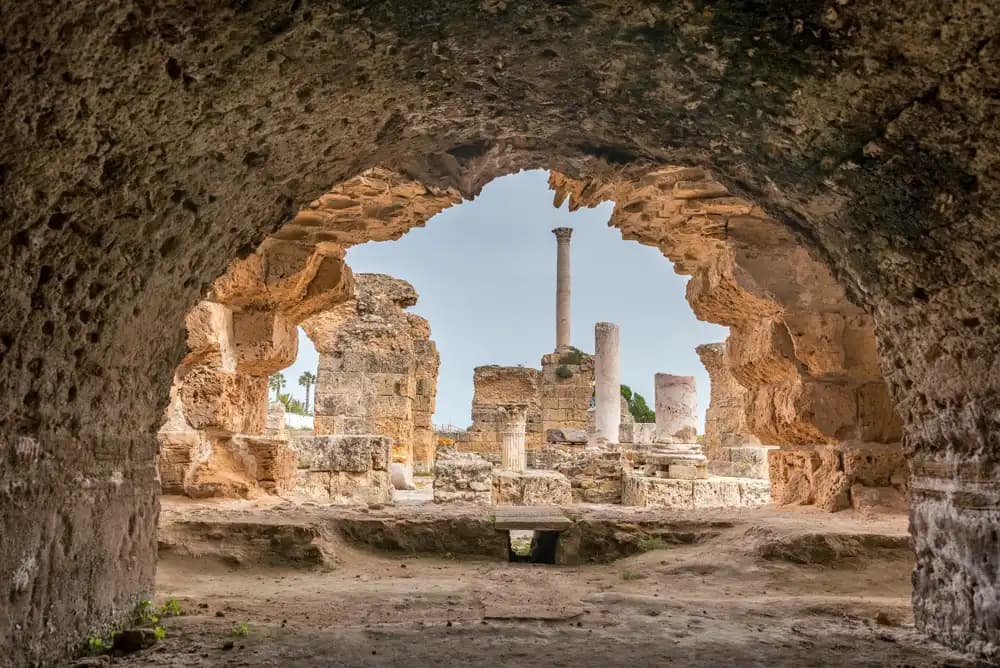
- El Jem International Symphonic Music Festival (July): orchestras and classical soloists perform inside the colossal Roman amphitheatre of El Jem — an unforgettable setting.
- International Festival of Hammamet (July–August): concerts and theatre in the open-air amphitheatre by the sea, at the cultural centre of Hammamet.
- Dougga Festival: classical drama performed in the ancient Roman theatre of Dougga, among the ruins.
- Tabarka (summer): the north-western resort known for its long-running jazz and music festivals by the Mediterranean.
Desert and oasis festivals
The south comes alive in the cooler months with festivals rooted in Saharan and Berber traditions:
- International Festival of the Sahara, Douz (December): the great desert gathering on the edge of the Tunisian Sahara — camel and horse races, folklore, poetry, music and desert sports, drawing nomadic communities from across the region.
- Festival of the Ksour, Tataouine (autumn): a celebration of the south's Berber heritage, around the fortified granaries (ksour) and troglodyte villages.
- Date-harvest festivals (autumn): the oases of Tozeur and Kebili mark the deglet nour date harvest, roughly November, with markets and folklore.
Film, theatre and the arts
Tunis is a long-standing hub for Arab and African cinema and theatre:
- Carthage Film Festival (JCC): the Journées Cinématographiques de Carthage, founded in 1966, is the oldest film festival in Africa and the Arab world, held in Tunis (usually autumn) with screenings across the city.
- Carthage Theatre Days (JTC): a major gathering of Arab and African theatre, also hosted in Tunis.
- Music and medina festivals: cities such as Sousse, Sfax and the Tunis medina host their own summer and cultural festivals through the year.
Religious holidays and seasonal celebrations
Islamic holidays follow the lunar calendar, so their dates shift each year:
- Ramadan: a month of daytime fasting and lively evenings, with special foods, decorated streets and late-night gatherings — a unique time to visit, with some daytime adjustments.
- Eid al-Fitr and Eid al-Adha: the two major feasts, marked by family celebrations; expect a festive but quieter public mood and some closures.
- Mouled (Prophet's birthday): celebrated warmly, especially in the holy city of Kairouan, with sweets like assida.
- Orange-blossom season (spring): around April, Cap Bon and Nabeul celebrate the citrus and neroli (orange-blossom) harvest used in Tunisian perfumes and pastries.
More festivals around the country
Beyond the headline events, nearly every region has its own celebration, and the calendar keeps filling out year after year:
- Falconry Festival, El Haouaria (Cap Bon, June): a centuries-old tradition on the tip of the Cap Bon peninsula, where trained sparrowhawks are celebrated.
- Coastal and medina festivals: Sousse, Sfax, Bizerte and the Tunis medina all stage summer music and cultural seasons, often free or inexpensive.
- Oasis and spring festivals: Nefta, Gabes and other oases hold their own gatherings tied to the land and the seasons.
- Contemporary events: newer film, music and arts events have grown around Tunis and the coast, adding to the traditional calendar.
Because programmes and exact dates change every year, it's always worth checking the latest schedule — or letting a local operator confirm what's on during your dates.
Festival calendar at a glance
- Spring (Mar–May): orange-blossom and citrus celebrations; pleasant weather for sightseeing (see best time to visit).
- Summer (Jun–Aug): the big arts season — Carthage, El Jem, Hammamet, Dougga, Tabarka.
- Autumn (Sep–Nov): Carthage Film Festival, Festival of the Ksour, date-harvest festivals.
- Winter (Dec–Feb): the Sahara Festival of Douz; cool, quiet and good value.
- Moveable: Ramadan and the two Eids shift earlier by about 11 days each year.
Atlantis Voyages can time a tailor-made Tunisia trip around a festival — a symphony at El Jem, the Sahara Festival at Douz, or the Carthage season — and handle tickets, transfers and the surrounding itinerary. Browse our Tunisia tours or start planning your trip.
Frequently asked questions
What are the main festivals in Tunisia?
The best-known are the International Festival of Carthage and the El Jem Symphonic Music Festival in summer, the International Festival of the Sahara in Douz in December, and the Carthage Film Festival (JCC) in autumn, alongside many regional music and heritage festivals.
When is the International Festival of Carthage?
It runs in summer, roughly July to August, in the Roman theatre of Carthage near Tunis, featuring leading Arab and international music, theatre and dance.
What is the El Jem Symphonic Music Festival?
A July festival where orchestras and classical soloists perform inside the colossal Roman amphitheatre of El Jem — one of the most atmospheric classical-music settings anywhere.
What is the Sahara Festival of Douz?
Held each December in Douz on the edge of the Sahara, it celebrates desert culture with camel and horse races, folklore, poetry, music and desert sports. It is one of southern Tunisia's signature events.
What is the Carthage Film Festival?
The Journées Cinématographiques de Carthage (JCC), founded in 1966, is the oldest film festival in Africa and the Arab world, held in Tunis with screenings across the city, usually in autumn.
When is the best time to visit Tunisia for festivals?
Summer (July–August) is the peak for open-air arts festivals, while December brings the Sahara Festival of Douz and autumn hosts the Carthage Film Festival and date-harvest celebrations. Spring adds blossom festivals.
Can tourists attend Tunisian festivals?
Yes — festivals welcome visitors, tickets are generally affordable, and major events draw international audiences. For headline concerts it is worth booking ahead, and a tour operator can arrange tickets and transport.
What happens in Tunisia during Ramadan?
Ramadan is a month of daytime fasting with lively evenings: streets and cafés come alive after sunset, with special foods and gatherings. Some daytime services adjust their hours; see our Ramadan travel guide.
Are festival dates fixed each year?
The cultural festivals (Carthage, El Jem, Douz, JCC) follow roughly the same season each year, though exact dates change — always check the latest programme. Religious holidays like Ramadan and the Eids move about 11 days earlier annually.
What is the Festival of the Ksour?
A festival in the Tataouine region of the south celebrating Berber heritage around the fortified granaries (ksour) and desert villages, typically held in autumn.
Is there a date festival in Tunisia?
Yes — the southern oases, including Tozeur and Kebili, mark the deglet nour date harvest around November with markets, folklore and celebrations tied to the palm groves.
What music will I hear at Tunisian festivals?
Everything from classical symphonies (El Jem) and Arab and international pop and traditional music (Carthage, Hammamet) to jazz (Tabarka) and Bedouin and folkloric music at the desert festivals.
Do I need to book tickets in advance?
For the big summer concerts at Carthage, El Jem and Hammamet, booking ahead is wise as popular nights sell out. Smaller regional and desert festivals are usually easy to attend on arrival.
Are festivals family-friendly?
Generally yes — the desert festivals, with camel races and folklore, are especially fun for families, and daytime cultural events suit all ages. Late-night concerts may run past young children's bedtime.
What should I wear to a festival in Tunisia?
Smart-casual is fine for concerts; bring a layer for cool evenings, and for desert festivals in winter pack warm clothes, as nights are cold. Modest dress is appreciated at religious or traditional events.
Can I plan a whole trip around a festival?
Absolutely — a festival makes a great anchor for an itinerary, combined with nearby sights. A tailor-made trip can secure tickets and build the festival into a wider tour of the coast, the Roman sites and the desert.
How much do festival tickets cost in Tunisia?
Prices are modest by international standards, and many regional and street events are free. Headline concerts at Carthage, El Jem and Hammamet cost more but remain good value; prices vary by artist and seat, so check the current programme.
Where should I stay for a festival?
For the summer festivals, base yourself near the venue — Tunis for Carthage and the JCC, the Sousse–El Jem area for the amphitheatre, or Hammamet for its festival. For the Sahara Festival, book accommodation in Douz well ahead (see where to stay in Tunisia).
What food is associated with Tunisian festivals and holidays?
Celebrations come with special dishes and sweets — from assida at Mouled to festive couscous and pastries like makroudh and baklava. Our food and cuisine guide has more.
Is it busy and should I book transport?
Popular festival nights and the Douz Sahara Festival draw crowds, so accommodation and transport fill up. Booking ahead — or arranging a private transfer as part of a tour — makes festival travel much smoother.
Time your trip to a Tunisian festival. Let Atlantis Voyages plan a tailor-made trip around the event you want to see, or browse our guided Tunisia tours.