
Where you sleep in Tunisia shapes your whole trip — the right base turns a long drive into a short stroll and a good day into a great one.
For a first visit, base yourself where your priorities are: stay in or near Tunis for Carthage, Sidi Bou Saïd and culture; choose Hammamet or Sousse for beach-resort comfort; pick Djerba for a laid-back island feel; and add a night in a desert camp near Tozeur or Ksar Ghilane for the Sahara. On an Atlantis private tour you don't choose a single hotel — vetted accommodation is arranged at each stop so your route, not your bed, decides where you wake up.
A quick answer by traveller profile
Tunisia is compact, but it still rewards matching your lodging to how you like to travel. There is no single "best" base — there is a best base for you.
- First-timer who wants a bit of everything: split nights between Tunis (culture) and a coastal resort town (beach), then add the desert.
- Beach and relaxation first: Hammamet–Yasmine or Sousse–Monastir, where resort hotels sit right on the sand.
- Culture, history and photography: Tunis, within easy reach of Carthage and Sidi Bou Saïd.
- Slow island escape: Djerba, with its whitewashed villages and long sandy coast.
- Desert and stargazing: a camp or oasis hotel near Tozeur or out at Ksar Ghilane.
Where should you stay in Tunisia for a first trip?
For most first-timers, the easiest and most rewarding approach is to base in two or three places rather than one. A couple of nights near Tunis covers the capital, Carthage and Sidi Bou Saïd. A few nights on the coast — Hammamet or Sousse — give you beach time and a springboard to Kairouan and El Jem. Then one or two nights in the south deliver the Sahara.
If you only have time for a single base and your focus is sightseeing, choose the Tunis area. If it is sun and sea, choose a coastal resort. For help turning this into real nights on a map, see our guide to how many days you need in Tunisia.
Best area to stay in Tunisia, region by region
Here is an at-a-glance comparison of the main areas, so you can see what each one is best for before you read the detail.
| Area | Best for | Vibe | Good base for |
|---|---|---|---|
| Tunis & La Marsa | Culture, history, food | Lively capital, coastal suburbs | Carthage, Sidi Bou Saïd, the Medina, Bardo |
| Hammamet / Yasmine | Beach resorts | Polished, holiday-focused | Coast, spas, day trips north |
| Sousse / Monastir | Beach plus old town | Buzzy seaside city | Kairouan, El Jem, central coast |
| Djerba | Island relaxation | Slow, sunny, flat | Beaches, villages, the far south |
| Tozeur / desert | Sahara, oases, film sites | Remote, dramatic | Dunes, Star Wars locations, stargazing |
| Sidi Bou Saïd | Charm, views, short stays | Quiet, picturesque | A romantic night near Tunis |
Where is the best place to stay in Tunis?
Tunis works on two levels. The city centre and the edge of the Medina put you steps from the souks, the Bardo Museum and the train north. The coastal suburbs — Sidi Bou Saïd, La Marsa and Gammarth — are calmer, greener and closer to Carthage, with sea air and easy evening strolls.
If you want to be in the thick of the action, stay central. If you prefer to retreat somewhere pretty after a day of ruins, the northern suburbs are hard to beat. Either way you are well placed to reach Tunis's highlights without long transfers.
Is Hammamet or Sousse better for a beach holiday?
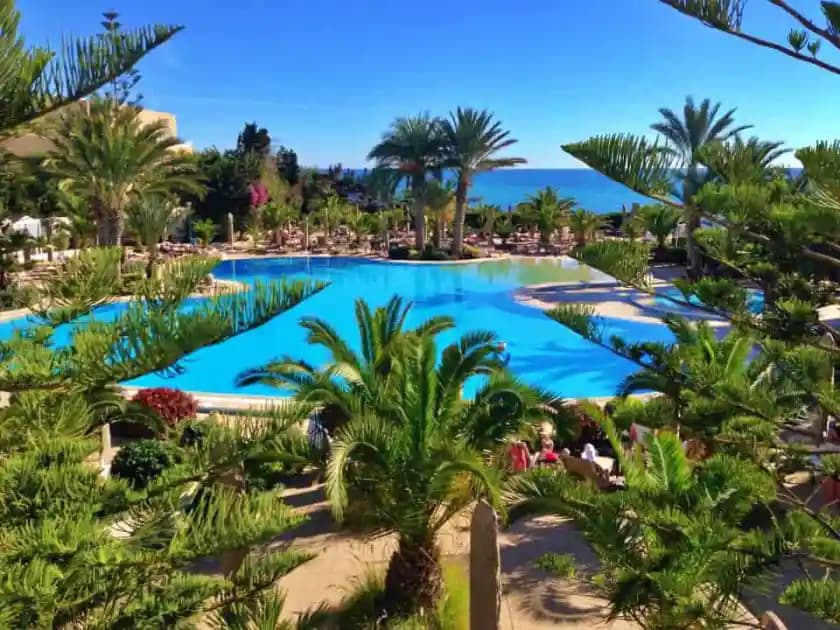
Both are built for the beach, with resort hotels lining the sand, but they feel different. Hammamet — especially the purpose-built Yasmine Hammamet marina zone — leans polished and tranquil, with gardens, spas and a tidy seafront. Sousse is a working seaside city with a genuine old Medina and more everyday buzz, plus its quieter neighbour Monastir close by.
Choose Hammamet if you want a calm, contained resort feel. Choose Sousse if you like a bit of local life on your doorstep and want an easy base for Kairouan and the great Roman amphitheatre at El Jem.
Resort, city hotel or desert camp
Tunisia's accommodation falls into a few broad types, and knowing the trade-offs helps you plan nights that suit each leg of your route.
- Beach resorts: large, comfortable and often set in gardens by the sea, with pools, spas and plenty of on-site dining. Best on the coast for a few relaxed nights.
- City hotels: smaller and more central, ideal when you want to walk out into a medina, a museum or a café quarter rather than stay inside a compound.
- Boutique and dar stays: restored traditional houses, often around a courtyard, found in medinas and villages. Full of character, lighter on resort facilities.
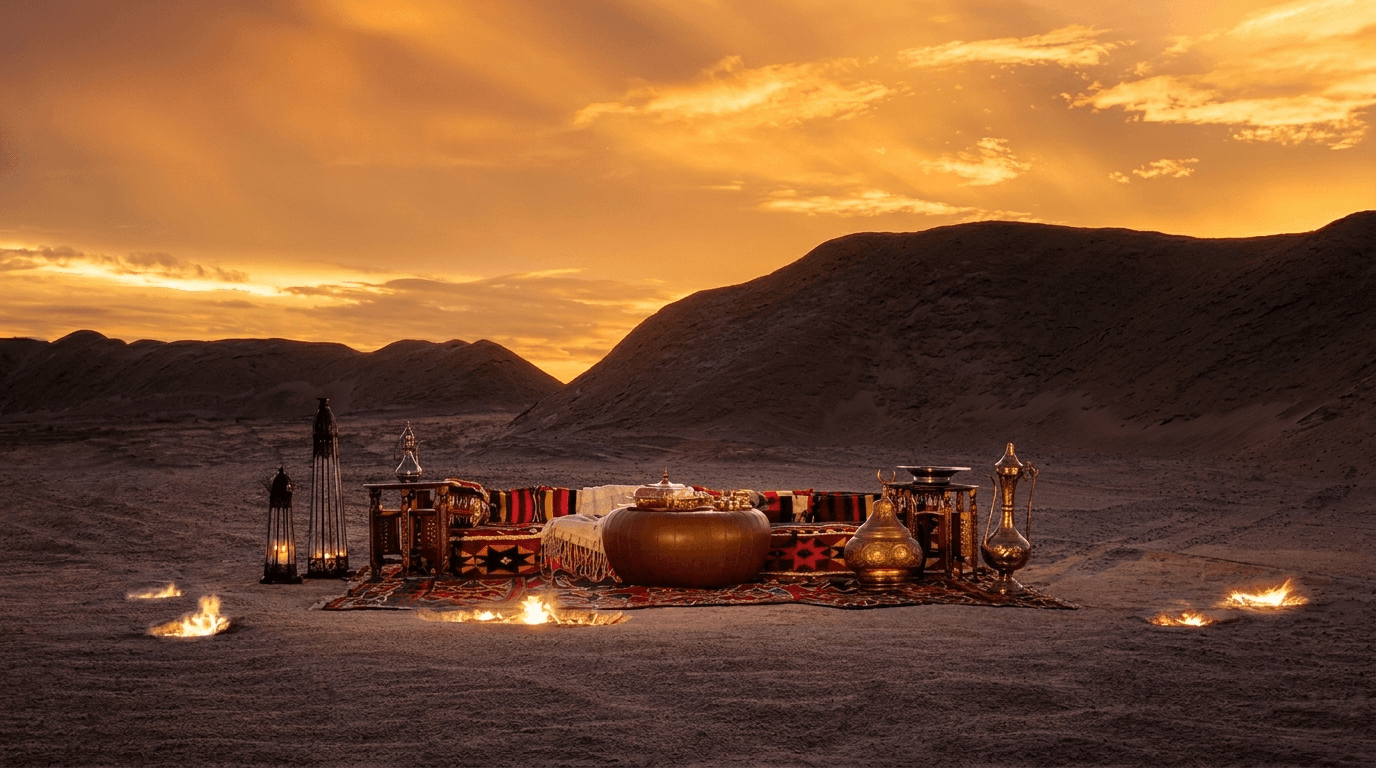
- Desert camps and oasis hotels: from simple tented camps under the stars to comfortable oasis lodges near Tozeur. Unbeatable for the Sahara experience.
What is a desert camp in Tunisia actually like?
Desert stays range from rustic to surprisingly comfortable. Near Tozeur and Nefta you'll find oasis hotels with gardens and pools. Out at Ksar Ghilane, on the edge of the open Sahara, camps offer tents with real beds, shared or private facilities and dinner under an enormous sky. The reward is silence, dunes at sunrise and some of the clearest stargazing you'll ever see.
Nights in the desert are best kept short and intentional — one or two is plenty for most travellers. For the full picture of what the south offers, read our Sahara Desert Tunisia guide.
All-inclusive in Tunisia, and what to expect
All-inclusive is common along the Tunisian coast, particularly in Hammamet, Sousse and Djerba. It typically covers your room, buffet meals, soft drinks and most on-site activities under a single arrangement, which makes budgeting simple and days effortless if you mainly want to relax by the pool and sea.
The trade-off is that all-inclusive encourages you to stay put. If your reason for coming is Tunisia's history, villages and desert, a resort-only stay can leave the best of the country unseen. Many travellers get the best of both worlds by combining a few relaxed resort nights with a touring loop inland and south.
Is all-inclusive the best way to see Tunisia?
All-inclusive is excellent for rest, families and a low-effort beach week. It is not, on its own, a way to see Tunisia, because the sights that make the country special — Carthage, Dougga, El Jem, Kairouan and the Sahara — are spread across the map.
If you want both comfort and discovery, pair resort nights with guided days out, or build a touring itinerary that uses resorts as rest stops. Our Tunisia trip cost and budget guide explains how different styles compare.
How accommodation works on an Atlantis private tour
We should be honest about what we do. We don't sell standalone hotel rooms. What we do is design and run private, door-to-door tours of Tunisia — and on those tours, accommodation is arranged for you at every stop.
That means you travel with a private car and a licensed, English-speaking guide, and each night you arrive at vetted accommodation chosen to match your route and comfort level: a city hotel near the medina one night, a coastal resort the next, a desert camp or oasis lodge in the south. You never have to juggle bookings, decode check-in in a new town, or wonder whether tonight's hotel is well placed for tomorrow's sights. When you're ready, you can plan your trip and tell us how you like to travel, and we handle the rest.
Is accommodation included on a private Tunisia tour?
Yes. On a private tour with Atlantis Voyages, your lodging is part of the arrangement at each stage of the journey, selected and booked for you to fit your itinerary and preferred comfort level. You tell us your style — relaxed, mid-range or upscale — and we match the properties accordingly.
This is the main difference from booking rooms yourself: instead of locking yourself to one base, your accommodation follows your route, so the map decides where you sleep rather than the other way around.
Budget, mid-range and upscale, without the price tags
Tunisia offers lodging across every comfort level, and you can mix them along a single route. Rather than quote figures that quickly date, here is what each tier tends to feel like.
- Budget: simple, clean and friendly — small city hotels, family-run guesthouses and basic desert camps. Great value and often full of character.
- Mid-range: comfortable rooms, reliable facilities and good locations — a sweet spot for most visitors, including solid resorts and boutique dar stays.
- Upscale: polished resorts, design-led boutique hotels and the smartest oasis lodges, with spas, fine dining and standout settings.
The right tier also depends on when you go, since coastal demand peaks in the warm months. See our guide to the best time to visit Tunisia to plan around the seasons.
Where should you stay in Djerba?
On Djerba, the main resort strip runs along the northeast coast around Sidi Mahrez and Aghir, where beach hotels line long sandy shores. For something more local, stay near Houmt Souk, the island's lively main town, with its market, harbour and whitewashed lanes. Djerba is flat, sunny and easygoing, which makes it a favourite for relaxed stays and a natural gateway to the far south.
Should you book your accommodation in advance in Tunisia?
In high season — summer on the coast and major holiday periods — it is wise to book well ahead, because the best resorts in Hammamet, Sousse and Djerba fill quickly. Outside those peaks you have more flexibility, but desert camps around Tozeur and Ksar Ghilane are small and can sell out, so securing them early is sensible. On a private Atlantis tour this is handled for you: every stay is reserved in advance and matched to your route, so you never arrive in a new town hunting for a room.
Let us arrange where you stay
You don't have to become a Tunisia accommodation expert to sleep well in the right places. Tell us how you like to travel and what you most want to see, and we'll build a private, door-to-door journey with vetted stays arranged at every stop. Plan your trip with Atlantis Voyages, and wake up each morning exactly where your day should begin.