
A first-hand, practical guide to Tunisia — written by someone born and raised there. Everything a first-time visitor actually needs: visas, safety, money, getting around, culture, food, and the local know-how you won't find on an aggregator.
Quick answer: Most travellers enter Tunisia visa-free for up to 90 days. It is a safe, remarkably welcoming country and one of the Mediterranean's best-value destinations, combining Roman ruins, the Sahara desert and the coast in a single trip. Bring cash (the Tunisian dinar is a closed currency), visit in spring or autumn, learn a few Arabic words, and come above all for the history and the food — that is the heart of the journey.
The first thing every visitor notices: the hospitality
Are Tunisian people friendly to tourists?
Genuinely, yes — and it is the thing that surprises first-time visitors most. As someone born and raised in Tunisia, I can tell you it is completely normal for a shopkeeper to pour you a glass of mint tea while you browse, and I have seen locals share their own sandwich with a traveller simply because it felt right. Tunisians are a people who love and help foreigners, even in the hardest situations — I have watched strangers go far out of their way to help a lost tourist find an address, translate a conversation, or carry a bag. Hospitality here is not a sales tactic or a performance for visitors; it is woven into daily culture. Understanding this changes how you experience the whole country: you relax, you open up, and the trip becomes about people as much as places.
Should I accept when a Tunisian offers me tea or food?
Yes — and it is one of the loveliest parts of the trip. When a local offers you a glass of tea or a bite to eat, it is a genuine gesture of welcome, not a trick and not an obligation to buy anything. Refusing can even feel a little cold. Sit down, accept warmly, and treat it as the small moment of connection it is meant to be. A simple thank-you in Arabic — Barakallahou fik — will delight your host and often turns a passing exchange into a real conversation. These unplanned moments, shared over tea, are exactly the memories most travellers say they treasure most from Tunisia.
Safety & peace of mind
Is Tunisia safe for tourists in 2026?
Yes. First-time visitors often worry about muggings or hostility, and honestly that fear is misplaced. The main tourist regions — Tunis, Carthage, Sidi Bou Saïd, Hammamet, Sousse, Djerba, Kairouan and the Roman sites — are safe, stable and thoroughly used to visitors. In practice, locals are far more likely to go out of their way to help you than to bother you: people confuse Tunisia with conflict zones elsewhere in the region, but the reality on the ground is a calm, tourism-focused country. Use the same common sense you would in any city — keep an eye on your belongings in crowded medinas, agree taxi fares in advance — and check official advisories only for the remote southern border areas, which are far from the normal tourist route. For the overwhelming majority of trips, safety simply is not the problem people expect it to be.
Is Tunisia safe for solo female travellers?
Many women travel Tunisia solo and comfortably. A few sensible habits make it easy: dress modestly to reduce unwanted attention, use registered taxis or a ride app such as Bolt after dark, and stick to well-lit, busy areas at night. What surprises many solo travellers is that the instinct of most Tunisians toward a woman travelling alone is protective rather than predatory — shopkeepers, families and fellow passengers will often quietly look out for you. The occasional bit of attention you may get is usually just curiosity or a vendor making a sale, not a threat. Trust your instincts as you would anywhere, and you will likely find Tunisia one of the more relaxed destinations in the region for solo travel.
Will people be rude or aggressive toward tourists?
This is the myth I most often have to correct. Tunisians are warm, curious and helpful by nature, and open rudeness toward a visitor is rare. The one moment that can feel pushy is a souk vendor working hard to make a sale — but that is commerce, not hostility, and it stops the instant you smile and say no. Away from the busiest market stalls, you will find people patient with lost tourists, generous with directions, and genuinely pleased that you chose their country. A word of Arabic and a smile turn almost any interaction friendly within seconds. Come expecting warmth rather than confrontation, and that is exactly what you will meet.
Can I walk around at night in Tunisia?
In tourist towns and city centres, an evening stroll is completely normal and safe. The medinas, cafés and seafront promenades stay lively well into the night, and you will see families, couples and groups of friends out enjoying the cooler air. As you would anywhere in the world, keep to well-lit, populated streets, stay aware of your surroundings, and avoid empty or unfamiliar areas late at night. In places like Sidi Bou Saïd, La Marsa or the heart of Tunis, walking after dinner is one of the pleasures of the trip, not a risk to manage.
Shopping, souks & avoiding the tourist price
How do I avoid being overcharged in the souk?
Haggling in the souk is expected, friendly and honestly part of the fun — so here is the exact local playbook I use myself. First, signal that you are not a first-day tourist: mention that you have visited Tunisia (or Morocco) before and that you know the products. Second, drop a word or two of Arabic to build instant rapport — vendors soften the moment they feel a connection. And the real closer: say, with a smile, that it is not your last day, so you will come back tomorrow to buy. That single line removes all the pressure — the vendor knows a hard push won't work — and the price quietly drops on its own. Walk relaxed, never show that you love an item too much, and never buy on the first quote. Treat it as a warm, theatrical conversation rather than a fight, and you will both enjoy it and pay a fair price.
What are the common scams in Tunisia, and how do I handle them?
The scams you might meet are minor nuisances, not real dangers — the same small stuff you would find in most tourist destinations. The classics: a taxi that conveniently 'forgets' the meter, a friendly stranger who insists on guiding you and then steers you to a particular shop, or an inflated first price at the souk. The fixes are simple. For taxis, insist on the meter or agree the fare before you get in, or use a ride app like Bolt for a fixed price. For unsolicited 'guides,' a polite, firm no is enough. For shopping, use the local haggling approach above. None of this should worry you or spoil your trip — handled calmly and with a smile, these moments are just part of travelling in a lively, market-driven culture.
A few words of Arabic that open every door
What basic Arabic or Tunisian phrases should I learn?
A little Arabic goes a very long way, because Tunisians genuinely light up when a visitor makes the effort. You do not need to be fluent — one or two words at the right moment completely change the tone of an encounter. Start with these four: Aslema (hello / hi), Chnowa hwalek? (how are you?), Barakallahou fik (thank you — warm and respectful), and Khouya, written '5ouya' in Tunisian texting, which literally means 'my brother' and is the friendly, street way to address a guy around your own age. Drop 'Khouya' with a smile in a market and watch the vendor grin — it instantly signals you are not a clueless tourist. None of this is strictly necessary to get by, but it is the single easiest way to win people over and turn transactions into real, warm human moments.
Do people speak English in Tunisia?
English is limited outside big hotels and the main tourist sites — the everyday languages are Arabic and French, with French widely used in shops, signage, menus and business. If you speak any French at all, you will get through almost every situation comfortably. If you do not, do not panic: staff at hotels and popular attractions usually manage some English, younger Tunisians increasingly speak it, and a translation app covers the rest. This is exactly why a few Arabic words matter so much — they are not strictly necessary for logistics, but they instantly warm up every interaction and mark you as a respectful guest rather than a passing tourist.
Entry, visa & documents
Do I need a visa to visit Tunisia?
For most travellers, no. Citizens of most European countries, the UK, the US, Canada, Australia, Japan and South Korea can enter Tunisia visa-free for stays of up to 90 days as tourists. You simply arrive with a valid passport and receive an entry stamp. Because immigration rules can change and depend on your exact nationality, it is always worth confirming the current requirement with the Tunisian embassy or an official source before you book — but for the vast majority of visitors from these countries, entry is refreshingly simple and one less thing to plan around.
How long can I stay, and what are the passport requirements?
The standard visa-free stay is up to 90 days for most nationalities. Your passport should be valid for at least three months beyond your arrival date, with a blank page for the entry stamp. If you want to stay longer than 90 days, you apply for an extension at a regional police station before your initial period runs out — start early, as it takes time. It is also wise to keep a photo or photocopy of your passport somewhere separate from the original, so you are covered if it is ever lost or stolen.
Money & budget
What currency does Tunisia use, and can I pay by card?
Tunisia uses the Tunisian dinar (TND), and there is one important quirk to understand: it is a closed currency, which means you cannot buy it before you arrive or legally take it out of the country. Bring euros, dollars or pounds to exchange on arrival at the airport, a bank or an official bureau, and keep your exchange receipts — you will need them to convert leftover dinars back before you leave. Carry cash for taxis, markets, small cafés and rural areas, where cards are rarely accepted. In hotels, larger restaurants and city shops cards work fine, and ATMs are common in towns. It is the same cash-first logic as many other destinations — just plan to change money on the ground rather than in advance.
How much money do I need per day in Tunisia?
Tunisia is one of the most affordable destinations on the Mediterranean, which is a big part of its appeal. As a rough guide, a casual sit-down meal runs about 15–40 TND, a museum or site entry is around 12 TND, and a metro ride is roughly 2 TND. A mid-range traveller can eat well, move around and sightsee for a fraction of what the same day would cost in Italy, Greece or Turkey. Budget travellers can go lower with louages and street food; those wanting comfort can spend more on private guides and nicer hotels and still feel it is excellent value. Whatever your style, your money simply goes further here.
Should I tip in Tunisia?
Tipping (bakchich) is customary but modest, and never aggressive. Round up taxi fares to the nearest convenient amount, leave around 5–10% in restaurants if service is not already included, and a dinar or two is a kind gesture for a hotel porter, a helpful guide or good café service. It is appreciated rather than expected, and small amounts are perfectly normal — you are acknowledging good service, not paying a second bill. When in doubt, a little goes a long way and is always warmly received.
When to go & weather
What is the best time of year to visit Tunisia?
Spring (March to May) and autumn (September to November) are the sweet spots, and this is the single most useful thing to plan around. In those months the days are warm and the evenings mild — ideal for wandering Roman ruins and medinas without the summer heat. Summer (June to August) is hot and best suited to the coast and beach resorts, where the sea breeze helps. Winter is cool, quiet and cheap, and it is surprisingly good for the Sahara, where daytime desert temperatures are pleasant for touring (just pack warm layers for the cold desert nights). Match the season to what you most want to do — culture and cities in spring and autumn, beaches in summer, desert in the cooler months — and the trip flows beautifully.
How hot does Tunisia get, and is winter a good time to go?
In summer the coast sits around 30–35°C, cooled by sea breezes, while the interior and the desert can climb past 40°C — so if you travel in July or August, save desert excursions for early morning or late afternoon. Winter, by contrast, is mild along the coast, gloriously uncrowded, and often cheaper, with the Sahara at its most comfortable for daytime touring. The one thing to remember for winter is that desert nights get genuinely cold, so bring warm layers. Both extremes are perfectly travellable if you plan your days around the temperature.
Getting around & local guides
How do I get around in Tunisia?
You have several easy options. Between towns, the louage — a shared minibus that leaves once it fills up, with a fixed per-seat fare — is the cheap, authentic local favourite, organised into stations by destination. Within cities, use metered taxis (insist on the meter) or a ride app like Bolt, and in the Tunis area the TGM light rail conveniently links the capital to Carthage, Sidi Bou Saïd and La Marsa. If you want maximum freedom to reach the Roman sites, the villages and the desert on your own schedule, renting a car is well worth it. Many first-timers mix and match — louages and taxis for the cities, a rental or a guided vehicle for the far-flung sites.
Should I hire a local guide in Tunisia?
Honestly, yes — it is the tip I give every first-time visitor. A good local guide transforms a pile of ancient stones into a living story: they explain why Carthage rose and fell, what daily life looked like in the arena at El Jem, and how Dougga fit into the Roman world. Beyond the history, a guide smooths over the language barrier, handles the practical friction of a new country, and takes you to the corners and viewpoints you would simply never find on your own. For the major heritage sites especially, a guide is the difference between merely seeing Tunisia and genuinely understanding it — and it turns a good day into a memorable one.
How do I get from Tunis-Carthage Airport to the city centre?
Tunis-Carthage Airport sits only about 8 km from the city centre, so the transfer is quick and easy. The simplest option is a metered taxi — insist on the meter — or a ride app such as Bolt, which gives you a clear fixed price and avoids any negotiation. Expect a ride of roughly 20 to 30 minutes depending on traffic. One practical tip: skip the drivers who approach you inside the terminal offering a 'special price,' and head to the official taxi rank or simply order a Bolt from the app. It is a smooth first step into the country and sets an easy tone for the trip.
What SIM card or internet options are there for tourists?
Staying connected is cheap and easy. The three local providers — Ooredoo, Orange and Tunisie Telecom — all sell inexpensive prepaid tourist SIM cards with generous data, available at the airport and in city shops. Bring your passport, as registration is required, and the staff will usually set everything up for you on the spot. Coverage is strong in cities and tourist areas, which makes navigation, ride apps and translation effortless. For a short trip, a local SIM is almost always better value than international roaming.
Food & culture — the real reason to come
What is the one thing I should not miss in Tunisia?
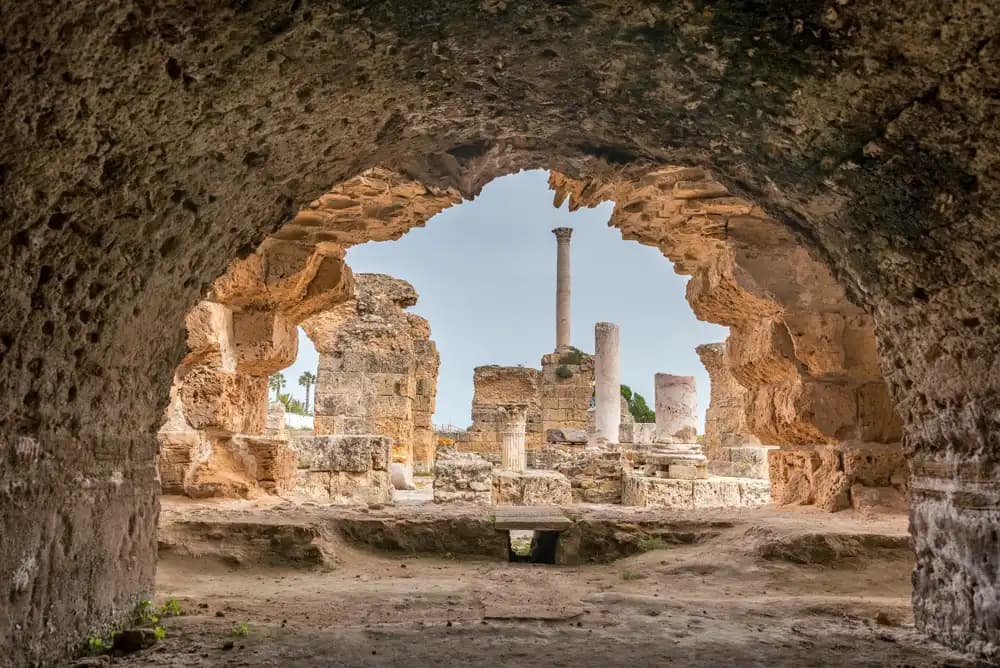
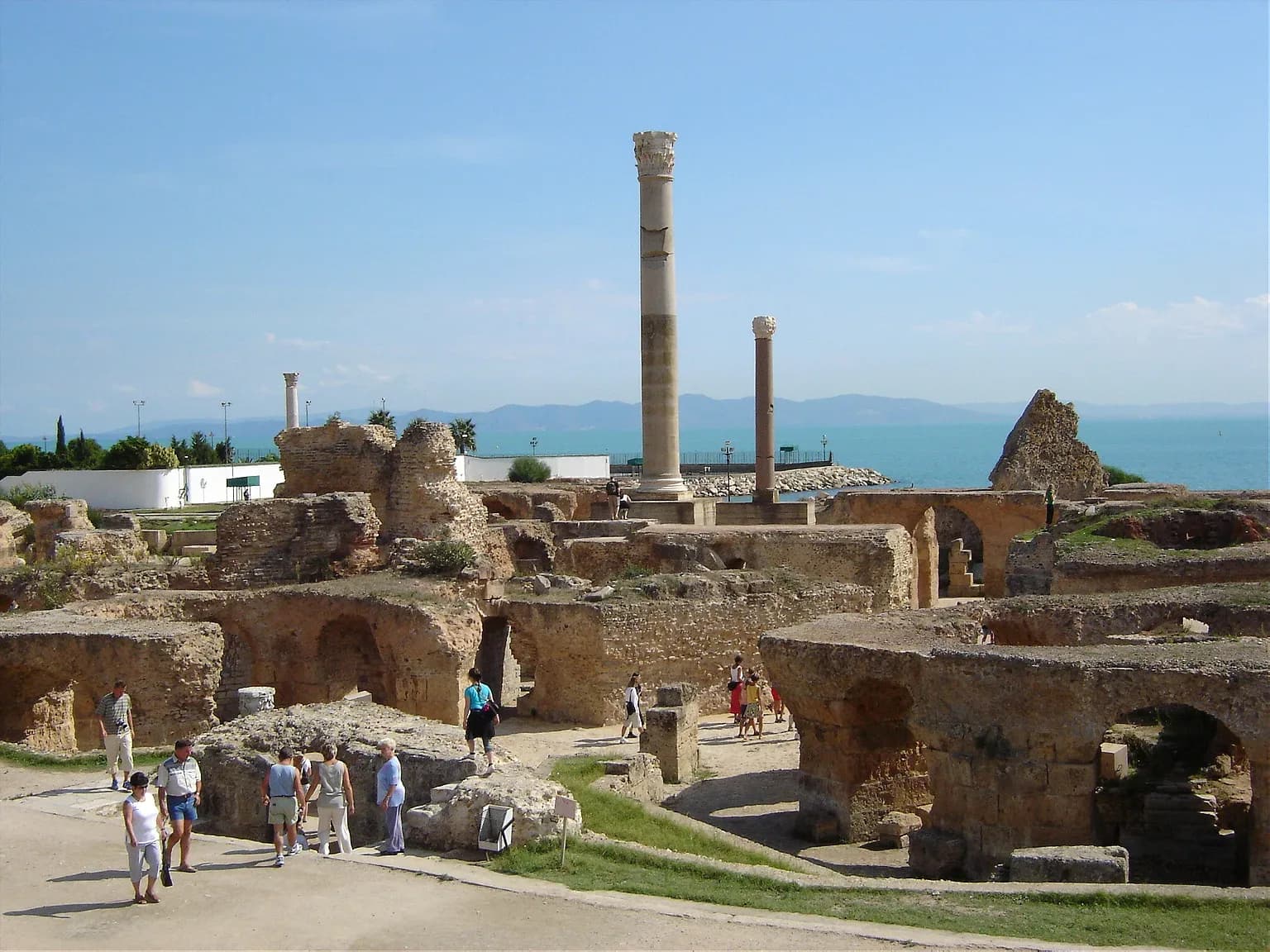
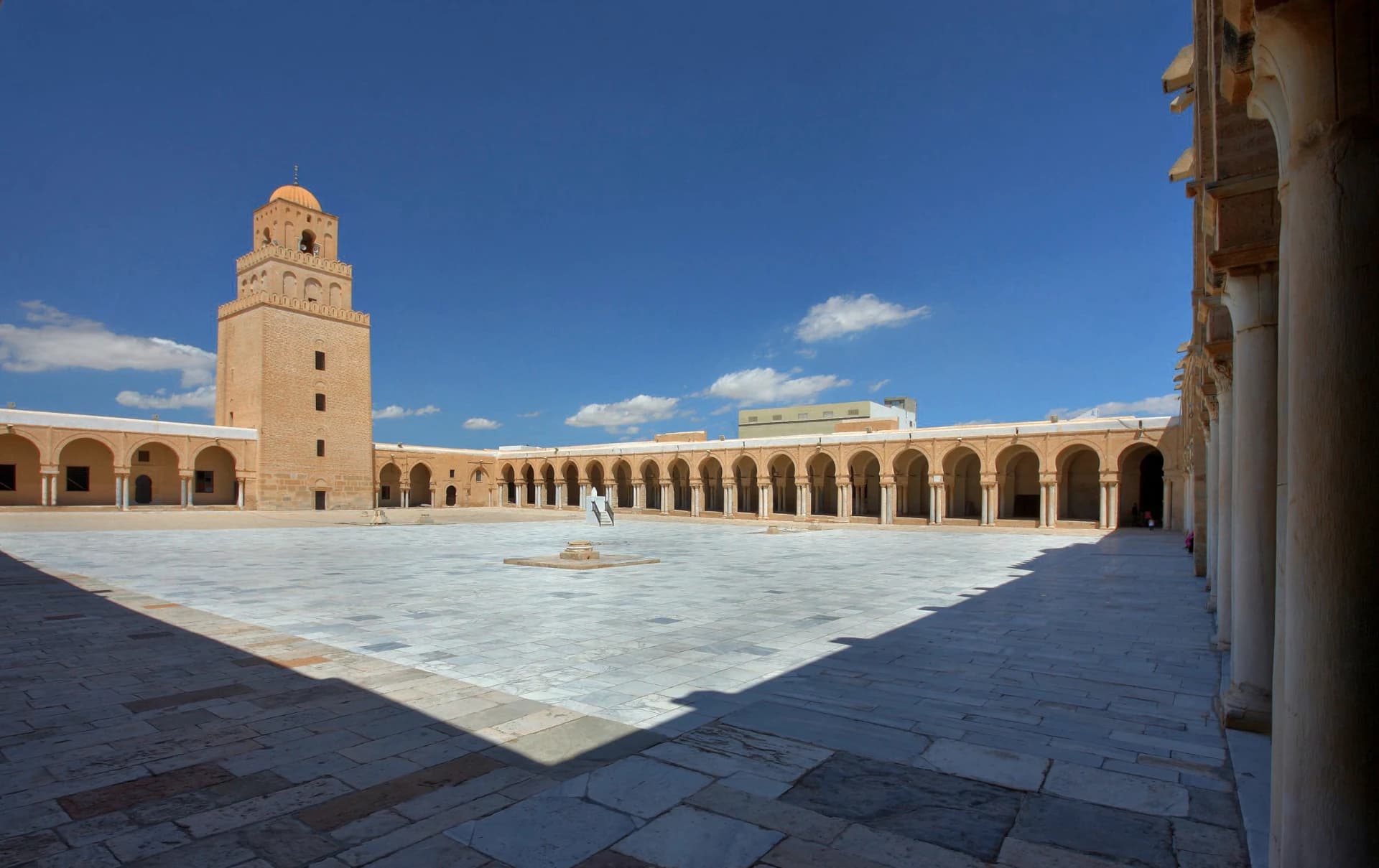
If you take away only one thing, let it be this: come for the history and the food — that is the true heart of a Tunisian trip. This is a country with seven UNESCO World Heritage sites, Roman cities like El Jem and Dougga, the ancient wonder of Carthage, and the holy city of Kairouan, all paired with some of the most underrated cooking in the Mediterranean. Elsewhere you might get the ruins or the cuisine; here you get both, at Tunisian prices and without the crowds that swamp better-known destinations. Build your trip around those two pillars — walk the ancient sites by day, eat generously in the evenings — and you will understand why Tunisia leaves such a lasting impression.
What Tunisian food should I try?
Come hungry — the food is half the reason to visit. Start with couscous, the national dish, slow-cooked and served countless ways; brik, a crisp deep-fried pastry usually wrapped around a runny egg; and lablabi, a hearty chickpea soup that locals swear by. On the coast, seek out the fresh grilled fish. Everywhere you will meet harissa, the fiery chilli paste that accompanies almost everything, and for something sweet, makroudh and honeyed pastries with a glass of mint tea topped with pine nuts. Tunisian cuisine blends Berber, Arab, Mediterranean and French influences into something genuinely its own — treat it as a highlight to plan around, not an afterthought.
What should I wear, and what etiquette should I respect?
Tunisia is relatively relaxed compared with some of its neighbours, but a little modesty is appreciated, especially in medinas, mosques and rural areas — covering your shoulders and knees is a good rule of thumb, while beach resorts and towns like Sidi Bou Saïd are far more casual. On etiquette: greet people warmly, ask before photographing someone, use your right hand for eating and passing things, and dress respectfully at religious sites. Accepting an offer of tea or coffee is a lovely part of the culture rather than an obligation. A few polite habits and a genuine smile will carry you a very long way here.
Can I drink alcohol, and is the tap water safe?
On alcohol: Tunisia is a moderate Muslim country where alcohol is legally available in licensed hotels, restaurants, bars and some supermarkets. It is simply more discreet than in Europe, so drink respectfully and not in public streets or near religious sites. Local wines are surprisingly good, and the fig-based spirit boukha is worth a try. On water: stick to bottled water, which is cheap and available everywhere, for both drinking and brushing your teeth — especially outside the big hotels. These two small habits will keep your trip smooth and your stomach happy.
Planning your trip
What are the must-see places for a first trip to Tunisia?
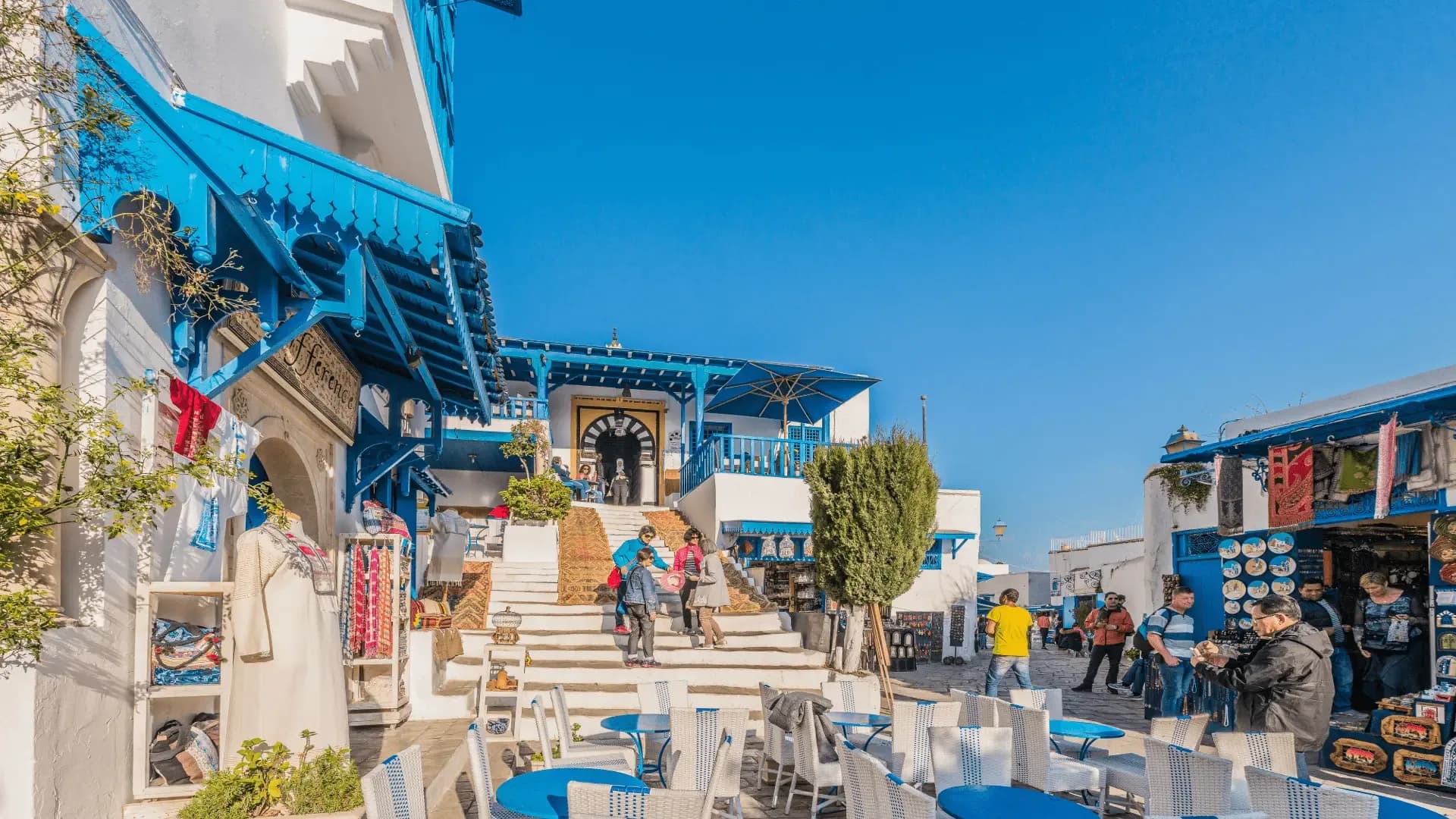
For a first visit, aim to combine the three things Tunisia does best: history, coast and desert. Do not miss the towering Roman amphitheatre of El Jem, the ruins of ancient Carthage, and the iconic blue-and-white cliffside village of Sidi Bou Saïd. Add the holy city of Kairouan and the labyrinthine Tunis medina for culture, the island of Djerba for the coast, and a taste of the Sahara around Douz or Tozeur for the desert — plus the otherworldly Star Wars film locations at Matmata if you are a fan. A well-planned week can string several of these together, and our Tunisia Trip itineraries are built to link them into one smooth journey.
How many days do I need in Tunisia?
A week is the sweet spot for a first trip — enough to string together the classic highlights: Tunis and Carthage, Kairouan, the amphitheatre at El Jem, and a first taste of the desert, at a comfortable pace. If you have 10 to 14 days, you can go deeper: add the far south and a proper Sahara experience, the coastal towns and islands, and more of the Roman heritage sites, without ever feeling rushed. Even a long weekend can be rewarding if you focus on Tunis, Carthage and Sidi Bou Saïd, but Tunisia rewards the traveller who gives it a little more time to unfold.
Is Tunisia better value than Morocco, Greece or Turkey?
For a first-time visitor weighing the options, Tunisia offers the same core ingredients as its bigger-name neighbours — Roman ruins, a beautiful Mediterranean coast, and Sahara desert — usually at noticeably lower prices and with far fewer crowds. You get El Jem instead of jostling at the most famous amphitheatres, a genuine desert without the tour-bus queues, and blue-and-white coastal charm to rival anywhere, all a short flight from Europe. It is one of the most under-the-radar, best-value destinations in the region: the same experiences, more affordably, and with the authentic, welcoming atmosphere that comes from not yet being overrun by mass tourism.
Is Tunisia family-friendly, and do I need vaccinations or insurance?
Tunisia is an easy and rewarding destination for families: short flights from Europe, warm and gentle seas, welcoming locals who genuinely love children, and a mix of beaches, ruins and desert excursions that keep older kids engaged. On health, no vaccinations are legally required for most travellers, though you should keep routine jabs up to date and check with your doctor before you go. Travel insurance that covers medical care is strongly recommended, as it is for any international trip. With those basics handled and bottled water for the little ones, a family trip to Tunisia is as smooth as it is memorable.