
Where Tunisia turns green — pine and cork-oak mountains tumbling down to a jagged coral coast — Tabarka and Aïn Draham are the country's cool, forested northwest, a world away from the Sahara.
Tabarka is a laid-back coral-fishing and diving town on Tunisia's northwest coast, famous for its offshore rock spires Les Aiguilles (The Needles), a hilltop Genoese fort, excellent scuba diving and an international jazz festival. Just inland, Aïn Draham sits high in the Kroumirie mountains among cork-oak forests, with cool air, red-roofed houses and walking trails. Together they are the greenest, most un-Saharan corner of Tunisia — best from late spring to early autumn.
Where are Tabarka and Aïn Draham?
Both lie in the far northwest, in Jendouba governorate, close to the Algerian border and about 170 km (roughly 3 hours by road) west of Tunis. This is the Kroumirie (Khroumirie) region, where the Mediterranean meets Tunisia's only real mountain forests. Tabarka sits on the coast; Aïn Draham is some 25 km inland and around 800–1,000 m up in the hills — close enough to combine the two in a single trip. If you have been picturing Tunisia as all desert and beaches, this corner rewrites that image. For the bigger picture of when to travel, see our best time to visit Tunisia guide.
Tabarka: the coral coast
Tabarka has been linked to the sea and to coral for centuries — its famous red coral was prized across the Mediterranean, and the town still has a gentle, slightly faded seaside charm rather than big-resort polish. The waterfront, the marina and the long beaches are backed by wooded hills, and the pace is slow. It makes a relaxed base for a few days of swimming, seafood and short excursions.
What are Les Aiguilles (The Needles)?
The signature sight is Les Aiguilles — a row of sharp, needle-like rock spires rising straight out of the sea at the western edge of town, sculpted by wind and waves into one of Tunisia's most photographed natural landmarks. They are especially striking at sunset, and a shoreline path gets you close.
The Genoese fort
Crowning a rocky islet (now joined to the mainland) stands the Genoese fort, built in the 16th century when the Genoese Lomellini family controlled the coral trade here. The climb up is rewarded with sweeping views over the town, the marina and the Needles — a reminder of how fought-over this little coast once was.
Diving and the underwater world
Tabarka is Tunisia's best-known scuba diving destination. The rocky seabed drops into canyons, tunnels and caves, with good visibility, groupers and Mediterranean coral, and several dive centres run trips and courses. Even if you don't dive, the clear water and rocky coves make for excellent swimming and snorkelling.
The Tabarka Jazz Festival
Tabarka has a long musical reputation. Its international jazz festival, running since the 1970s, once made the town a summer hotspot, and music still animates it in the warm months alongside a coral festival. Summer evenings by the marina are the liveliest time to be here.
Aïn Draham: mountains and cork forests
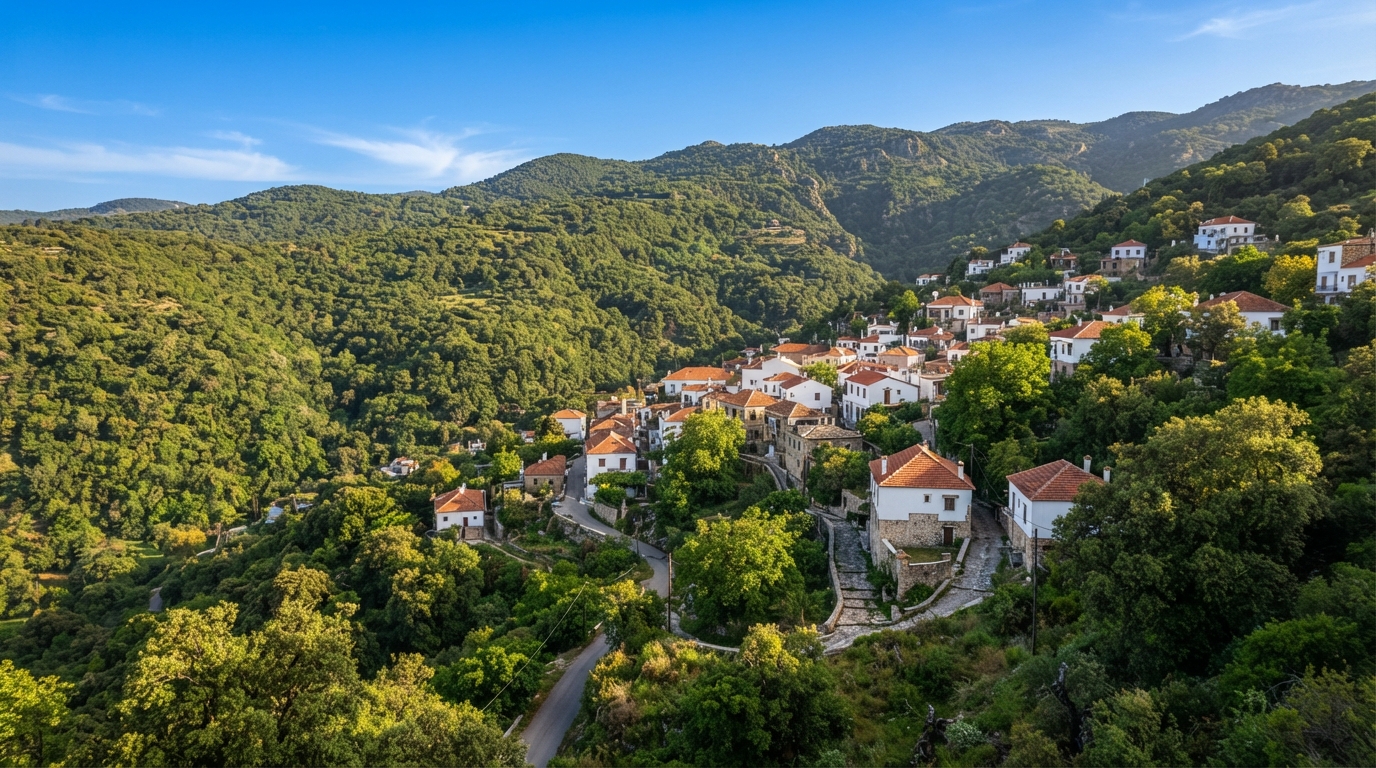
A winding road climbs from the coast into the Kroumirie mountains to Aïn Draham, a hill town of red-tiled roofs set among dense cork-oak forests. At altitude the air is noticeably cooler and fresher — a genuine escape from the summer heat — and in winter the hills can even see snow. The town grew as a colonial-era hill station and hunting retreat, and that slightly alpine feel survives today.
What is there to do in Aïn Draham?
This is Tunisia for walkers and nature lovers: forest trails through cork oak and pine, cool viewpoints over wooded ridges, and crisp mountain air. Nearby Hammam Bourguiba is a thermal spa resort tucked close to the Algerian border, long used for its hot springs. It's a place to slow down, breathe, and see a side of the country few visitors reach.
Roman sites nearby: Bulla Regia and Chemtou
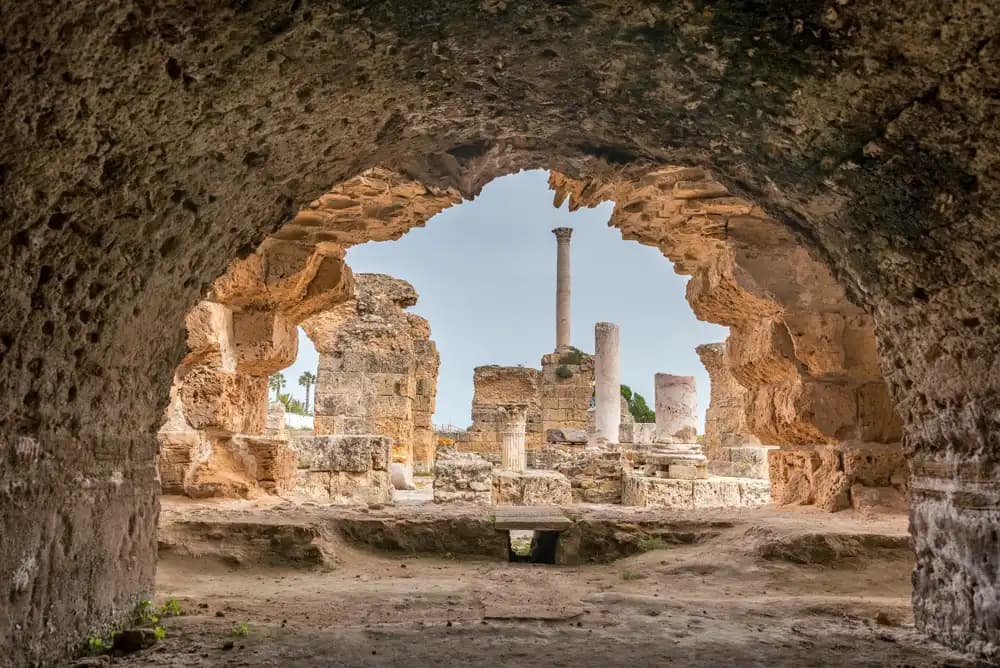
The northwest hides two remarkable Roman sites within easy reach. Bulla Regia, near Jendouba, is famous for its underground villas — wealthy Romans built their finest rooms below ground to escape the heat, and many mosaics survive in place. Chemtou (Simitthus) was the source of prized golden-pink marble, with ancient quarries and a site museum. Both pair naturally with a Tabarka–Aïn Draham trip and add to Tunisia's deep Roman story — see our guide to Tunisia's UNESCO and ancient sites.
When to go
The northwest is greenest and most beautiful in spring (April–June), when the hills are lush and the wildflowers are out, and lovely again in early autumn (September–October) with warm sea and fewer crowds. Summer is the liveliest season on the coast, with the warmest water and the festivals, though busier. Winter is cool, wet and green — atmospheric in the forests, occasionally snowy in Aïn Draham, but not beach weather. Because the mountains stay cooler, this region is a fine antidote to a Tunisian summer. Compare seasons across the country in our best time to visit guide.
How to get there and around
Tabarka is about a 3-hour drive from Tunis via Béja and Jendouba, on a scenic route that climbs through farmland and forest. There is a regional airport (Tabarka–Aïn Draham), though scheduled flights are limited. Louages (shared minibuses) and buses connect Tabarka with Tunis and the northwest, but the mountain roads to Aïn Draham and the scattered Roman sites are far easier with your own car or a private driver. For the full rundown of options, see our getting around Tunisia guide.
Where to stay
Tabarka has a cluster of coastal hotels and a marina area, while Aïn Draham offers mountain lodges and small hotels among the trees — some retaining that old hunting-lodge character. Many travellers split a trip between a night or two on the coast and a night in the hills. For how lodging works across the country, see our where to stay in Tunisia guide.
Combining it with the rest of Tunisia
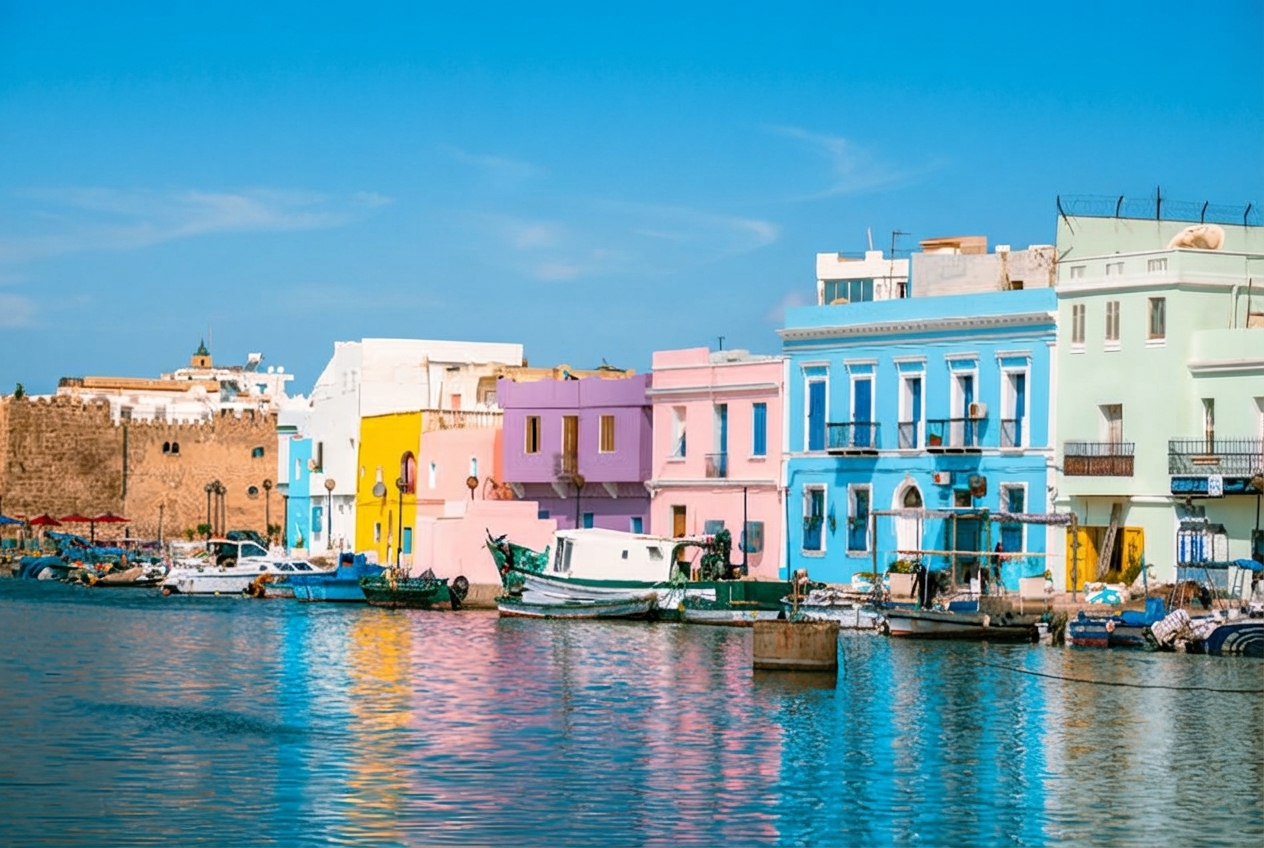
Tabarka and Aïn Draham sit naturally on a northern loop: pair them with Bizerte and Ichkeul to the east, the beaches and pottery towns of Nabeul and Cap Bon, and Tunis, Carthage and Dougga. It's the perfect green counterpoint to a later leg in the Sahara — proof that Tunisia packs mountains, forests, coral coast and desert into one compact country.
Frequently asked questions
What is Tabarka known for?
Coral, diving and its jazz festival — plus the offshore Needles rock spires and a 16th-century Genoese fort. It's a relaxed northwest coast town backed by wooded hills.
What are the Needles of Tabarka?
Les Aiguilles are dramatic needle-shaped rock spires rising from the sea at the edge of town, one of Tunisia's most photographed natural landmarks, especially at sunset.
Is Tabarka good for diving?
Yes — it's Tunisia's top scuba-diving spot, with rocky canyons, caves, good visibility and Mediterranean coral. Several dive centres offer trips and courses.
What is Aïn Draham famous for?
Its cork-oak forests, cool mountain air and red-roofed houses high in the Kroumirie range. It's a walking and nature destination, and can even see snow in winter.
How far is Tabarka from Tunis?
About 170 km, roughly a 3-hour scenic drive via Béja and Jendouba. There is also a regional airport, though scheduled flights are limited.
Can you visit Roman sites near Tabarka?
Yes — Bulla Regia, famous for its underground villas and mosaics, and the marble quarries of Chemtou are both within easy reach near Jendouba.
When is the best time to visit the northwest?
Spring (April–June) for green hills and wildflowers, and early autumn for warm sea with fewer crowds. Summer is liveliest on the coast; winter is cool, green and occasionally snowy.
Is Tabarka worth visiting?
If you want a greener, quieter side of Tunisia — forests, coral coast and Roman ruins instead of desert — it's absolutely worth it, especially combined with a northern loop.
Plan your northwest escape
Tabarka and Aïn Draham reward travellers who want Tunisia beyond the postcard — cool forests, a wild coral coast and Roman treasures with hardly a crowd in sight. Atlantis Voyages, the Tunisia-based team behind Tunisia Trip, can weave them into a tailor-made itinerary with a private driver-guide. Start planning your trip or browse our Tunisia tours.