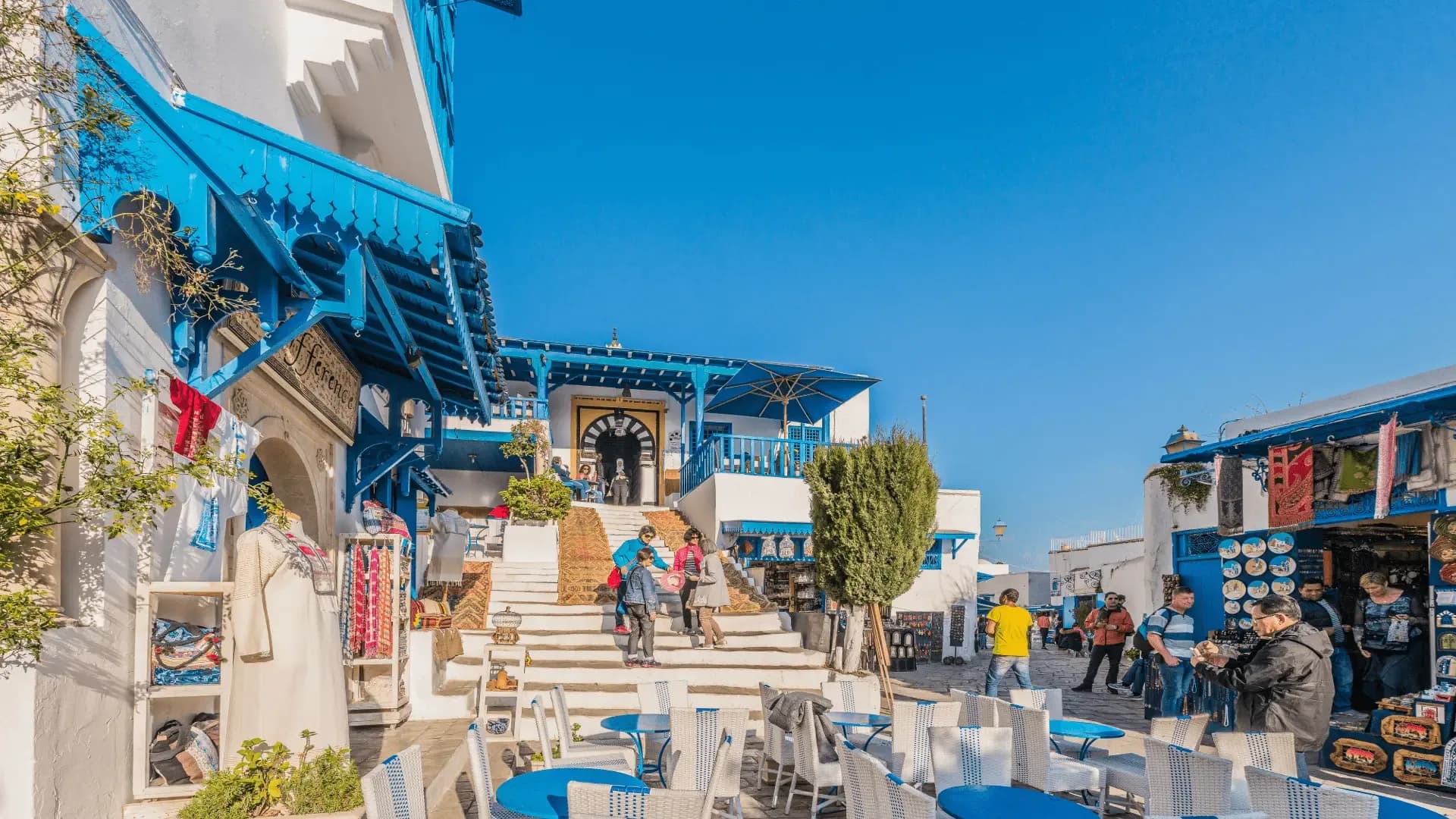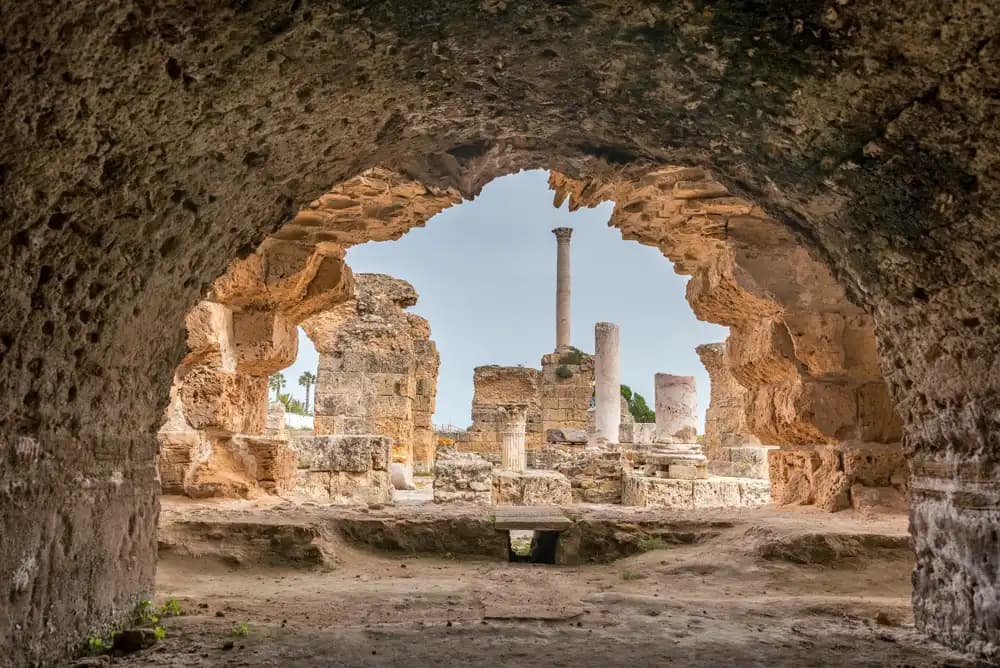


Painted pottery drying in the sun, Punic ruins facing the sea, orange groves scenting the spring air, thermal springs steaming into the Mediterranean — Cap Bon is the green, laid-back peninsula just an hour from Tunis, and Nabeul is its warm-hearted capital.
Nabeul and the Cap Bon peninsula are Tunisia's garden and craft heartland. Nabeul is famous for its ceramics, its big Friday market and its orange-blossom distilleries; the wider Cap Bon adds beaches, the Punic city of Kerkouane, the fort and muscat vineyards of Kelibia, the sea caves and falconry of El Haouaria, and the thermal springs of Korbous. It pairs beautifully with nearby Hammamet. This guide covers what to see, when to go, and how to build it into a trip.
Where is Cap Bon, and why go?
Cap Bon is the fertile peninsula that juts northeast from Tunisia toward Sicily, enclosing the Gulf of Tunis. It's one of the country's greenest, most agricultural regions — citrus groves, vineyards, strawberry fields and market gardens — with a string of beaches along both coasts. It sits roughly an hour's drive from Tunis and Carthage, which makes it an easy and rewarding extension to a northern-Tunisia trip. Nabeul, the main town, is the ceramic capital of the country and a relaxed, authentic base far from the big resorts.
Nabeul: pottery, markets and orange blossom
Nabeul (نابل) has been a centre of craft since antiquity, when it was the Roman town of Neapolis. Today it's best known for three things:
- Ceramics and pottery: workshops across town turn out hand-painted tiles, bowls and jars in blues, greens and yellows. You can watch potters at the wheel and buy directly — Nabeul pottery is some of the best value in Tunisia.
- The Friday market (souk): one of the largest weekly markets in the country, spilling across the centre with pottery, straw and wicker work, spices, produce, clothes and the famous local olives and harissa.
- Orange blossom and neroli: in spring (around April), Cap Bon's citrus orchards bloom and Nabeul's distilleries turn the flowers into orange-flower water (used in pastries) and neroli essence for perfume — a centuries-old local industry.
Nabeul also has a small archaeological museum, Roman mosaics, a long sandy beach and a calm, everyday feel that many travellers prefer to the resort strips.
The Cap Bon coast: Kelibia, Kerkouane and El Haouaria
Drive up the eastern coast of the peninsula and you string together some of Tunisia's most atmospheric sights:
- Kelibia: a fishing port crowned by a great Byzantine-era fortress with sweeping sea views. Below it lie some of the finest white-sand beaches in the country, and the region is known for its crisp Muscat de Kelibia white wine.
- Kerkouane: a UNESCO World Heritage Site and the best-preserved Punic (Carthaginian) town anywhere — never rebuilt by the Romans, so you walk streets, houses and even pink-plastered bathtubs laid out as the Phoenicians left them, right by the sea.
- El Haouaria: at the very tip of the peninsula, with ancient Roman quarry caves (the Ghar el Kebir) cut into the cliffs, dramatic sea views toward Sicily, and a centuries-old spring falconry tradition celebrated each June (see our festivals and events guide).
Korbous, Takrouna and the western shore
The western side of Cap Bon, facing the Gulf of Tunis, has its own character:
- Korbous: a thermal spa village wedged between cliffs and the sea, where hot mineral springs have been used since Roman times — in places the hot water runs straight into the Mediterranean.
- Soliman and Takrouna: villages with Andalusian heritage (from Muslims expelled from Spain), with distinctive architecture and quiet charm.
- Beaches and coves: the whole western shore is dotted with small beaches, scenic drives and viewpoints over the gulf back toward Tunis and Carthage.
Food, wine and local flavours
Cap Bon is a feast for the table. It's a major producer of citrus, strawberries, tomatoes, peppers (the base of Tunisia's beloved harissa) and grapes. Expect ultra-fresh seafood along the coast, Muscat wine around Kelibia, olives and olive oil, and the orange-blossom water that perfumes local pastries. It's one of the best regions in the country to eat simply and well — our food and cuisine guide has more.
When to visit Cap Bon
Cap Bon is a year-round destination, but the sweet spots are:
- Spring (April–May): orange blossom in bloom, green landscapes, mild weather — arguably the loveliest time.
- Early summer (June): warm sea, the El Haouaria falconry festival, beaches not yet at peak crowds.
- Autumn (September–October): warm water, grape and citrus harvests, fewer visitors.
High summer (July–August) is hot and busy along the beaches; see our best time to visit Tunisia guide for the full picture.
How to visit — and where to stay
Cap Bon is best explored by car or with a driver, as the sights are spread around the peninsula. Many travellers base themselves in Hammamet (at the southern neck of Cap Bon) or in Nabeul, and make day trips up the coast to Kelibia, Kerkouane and El Haouaria. It also works as a one- or two-day extension from Tunis and Carthage. For accommodation options across the region, see where to stay in Tunisia.
Atlantis Voyages can build Nabeul and Cap Bon into a tailor-made Tunisia itinerary — pottery workshops, the Kerkouane ruins, Kelibia's beaches and the orange-blossom season — with a private driver and the rest of your route arranged around it. Browse our Tunisia tours or start planning your trip.
Frequently asked questions
Where is Cap Bon in Tunisia?
Cap Bon is the fertile peninsula in northeastern Tunisia that points toward Sicily and encloses the Gulf of Tunis. It lies about an hour's drive east of Tunis and Carthage, with Nabeul as its main town and Hammamet at its southern end.
What is Nabeul famous for?
Nabeul is Tunisia's ceramics capital, known for hand-painted pottery and tiles. It also has one of the country's biggest Friday markets and a long tradition of distilling orange-blossom water and neroli from Cap Bon's citrus orchards.
Is Nabeul worth visiting?
Yes — if you want craft, markets and an authentic, relaxed Tunisian town rather than a resort. It's excellent for pottery shopping, has a good beach, and makes a convenient base for exploring the whole Cap Bon peninsula.
What is Kerkouane?
Kerkouane is a UNESCO World Heritage Site on Cap Bon and the best-preserved Punic (Carthaginian) town in the world. Because the Romans never rebuilt it, you can see the original streets, houses and bathtubs of a Phoenician town right beside the sea.
What is there to do in Kelibia?
Kelibia has a dramatic Byzantine fortress with panoramic sea views, some of Tunisia's best white-sand beaches, a working fishing port, and the local Muscat de Kelibia white wine. It's one of the highlights of the Cap Bon coast.
What is El Haouaria known for?
El Haouaria, at the tip of Cap Bon, is known for its ancient Roman quarry caves cut into the cliffs, its views toward Sicily, and a centuries-old falconry tradition celebrated at a festival each June.
When is the orange-blossom season in Cap Bon?
Orange blossom typically blooms around April. This is when Nabeul's distilleries produce orange-flower water and neroli essence, and the whole region is fragrant with citrus — one of the loveliest times to visit.
How do I get to Cap Bon from Tunis?
Cap Bon is about an hour's drive east of Tunis. The easiest way to explore it is by car or with a private driver, since the main sights — Nabeul, Kelibia, Kerkouane, El Haouaria, Korbous — are spread around the peninsula.
Is Cap Bon good for beaches?
Yes — Cap Bon has beaches on both coasts, with some of the finest white sand around Kelibia and plenty of quieter coves on the western shore. Hammamet and Nabeul also have long sandy beaches.
What is Korbous?
Korbous is a thermal spa village on the western coast of Cap Bon, set between cliffs and the sea. Its hot mineral springs have been used since Roman times, and in places the hot water flows directly into the Mediterranean.
How many days do you need for Cap Bon?
One to two days is enough to see the highlights — Nabeul's pottery and market, Kerkouane, Kelibia and El Haouaria — especially with a driver. Add more time if you want to relax on the beaches or combine it with Hammamet.
Can I buy pottery directly from workshops in Nabeul?
Yes — many workshops let you watch potters at work and buy directly, often at better prices than tourist shops elsewhere. Nabeul ceramics are among the best-value souvenirs in Tunisia.
Is Cap Bon suitable for families?
Very much so — gentle beaches, pottery workshops, easy day trips and low-key towns make it relaxed and family-friendly, with less intensity than the big resort zones.
Does Cap Bon produce wine?
Yes — the region around Kelibia is known for its Muscat de Kelibia, a crisp dry white, and Cap Bon has a long viticulture tradition going back to antiquity.
Can I combine Cap Bon with Hammamet and Tunis?
Easily — Hammamet sits at the southern neck of Cap Bon, and Tunis and Carthage are about an hour away. Many itineraries combine all three, using Hammamet or Nabeul as a base for day trips up the peninsula.
What local food should I try in Cap Bon?
Try the fresh seafood along the coast, local olives and olive oil, harissa made from Cap Bon peppers, Muscat wine near Kelibia, and pastries flavoured with orange-blossom water. See our food and cuisine guide.
Is there a festival in Cap Bon?
Yes — El Haouaria holds a falconry festival each June, and the citrus-blossom season is celebrated across the region in spring. See our festivals and events guide for more.
Discover Tunisia's garden peninsula. Plan a tailor-made trip through Nabeul and Cap Bon with Atlantis Voyages, or browse our guided Tunisia tours.