
Access & essentials
| Region | North, Mediterranean climate |
|---|---|
| Map | View location on Google Maps |
Frequently asked questions
What is Tunis known for?
Tunis is Tunisia's capital and largest city, where Arab, French and Mediterranean cultures meet along the north coast. Its walled medina is a UNESCO World Heritage Site, while the elegant Ville Nouvelle, built in the French colonial era, centres on the cafe-lined Avenue Habib Bourguiba. The city is also the gateway to the ancient ruins of Carthage and the postcard village of Sidi Bou Said.
What are the must-see sights in Tunis?
Start in the medina, a maze of souks around the Zitouna (Great) Mosque, with historic palaces and madrasas tucked down its lanes. Don't miss the Bardo National Museum, home to one of the world's finest collections of Roman mosaics. In the Ville Nouvelle, stroll Avenue Habib Bourguiba and see the cathedral, then pair the city with trips to Carthage and Sidi Bou Said.
How do I get to Tunis?
Most visitors arrive at Tunis-Carthage International Airport, the country's main gateway, just a short drive from the centre. Tunis is also well connected by road and rail to the rest of Tunisia and makes a natural starting point for exploring the north. Taxis and private transfers are the easiest way to reach your hotel from the airport.
How do I visit Carthage and Sidi Bou Said from Tunis?
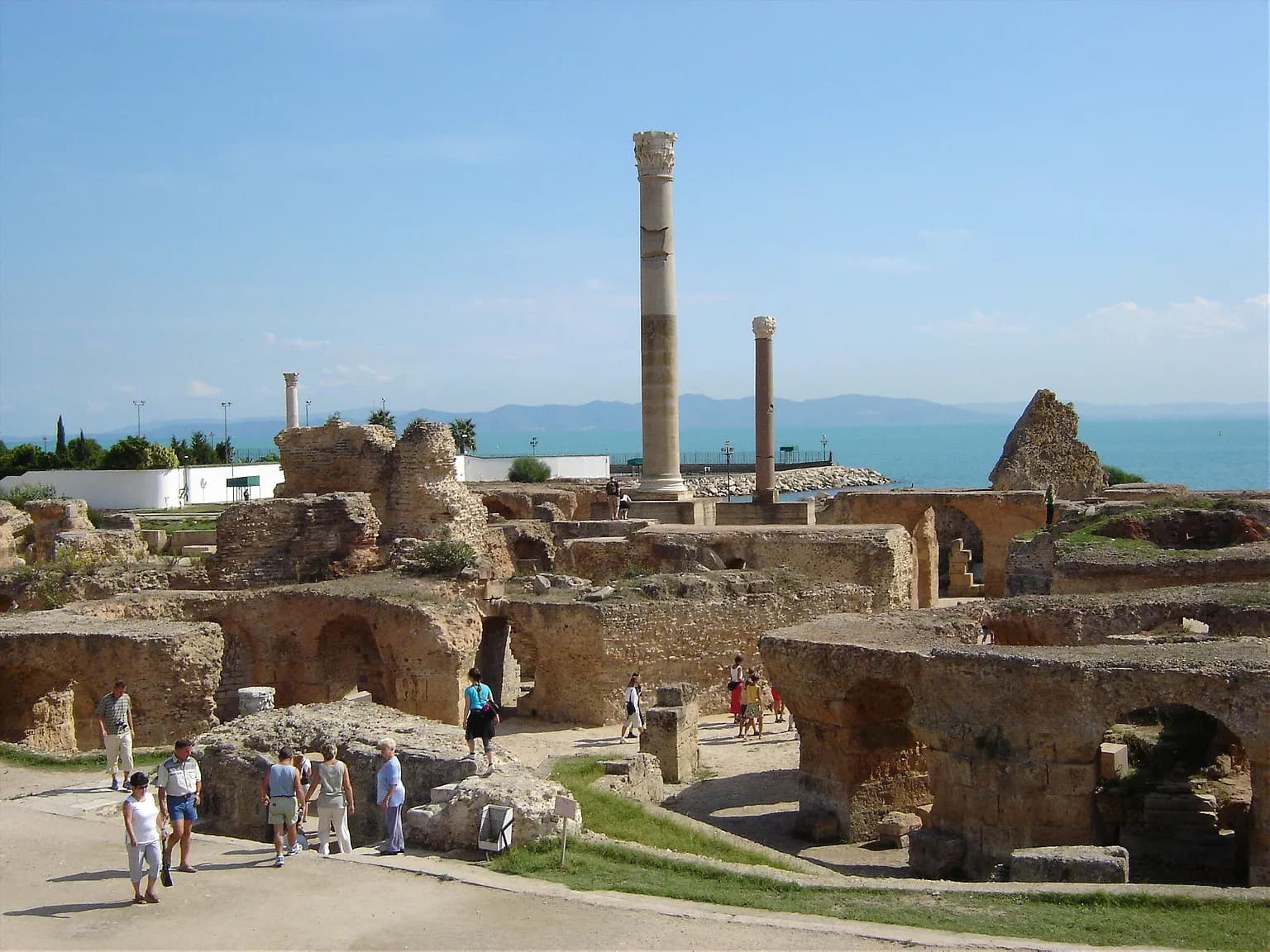
Both are easy half-day trips on the TGM light rail, which runs from Tunis Marine station out along the coast. Carthage spreads over several archaeological sites and is a UNESCO World Heritage Site, and a few more stops bring you to Sidi Bou Said, the blue-and-white village perched on a clifftop above the sea. Many travellers combine the two in a single outing, on their own or on a guided day trip.
How many days should I spend in Tunis?
One to two days is enough to enjoy the medina, the Bardo Museum and the Ville Nouvelle. Add a half to full day if you want to take your time at Carthage and Sidi Bou Said. Many travellers also use Tunis as a base for exploring northern Tunisia, which can extend the stay.
When is the best time to visit Tunis?
Spring (roughly March to May) and autumn (September to November) are the most pleasant, with warm, comfortable days. Summers are hot, though the coastal setting softens the heat, while winters are mild and quieter. Any season works, but spring and autumn are ideal for walking the medina and the ancient sites.
Is Tunis worth visiting, and is it good for families?
Yes. Few capitals pack so much variety into such a compact area, from ancient ruins to lively souks and seaside villages. It is family-friendly, with the easy TGM ride to Carthage and Sidi Bou Said a hit with children, plus wide avenues and cafes for relaxed breaks. Allowing a day or two lets families enjoy it at an easy pace.
What is the Bardo National Museum?
The Bardo is Tunisia's leading museum, set in a former palace on the edge of Tunis. It is famous above all for its Roman mosaics, considered one of the richest such collections anywhere in the world, alongside artefacts spanning Tunisia's long history. It is one of the city's highlights and pairs naturally with a visit to the medina.