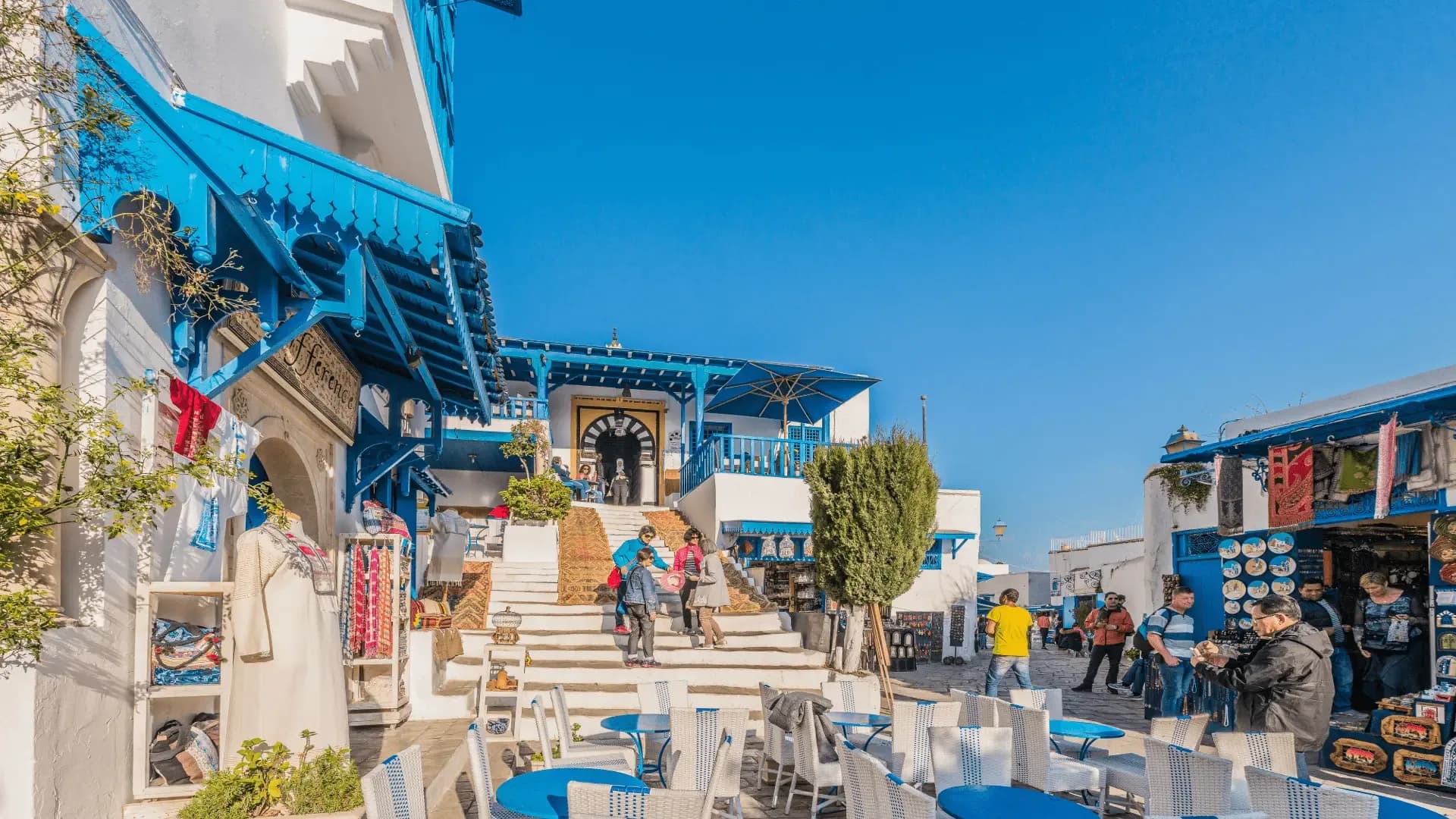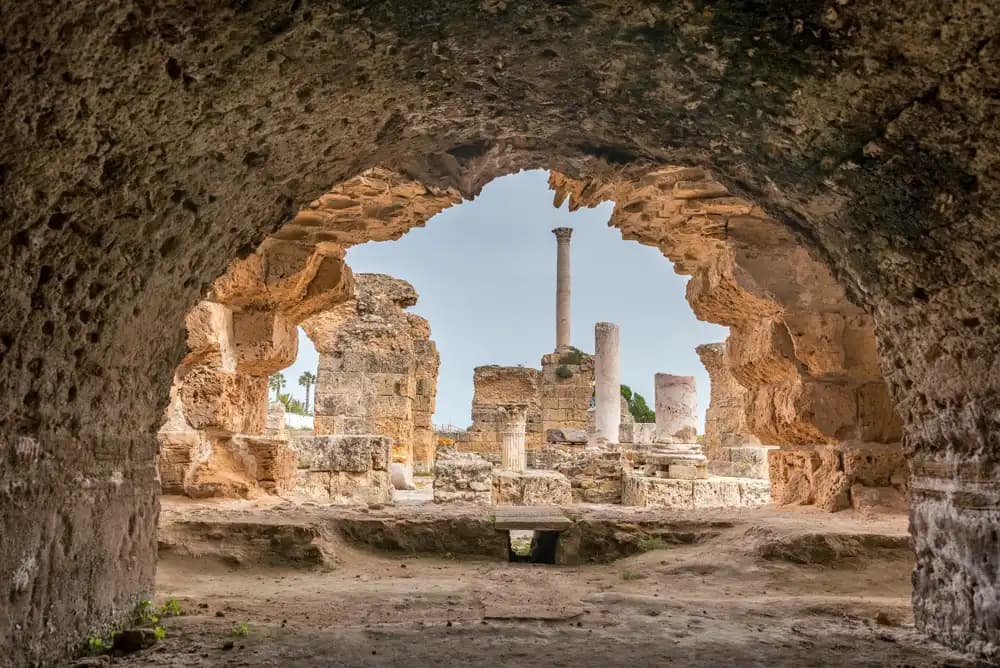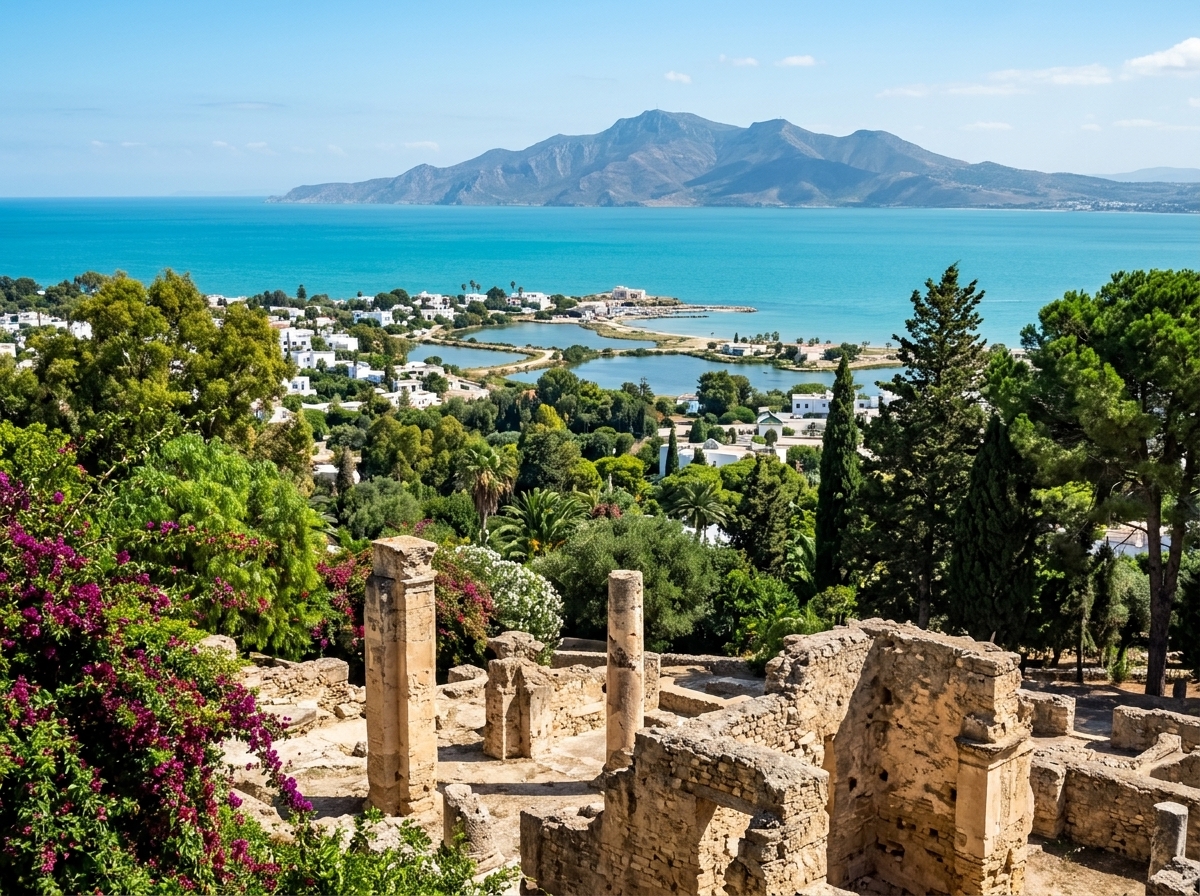

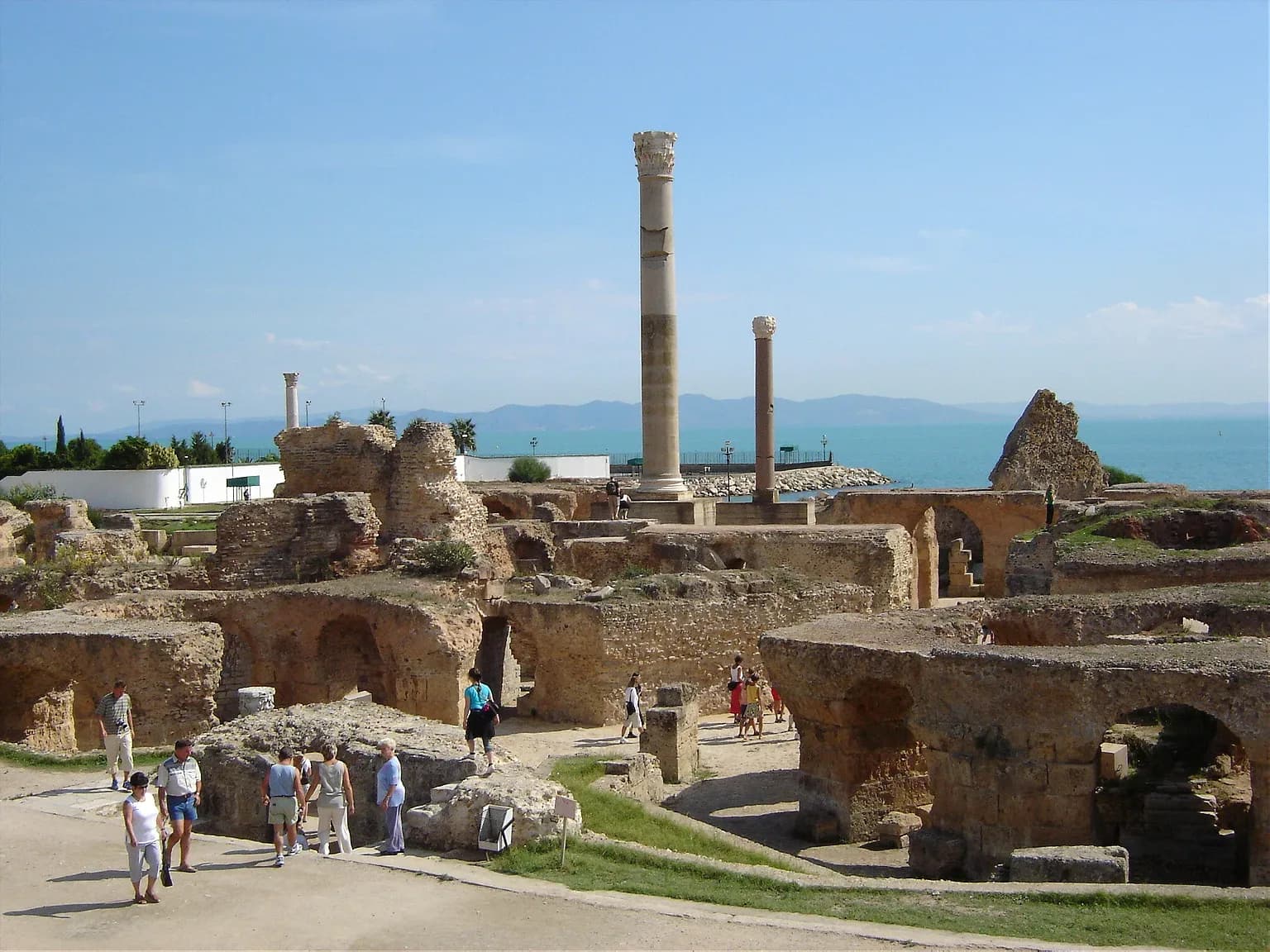
A fishing harbour where blue boats rock in front of ochre houses, a Spanish fort watching over the oldest port in Africa, flamingos on a lake behind the town, and long empty beaches reaching toward the sea — Bizerte is Tunisia's northernmost city, and one of its most relaxed.
Bizerte (Bizerta) is the northernmost city in Africa and one of the Mediterranean's oldest ports. Its picture-perfect Old Port and kasbah, the Andalusian old town, wide northern beaches, and the UNESCO-listed wetlands of Ichkeul National Park just inland make it a rewarding, uncrowded stop — easily paired with Tunis and Carthage an hour to the south. This guide covers what to see, when to go and how to fit it into a trip.
Where is Bizerte, and why go?
Bizerte sits on Tunisia's far north coast, about an hour's drive (65 km) north of Tunis. Founded by the Phoenicians as Hippo Diarrhytus, it has been a strategic Mediterranean port for nearly three thousand years — Punic, Roman, Arab, Ottoman, Spanish and French in turn. Today it's a working fishing city with a laid-back, authentic feel: fewer tourists than the resort coast, a beautiful old harbour, a historic medina, and some of the country's widest beaches on the doorstep. It's the gateway to the green, lake-and-mountain north of Tunisia.
The Old Port and the kasbah
The heart of Bizerte is its Old Port (Vieux Port) — a small, photogenic harbour lined with pastel houses and fishing boats, framed by two fortresses. It's the city's postcard image and a lovely place to sit over coffee or grilled fish.
- The Kasbah: a massive walled Ottoman-era fortress guarding the harbour mouth, with a labyrinth of tiny whitewashed lanes inside — a miniature medina you can wander in minutes.
- The Sidi El Hani fort (Fort of Spain): on the hill opposite, built in the 16th century, with panoramic views over the port, the medina and the sea.
- The medina and old town: narrow streets, a covered market, old mosques and the Andalusian quarter settled by Muslims expelled from Spain, which gives the town much of its character.
Beaches and the coast
Bizerte has some of the longest, least crowded beaches in Tunisia, on both sides of the city and along the capes:
- Rimel (Remel) beach: a vast stretch of sand backed by a pine forest just east of the city.
- The Corniche: Bizerte's seafront promenade, lined with cafés and hotels, with town beaches close to the centre.
- Cap Blanc and Cap Zebib: dramatic headlands north of the city — Cap Blanc is often cited as the northernmost point of the African continent.
- Raf Raf and Sidi Ali El Mekki: to the east, two of the most beautiful beaches in the north, with pale sand, clear water and the island of Pilau offshore.
Ichkeul National Park and the lakes
Just inland from Bizerte lies one of Tunisia's natural treasures. Ichkeul National Park — a UNESCO World Heritage Site and a wetland of international importance — centres on a shallow lake and a lone mountain, and is one of the most important stopovers in the Mediterranean for migratory birds. In winter, tens of thousands of ducks, geese, flamingos and other waterfowl gather here. Behind the town, Lake Bizerte (connected to the sea by a channel) and Lake Ichkeul give the area its distinctive landscape of water, reeds and low hills — a world away from the Sahara.
Around Bizerte: Utica, Raf Raf and the Andalusian villages
The region rewards a little exploring:
- Utica: one of the oldest Phoenician settlements in North Africa and later an important Roman city, with ruins and a small museum southeast of Bizerte.
- Ras Jebel, Raf Raf and Metline: fishing villages and beaches east of the city, with strong Andalusian heritage.
- Menzel Bourguiba and the lake shore: towns set around Lake Bizerte, in the green farming country of the north.
Food in Bizerte
As a fishing city, Bizerte is all about seafood — grilled fish, calamari, prawns and the catch of the day served simply by the Old Port, often with the fiery local harissa and fresh bread. It's one of the best places in the north for a relaxed seafood lunch by the water. For the bigger picture, see our food and cuisine guide.
When to visit Bizerte
- Spring (April–June): green countryside, mild weather and quiet beaches — arguably the best time.
- Summer (July–August): warm sea and lively beaches, busier but still less crowded than the resort coast.
- Autumn (September–October): warm water and fewer visitors.
- Winter: cooler and sometimes wet, but the best season for birdwatching at Ichkeul.
See our best time to visit Tunisia guide for the full picture.
How to visit — and where to stay
Bizerte is an easy hour's drive from Tunis, so many travellers visit on a day trip or as a short northern extension. To combine the Old Port, the beaches and Ichkeul comfortably, a car or private driver is ideal. It pairs naturally with Tunis, Carthage and Cap Bon in a northern loop. For accommodation across the region, see where to stay in Tunisia.
Atlantis Voyages can build Bizerte — the Old Port, the capes and beaches, Ichkeul and Utica — into a tailor-made Tunisia itinerary, with a private driver and the rest of your route arranged around it. Browse our Tunisia tours or start planning your trip.
Frequently asked questions
Where is Bizerte in Tunisia?
Bizerte is on Tunisia's far northern coast, about an hour's drive (65 km) north of Tunis. It's the northernmost city in Africa and one of the oldest Mediterranean ports.
Is Bizerte worth visiting?
Yes — if you want an authentic, relaxed port city away from the resorts. Its Old Port and kasbah are among the prettiest in Tunisia, the beaches are long and uncrowded, and Ichkeul National Park is nearby. It's an easy and rewarding day trip or extension from Tunis.
What is Bizerte famous for?
Bizerte is famous for its picturesque Old Port framed by two fortresses, its historic kasbah and Andalusian old town, its long northern beaches, and for being the northernmost city on the African continent.
How do I get to Bizerte from Tunis?
Bizerte is about 65 km north of Tunis, roughly an hour by car. The easiest way to explore it and the surrounding beaches and Ichkeul is by car or with a private driver; there are also trains and louages (shared taxis) from Tunis.
What is there to do in Bizerte?
Wander the Old Port and kasbah, climb to the Spanish fort for the view, relax on the beaches (Rimel, Raf Raf, Sidi Ali El Mekki), eat seafood by the harbour, and visit Ichkeul National Park and the Roman ruins of Utica nearby.
What is Ichkeul National Park?
Ichkeul is a UNESCO World Heritage Site just inland from Bizerte — a lake, wetland and lone mountain that form one of the most important stopovers in the Mediterranean for migratory birds. In winter it hosts tens of thousands of ducks, geese and flamingos.
Does Bizerte have good beaches?
Yes — some of the longest and least crowded in Tunisia. Rimel beach and the Corniche are close to the city, while Raf Raf and Sidi Ali El Mekki to the east are among the most beautiful beaches in the north.
Which is the northernmost point of Africa?
Cap Angela, near Cap Blanc just north of Bizerte, is the northernmost point of the African mainland — making the Bizerte area the top of the continent.
Can I visit Bizerte as a day trip from Tunis?
Yes — it's only about an hour each way, so the Old Port, kasbah and a beach are very doable in a day. To add Ichkeul or the eastern beaches comfortably, allow an overnight or a full day with a driver.
What food should I try in Bizerte?
Fresh seafood above all — grilled fish, calamari and prawns by the Old Port, with harissa and local bread. See our food and cuisine guide for more.
What is the kasbah of Bizerte?
The kasbah is a large walled Ottoman-era fortress guarding the harbour mouth, with a maze of whitewashed lanes inside that works like a small medina. It's one of the city's highlights.
Is Bizerte good for families?
Yes — gentle beaches, an easy-to-explore old port, nature at Ichkeul and a low-key atmosphere make it relaxed and family-friendly, with less intensity than the big resort zones.
What is the best time to visit Bizerte?
Spring (April–June) for green countryside and quiet beaches, summer for the sea, autumn for warm water with fewer people, and winter for birdwatching at Ichkeul. See our best time to visit Tunisia guide.
What are the Roman ruins near Bizerte?
Utica, southeast of Bizerte, is one of the oldest Phoenician settlements in North Africa and later an important Roman city, with ruins and a small museum well worth a visit.
How many days do you need in Bizerte?
Half a day covers the Old Port and kasbah; a full day or an overnight lets you add the beaches, Ichkeul and Utica. Many travellers include it as a one- or two-day northern extension from Tunis.
Can I combine Bizerte with Tunis and Cap Bon?
Easily — Bizerte, Tunis, Carthage and Cap Bon are all within about an hour of each other and make a natural northern loop. A tailor-made trip with a driver can link them in a day or two.
Discover the top of Tunisia. Plan a tailor-made trip through Bizerte and the north with Atlantis Voyages, or browse our guided Tunisia tours.