
Tunisia's capital is two cities in one — a thousand-year-old walled medina of souks and mosques, wrapped in an elegant French-era new town — and the perfect base for the country's greatest sights.
Tunis is the capital of Tunisia and the gateway to the country, home to the Medina of Tunis — a UNESCO World Heritage Site since 1979 with some 700 historic monuments, including the great Zitouna Mosque and a labyrinth of souks. Alongside it stands the French-colonial Ville Nouvelle with its grand avenue. Tunis is also the base for day trips to Carthage, the Bardo Museum and Sidi Bou Saïd. This guide covers what to see and how to visit.
What is the Medina of Tunis?
The heart of the capital is its medina — the old walled city founded in the 7th century, which grew into one of the great cities of the Islamic world. Inscribed by UNESCO in 1979, it preserves around 700 monuments — palaces, mosques, mausoleums, madrasas (Koranic schools) and fountains — testifying to the city's golden age between the 12th and 16th centuries. To wander its shaded, winding lanes is to step into a living medieval city: artisans hammering copper, perfume and spice stalls, grand carved doorways and the call to prayer echoing off whitewashed walls. It is one of Tunisia's ten UNESCO World Heritage Sites — see them all in our complete guide to UNESCO sites in Tunisia.
The Zitouna Mosque
At the medina's centre stands the Zitouna Mosque (the "Mosque of the Olive Tree"), the oldest and most important mosque in the capital, founded in the 8th century. Its vast prayer hall rests on a forest of columns reclaimed from Roman Carthage, and its courtyard and square minaret anchor the whole old city. For centuries it was also a renowned centre of Islamic learning — effectively one of the oldest universities in the world. Non-Muslim visitors can usually enter the courtyard to admire the architecture, though not the prayer hall.
The souks of the medina
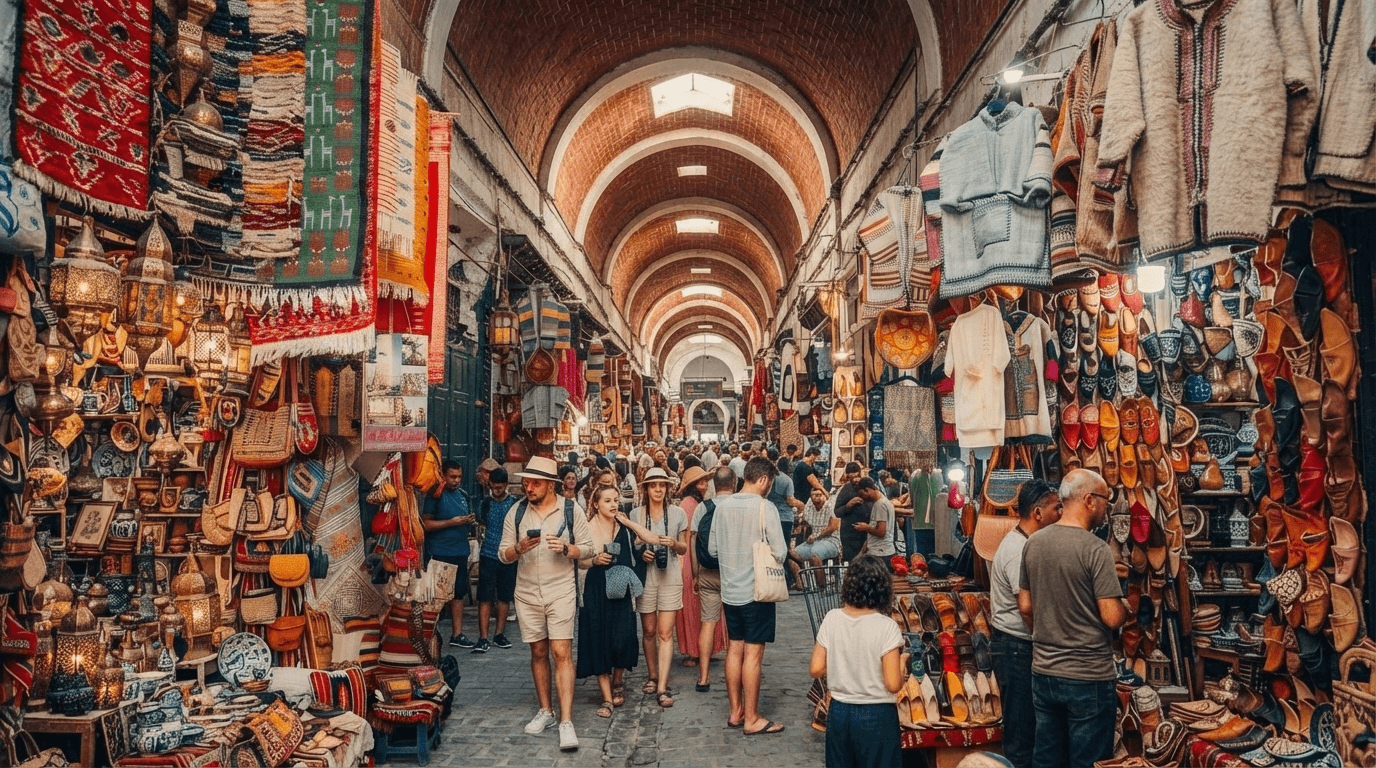
Radiating out from the Zitouna are the souks, each historically devoted to a trade:
- Souk El Attarine — the perfumers' market, fragrant with essences and oils.
- Souk des Chéchias — where craftsmen still make the traditional red felt chéchia hats.
- Souk El Berka — the former jewellers' quarter.
- Souk des Étoffes — fabrics and textiles in every colour.
Bargaining is part of the experience — stay friendly and patient. Climb to one of the rooftop terraces (several carpet shops offer the view) for a classic panorama over the medina's roofs to the Zitouna's minaret.
Palaces, madrasas and hidden museums
Beyond the souks, the medina hides remarkable interiors. The Dar Ben Abdallah, a sumptuous 18th-century palace, houses a museum of traditional Tunis life; the Tourbet el Bey is the grand mausoleum of the Husaynid rulers; and historic madrasas and tourbas reveal the exquisite tilework, carved stucco and marble of Tunisois craftsmanship. These quiet courtyards, tucked behind unassuming doors, are among the medina's greatest pleasures.
Bab el Bhar and the Ville Nouvelle
The medina meets the modern city at Bab el Bhar (the "Sea Gate," also called the Porte de France), a monumental arch marking the threshold between old and new. Beyond it stretches the Ville Nouvelle, the elegant new town laid out under the French protectorate, centred on the tree-lined Avenue Habib Bourguiba — Tunis's Champs-Élysées, lined with cafés, theatres and the white Cathedral of St Vincent de Paul. The contrast between the two worlds, a few steps apart, is one of the things that makes Tunis so distinctive.
A short history of Tunis
Tunis began in the shadow of its mighty neighbour. The town of Tunes existed beside Carthage in Punic times, but it stayed a secondary settlement through the Roman centuries. Its rise came after the Arab conquest of the 7th century, when nearby Carthage was abandoned and Tunis inherited its role. Under successive Muslim dynasties — and especially the Hafsids (13th–16th centuries) — Tunis became a flourishing capital, a centre of trade, scholarship and craft whose medina reached its golden age. Ottoman rule followed, then the French protectorate from 1881, which added the grid-planned Ville Nouvelle beside the old city. Since independence in 1956, Tunis has been the capital of the Tunisian Republic — the country's political, economic and cultural heart.
Eating and café culture in Tunis
Tunis is a wonderful place to eat. In the medina, seek out street-food classics — brik (a crisp fried pastry with egg), fricassé (a little stuffed roll) and lablabi (a hearty chickpea soup) — for a few dinars. Historic medina cafés serve sweet mint tea topped with pine nuts beneath vaulted ceilings, while the Ville Nouvelle offers everything from old French-style brasseries to modern restaurants. Don't miss a pastry and a strong Tunisian coffee at a terrace café. For the full picture, see our Tunisian food guide.
Tunis as a base: the best day trips
Tunis is the ideal base for some of Tunisia's finest sights, all within easy reach:
- The Bardo Museum — one of the world's great collections of Roman mosaics, just west of the centre.
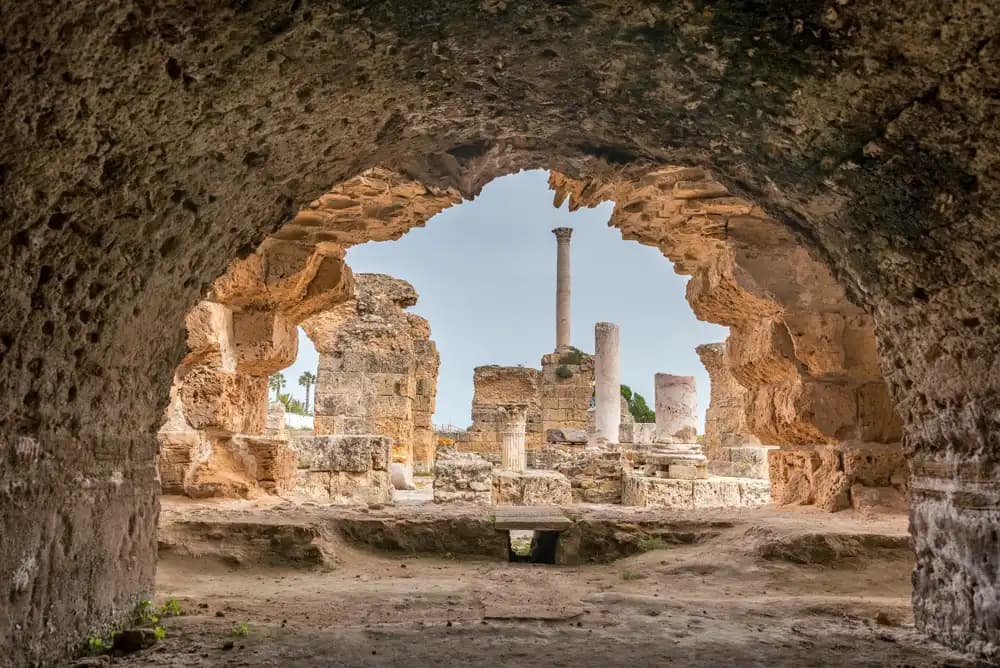
- Carthage — the ruins of the legendary Punic and Roman city, on the coast 20 minutes away; see our complete guide to Carthage.
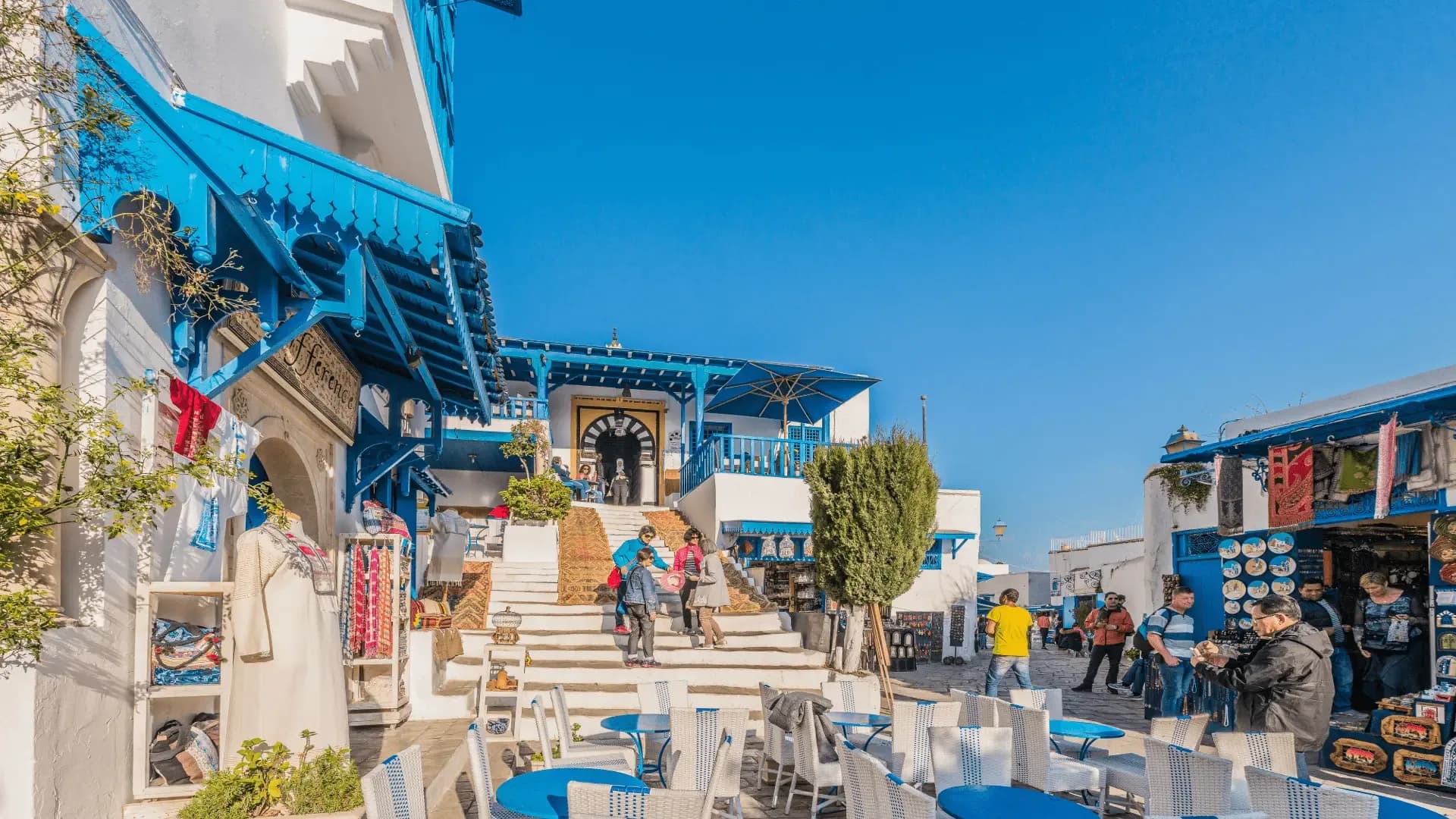
- Sidi Bou Saïd — the famous blue-and-white clifftop village overlooking the sea.
The light-rail line (TGM) links central Tunis directly to Carthage and Sidi Bou Saïd, making a classic day out effortless.
Visiting Tunis
- Getting there: Tunis–Carthage International Airport is the country's main gateway, just a few kilometres from the centre, with flights from across Europe and beyond.
- Getting around: the medina is explored on foot; taxis are cheap and plentiful, and the métro léger and TGM light-rail serve the city and coast.
- When to go: spring and autumn are ideal; summer is hot but the coast tempers it. See our best time to visit Tunisia guide.
- How long: give the medina at least half a day, and two to three days to combine the city with Carthage, the Bardo and Sidi Bou Saïd.
- Tips: dress modestly in the medina and near mosques, keep valuables secure against pickpockets in crowded souks, and consider a guide to unlock the old city's history.
Atlantis Voyages can build a tailor-made trip based in Tunis, linking the medina with Carthage, the Bardo and the coast — browse our Tunisia tours or start planning your trip.
Frequently asked questions
What is Tunis famous for?
For its UNESCO-listed medina — a thousand-year-old walled city of souks, mosques and palaces — alongside a French-era new town, and as the gateway to Carthage, the Bardo and Sidi Bou Saïd.
Is the Medina of Tunis a UNESCO World Heritage Site?
Yes — it was inscribed in 1979 and preserves around 700 historic monuments from the city's medieval golden age.
What is the Zitouna Mosque?
The great mosque at the heart of the Tunis medina, founded in the 8th century, built on columns from Roman Carthage, and historically one of the oldest centres of learning in the Islamic world.
Can you go inside the Zitouna Mosque?
Non-Muslim visitors can usually enter the courtyard to see the architecture and minaret, though the prayer hall is reserved for worshippers.
What can you buy in the Tunis souks?
Perfumes, spices, the traditional red chéchia hats, jewellery, fabrics, leather, ceramics and copperware — all with a bit of friendly bargaining.
What is Bab el Bhar?
The monumental "Sea Gate" (also called Porte de France) that marks the boundary between the old medina and the modern Ville Nouvelle.
What is there to see in the Ville Nouvelle?
The grand Avenue Habib Bourguiba with its cafés and theatres, the Cathedral of St Vincent de Paul, and the elegant French-colonial architecture of the new town.
How many days do you need in Tunis?
At least half a day for the medina; two to three days to combine the city with Carthage, the Bardo Museum and Sidi Bou Saïd.
Is Tunis a good base for day trips?
Excellent — Carthage, Sidi Bou Saïd and the Bardo are all within easy reach, with the TGM light-rail linking the centre to the coastal sites.
How do you get from Tunis to Carthage?
The TGM light-rail runs from central Tunis directly to Carthage and Sidi Bou Saïd in around 20–30 minutes; taxis are also cheap and quick.
Is Tunis safe for tourists?
Yes, with normal city precautions — the main everyday risk is petty theft in crowded areas, so keep valuables secure in the souks.
When is the best time to visit Tunis?
Spring and autumn offer the most comfortable weather for exploring the medina on foot; summer is hot but moderated near the coast.
Is Tunis worth visiting?
Yes — its UNESCO medina, mosques and souks, the elegant new town, and unbeatable access to Carthage, the Bardo and Sidi Bou Saïd make it a highlight of any Tunisia trip.
What is the capital of Tunisia?
Tunis — the country's largest city and its political, economic and cultural centre, on the Mediterranean coast in the north.
How old is the Medina of Tunis?
The medina was founded in the 7th century and reached its golden age between the 12th and 16th centuries, especially under the Hafsid dynasty.
What food should I try in Tunis?
Street-food classics like brik, fricassé and lablabi, sweet mint tea with pine nuts in a medina café, and Tunisian pastries and coffee.
Is Tunis walkable?
The medina and the central Ville Nouvelle are very walkable; for the coastal sites, the cheap TGM light-rail and taxis do the rest.
Do I need a guide for the Tunis medina?
Not essential, but a guide helps you navigate the maze and brings the history of the mosques, palaces and souks to life.
What is there to do in Tunis at night?
Stroll Avenue Habib Bourguiba, dine in the Ville Nouvelle, catch a performance at the municipal theatre, or enjoy a café terrace — the new town is liveliest after dark.
How far is Tunis airport from the city centre?
Tunis–Carthage International Airport is only a few kilometres from the centre, about 15–20 minutes by taxi.
Can you do a day trip to Sidi Bou Saïd from Tunis?
Yes — the blue-and-white clifftop village is about 20–30 minutes away on the TGM light-rail, and pairs perfectly with the ruins of Carthage on the same outing.
Where should I stay in Tunis?
Options range from characterful restored guesthouses inside the medina to modern hotels in the Ville Nouvelle and along the coast toward Carthage and Gammarth; see our where to stay in Tunisia guide.
Discover Tunisia's capital. Plan a tailor-made Tunisia trip with Atlantis Voyages, or explore our guided Tunisia tours.