
One of the oldest fortresses in the Islamic world, a golden-domed mausoleum, a yacht-filled marina and easy beaches by the airport — Monastir is a relaxed, photogenic base on Tunisia's Sahel coast.
Monastir is a coastal city on Tunisia's Sahel, famous for its Ribat — one of the oldest and most impressive Islamic fortresses in North Africa — and for the dazzling Bourguiba Mausoleum, resting place of Tunisia's first president, who was born here. With a marina, sandy beaches, a walkable medina and its own international airport, it makes an easy, good-value beach base, a short hop from Sousse, El Jem and Kairouan.
Why visit Monastir?
Monastir is smaller and calmer than neighbouring Sousse, and that is part of its charm. You can see its great monuments in a morning, then spend the afternoon on the beach or by the marina. Here is what makes it worth a stop:
- The Ribat — a magnificent 8th-century fortress-monastery, among the oldest in the Islamic world and a favourite film location.
- The Bourguiba Mausoleum — a gleaming monument with a golden dome and twin minarets, one of Tunisia's most striking modern buildings.
- Beaches and a marina — sandy shores at Skanès and the smart Cap Monastir marina, full of yachts and waterfront cafés.
- Easy access — Monastir has its own international airport, and the Sahel light-rail metro links it to Sousse and Mahdia.
- A great base — Sousse, El Jem and Kairouan are all close by for day trips.
The Ribat of Monastir
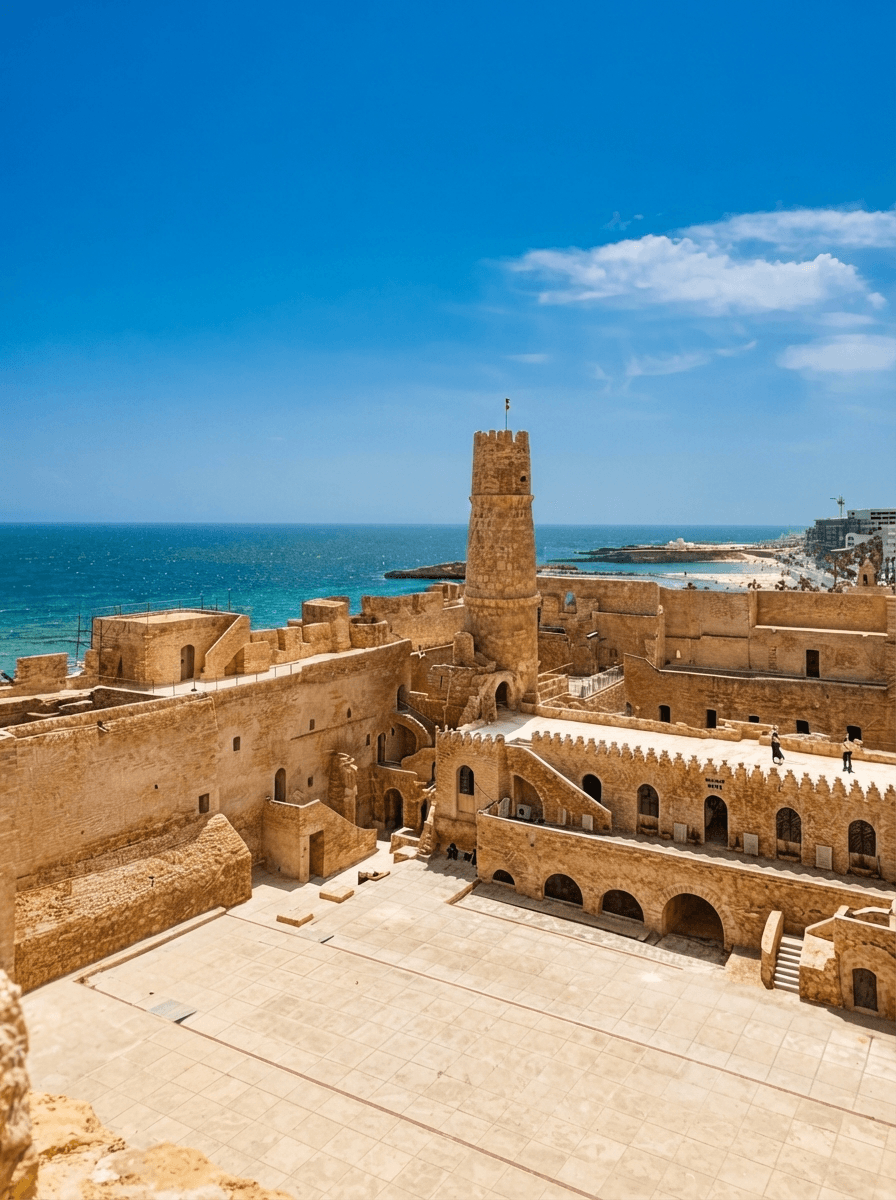
The Ribat of Monastir is the city's showpiece and one of the oldest Islamic monuments in North Africa, traditionally founded in 796 CE as a fortified monastery guarding the coast against seaborne raids. Expanded and remodelled over the centuries — the octagonal corner towers came later — it grew into a massive complex of ramparts, courtyards, prayer halls and cells. Climb the watchtower for a sweeping view over the medina, the cemetery and the blue Mediterranean beyond. Film buffs may recognise it: its timeless walls stood in for the Holy Land in productions such as Monty Python's Life of Brian and Jesus of Nazareth. Beside it, the old Great Mosque adds to the ensemble.
The Bourguiba Mausoleum
At the edge of the medina, beyond a grand cemetery, stands the Mausoleum of Habib Bourguiba — the most photographed sight in Monastir. Bourguiba, Tunisia's first president and a central figure in its independence, was born in Monastir and is buried here. The monument is unmissable: a brilliant golden central dome, two tall minarets of ochre stone, gates of wrought iron and gold, and interiors rich in marble and carved plaster. It is both a national shrine and an architectural set-piece, and entry is usually free.
The medina, marina and beaches
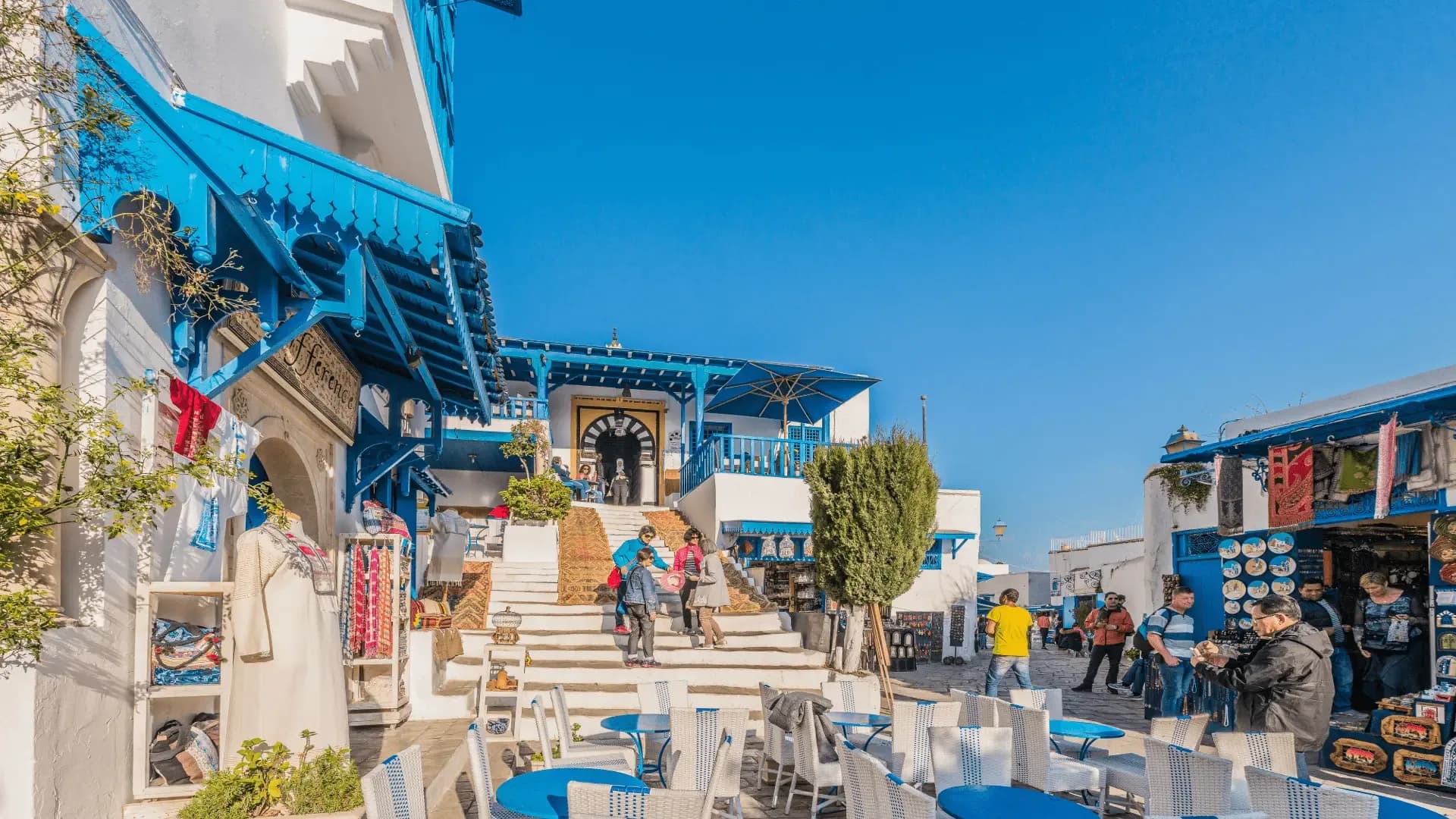
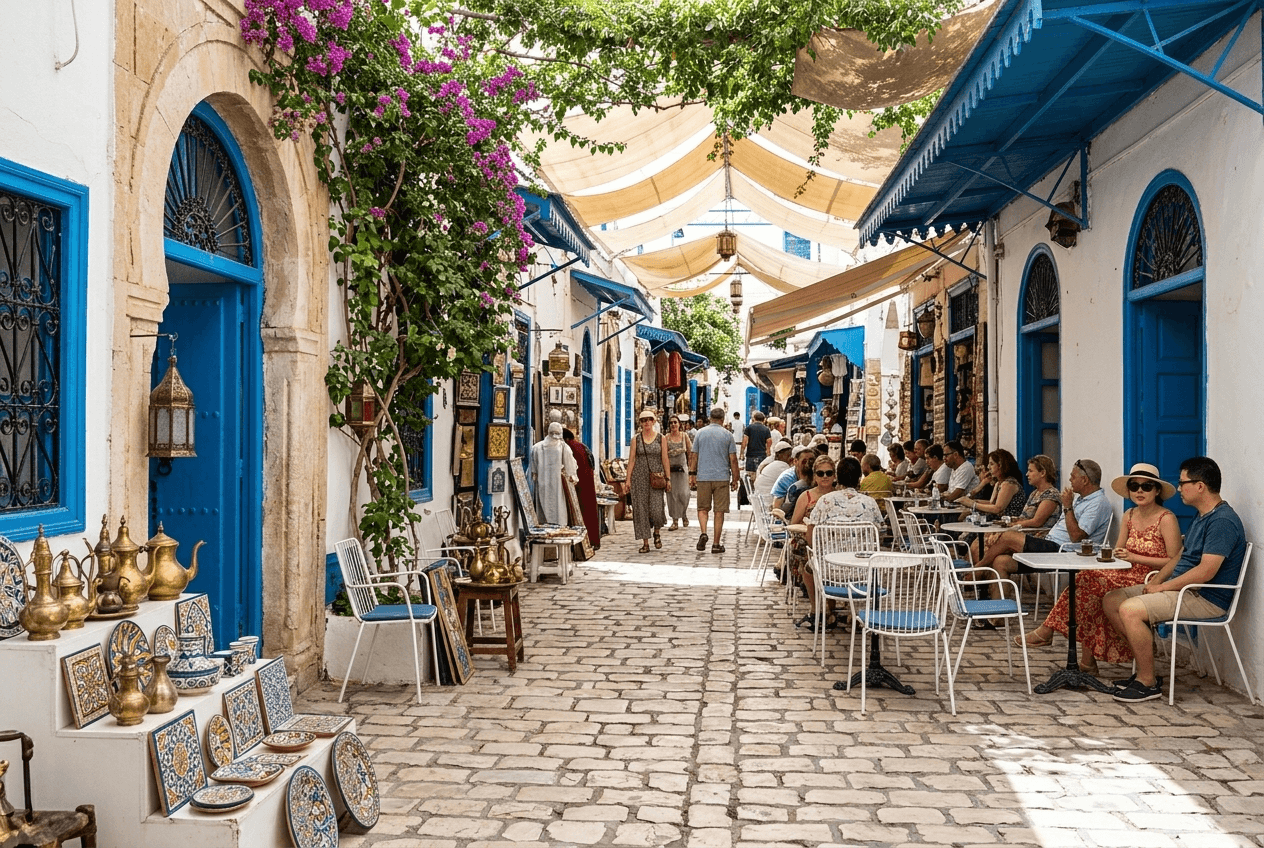
Monastir's medina is smaller and gentler than those of Sousse or Tunis — easy to wander, with a restored souk, cafés and craft shops, and far less hassle. Down on the water, the Cap Monastir marina is the modern heart of the town, lined with restaurants, bars and moored yachts; it's the place for an evening stroll and a seafood dinner. For beaches, the resort zone of Skanès, between Monastir and the airport, has long sandy stretches and a string of beach hotels. The town also has a relaxed, lived-in feel, with a university and a working fishing port alongside the tourism.
A short history of Monastir
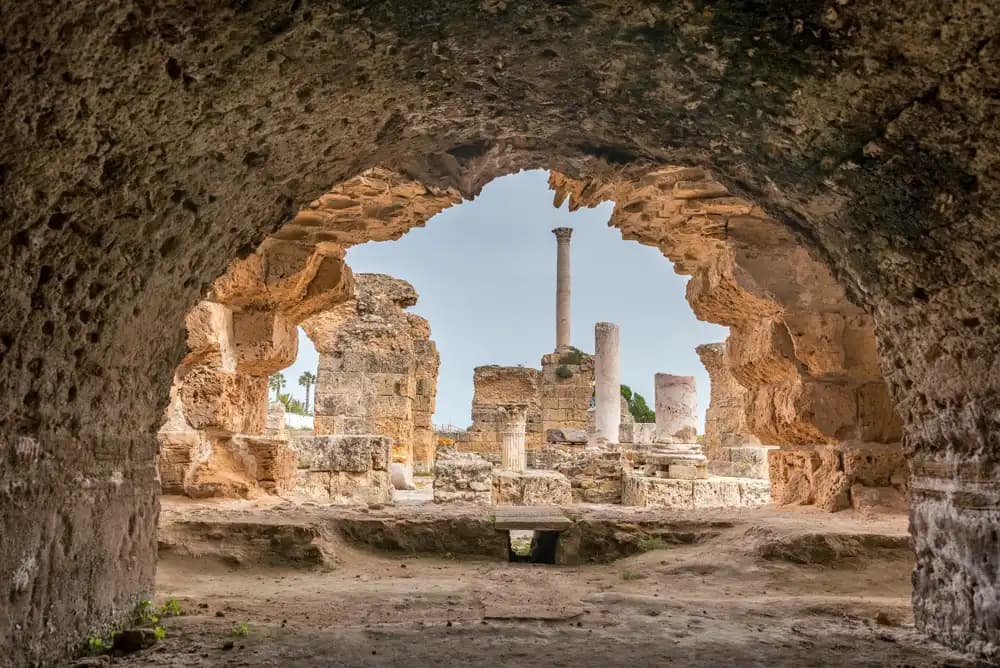
Monastir sits on the site of ancient Ruspina, a Phoenician and then Roman settlement — Julius Caesar used it as a base during his North African campaign. Its name comes from the Latin monasterium, a reminder of the fortified religious communities of late antiquity. The city's great age came with Islam: the ribat of 796 made it a key link in the Sahel's coastal defences, alongside Sousse. For centuries Monastir was a modest fishing and religious town — until the 20th century, when its most famous son, Habib Bourguiba, led Tunisia to independence and lavished development on his birthplace, giving it the mausoleum, the marina, the airport and the beach resorts that shape it today.
Day trips from Monastir
Monastir's position on the Sahel coast makes it a handy base:
- Sousse — the "Pearl of the Sahel", with its UNESCO medina and museum, just up the coast and reachable by the Sahel metro.
- El Jem — the colossal Roman amphitheatre, under an hour away.
- Kairouan — Islam's fourth holiest city and a UNESCO site, inland from the coast.
- Mahdia — a quieter former Fatimid capital on a scenic cape, good for calm beaches, a little further south.
- Thalasso & spa — Monastir and the Sousse area are a hub for thalassotherapy and spa breaks.
Eating and getting around
As a fishing port, Monastir is a fine place for seafood — grilled fish, calamari and prawns served simply, often with harissa and Tunisian salads. The marina and medina have the widest choice of restaurants and cafés, from casual grills to smarter waterfront tables, and mint tea on a terrace is the classic way to end the evening. Getting around is easy: the town is walkable, taxis are cheap, and the Sahel "metro" (a coastal light rail) connects Monastir with Sousse to the north and Mahdia to the south, making car-free day trips simple.
Views, cemetery and photo spots
Some of Monastir's best moments are about the setting rather than any single monument. Between the Ribat and the Bourguiba Mausoleum lies the Sidi el-Mezeri cemetery, one of the largest and most atmospheric in Tunisia, its white tombs running down toward the sea. From the Ribat's watchtower the whole scene opens up — ramparts, domes, cemetery and the Mediterranean in one frame, which is why photographers love early morning and late afternoon here. Along the seafront corniche and around Cap Monastir marina, the light on the water, the moored yachts and the palm-lined promenade make for an easy, pretty walk, especially at sunset. It's a compact, camera-friendly town where the sea is never far away.
Planning your visit to Monastir
- Best time to go: May–June and September–October for warm, uncrowded beach weather; July–August is hot and busy, winter is mild and quiet (see the best time to visit Tunisia).
- How long to stay: a day or two covers the ribat, mausoleum, medina and marina; beach-holiday visitors often stay a week at Skanès and day-trip from there.
- Getting there: Monastir has its own international airport (Habib Bourguiba, at Skanès); it is also about 20–30 minutes from Sousse and well connected by the Sahel metro.
- Where to stay: Skanès for a beach resort, or the town and marina for sightseeing and dining (see where to stay in Tunisia).
- Costs: Monastir is excellent value, from simple town hotels to beach resorts (see our Tunisia trip cost guide).
Atlantis Voyages can build Monastir into a tailor-made Tunisia itinerary — pairing its ribat and beaches with Sousse, El Jem and Kairouan across the Sahel. Browse our Tunisia tours or start planning your trip.
Frequently asked questions
Is Monastir worth visiting?
Yes — Monastir combines one of the oldest ribats in the Islamic world, the striking Bourguiba Mausoleum, a marina and sandy beaches in a relaxed, easy-to-reach town, making it a rewarding stop or beach base on the Sahel coast.
What is the Ribat of Monastir?
A fortified monastery traditionally founded in 796 CE to guard the coast, it is one of the oldest and best-preserved Islamic monuments in North Africa, with ramparts, a watchtower and courtyards you can explore.
What is there to do in Monastir?
Explore the Ribat and its watchtower, visit the Bourguiba Mausoleum, wander the medina and marina, relax on the Skanès beaches, and take day trips to Sousse, El Jem and Kairouan.
Who was Habib Bourguiba?
Tunisia's first president and a leader of its independence movement. He was born in Monastir and is buried in the golden-domed mausoleum that is now the town's most famous landmark.
Can you visit the Bourguiba Mausoleum?
Yes — the mausoleum, with its golden dome and twin minarets, is open to visitors and entry is usually free. It sits beyond the main cemetery at the edge of the medina.
Is Monastir good for a beach holiday?
Yes — the Skanès resort zone between the town and the airport has long sandy beaches and beach hotels, with the marina and historic sights close by.
What is the best time to visit Monastir?
Late spring (May–June) and early autumn (September–October) offer warm weather and calm beaches. Summer is hot and crowded; winter is mild and quiet.
Does Monastir have an airport?
Yes — Monastir Habib Bourguiba International Airport, at Skanès, serves the city and the wider Sousse–Sahel resort area, making it a common entry point for beach holidays.
How far is Monastir from Sousse?
Only about 20–30 minutes by road, and the two are linked by the Sahel light-rail metro, so Monastir and Sousse are easily combined.
What was Monastir called in ancient times?
Ruspina — a Phoenician and later Roman settlement whose ruins lie just west of the modern city; Julius Caesar used it as a base during his African campaign.
Monastir or Sousse — which is better?
Both are great Sahel bases. Sousse is larger, with a richer UNESCO medina and museum; Monastir is calmer, with the famous ribat, the mausoleum and a relaxed marina. Many trips include both.
Was Monastir used as a film location?
Yes — the Ribat's timeless walls have appeared in films set in the ancient Holy Land, including Monty Python's Life of Brian and the series Jesus of Nazareth.
How do you get around Monastir?
The town is walkable and taxis are cheap. The Sahel "metro", a coastal light rail, connects Monastir with Sousse to the north and Mahdia to the south for easy day trips.
Is Monastir safe for tourists?
Yes — Monastir is a well-established, relaxed tourist town and generally safe, with the usual sensible precautions in crowded or beach areas.
How many days do you need in Monastir?
A day or two is enough to see the ribat, mausoleum, medina and marina. Beach-holiday visitors often stay a week at Skanès, using Monastir as a base for Sahel day trips.
Is Monastir a cruise port?
Monastir is primarily a marina and fishing port rather than a major cruise terminal; most large ships calling in Tunisia use La Goulette near Tunis. Monastir's marina, Cap Monastir, is aimed at yachts and leisure boats.
What can you buy in Monastir's medina?
The restored medina souk sells leather, ceramics, carpets, spices and olive-wood crafts, with noticeably less hassle than the bigger-city bazaars — a relaxed place to browse and bargain.
Is Monastir good for families?
Very — gentle beaches at Skanès, resort hotels, an easy medina and marina, and short day trips make it a comfortable, good-value base for a family holiday.
Can you combine Monastir with a wider Tunisia trip?
Easily — with its own airport and the Sahel metro, Monastir pairs naturally with Sousse, El Jem, Kairouan and Mahdia, and connects on to Tunis, Carthage and the south.
Discover the ribat city of the Sahel. Let Atlantis Voyages plan a tailor-made Tunisia trip around Monastir and the coast, or browse our guided Tunisia tours.