
A UNESCO-listed medina with the best-preserved ribat in the Islamic world, long golden beaches, a lively marina resort and some of Tunisia's finest Roman mosaics — Sousse packs heritage and seaside into one easy base.
Sousse is Tunisia's third-largest city and the capital of the Sahel coast, famous for its UNESCO-listed medina, its 9th-century Ribat and Great Mosque, long sandy beaches, and the purpose-built marina resort of Port El Kantaoui. Founded by the Phoenicians as Hadrumetum nearly 3,000 years ago, it blends ancient history with a modern beach holiday — and makes an ideal base for day trips to El Jem, Kairouan and Monastir.
Why visit Sousse?
Few places in Tunisia combine so much in one spot. Nicknamed the "Pearl of the Sahel", Sousse lets you walk a 1,200-year-old fortified medina in the morning and lie on a Mediterranean beach in the afternoon. Here is what makes it special:
- A UNESCO World Heritage medina — one of the finest surviving examples of early Islamic coastal military architecture, with a ribat, a kasbah and a fort-like great mosque.
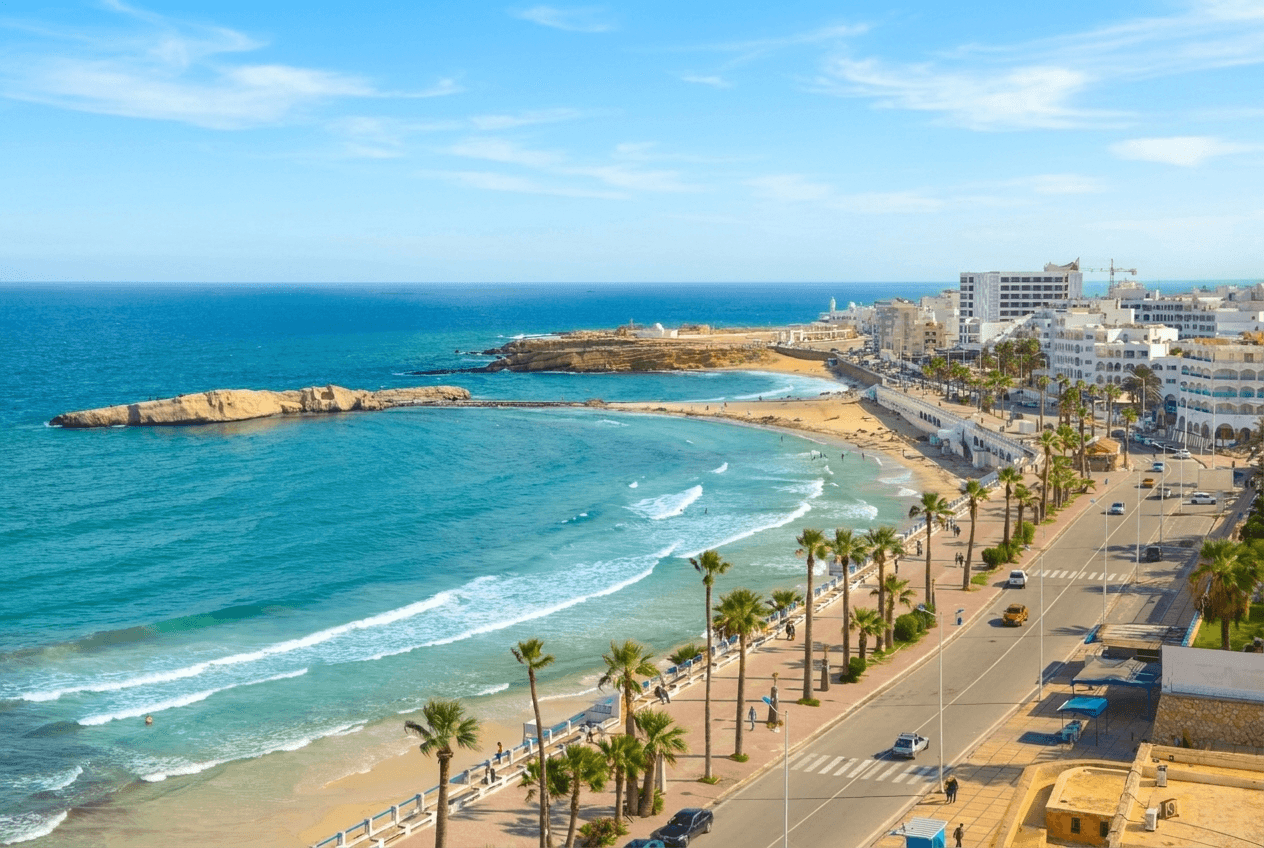
- Long sandy beaches right in town and along the coast toward Port El Kantaoui.
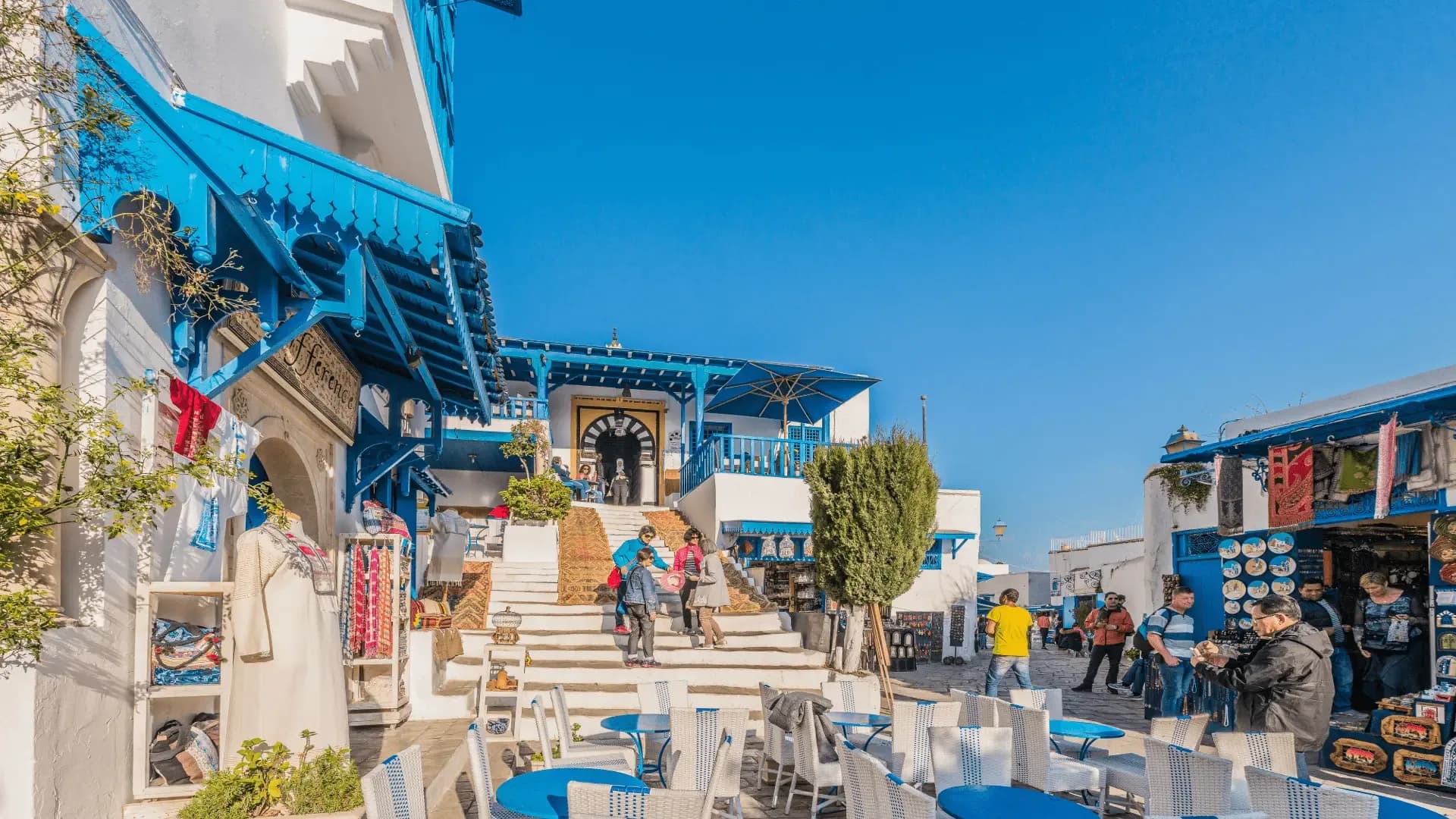
- Port El Kantaoui, a whitewashed marina resort with hotels, golf, restaurants and boat trips — a holiday hub in its own right.
- World-class Roman mosaics in the Sousse Archaeological Museum, second only to the Bardo in Tunis.
- A perfect base — El Jem, Kairouan, Monastir and Mahdia are all easy day trips.
The Medina of Sousse (UNESCO)
The walled medina is the heart of the city and a UNESCO World Heritage Site, listed as a rare, well-preserved example of a fortified Islamic coastal town from the Aghlabid era (9th century). Its ramparts still enclose a maze of whitewashed lanes, covered souks and quiet residential quarters. Three monuments stand out:
- The Ribat — a fortified monastery built in the 8th–9th centuries, often described as the best-preserved ribat of its kind. Climb its watchtower, the nador, for a superb view over the medina rooftops to the sea; from here monks once watched for enemy ships.
- The Great Mosque — an austere, fort-like 9th-century building with crenellated walls and a bare, dignified courtyard, built in the spirit of the great mosque of Kairouan.
- The Kasbah and its museum — the medina's highest point, crowned by a fortress that now houses the Sousse Archaeological Museum and its celebrated collection of Roman mosaics.
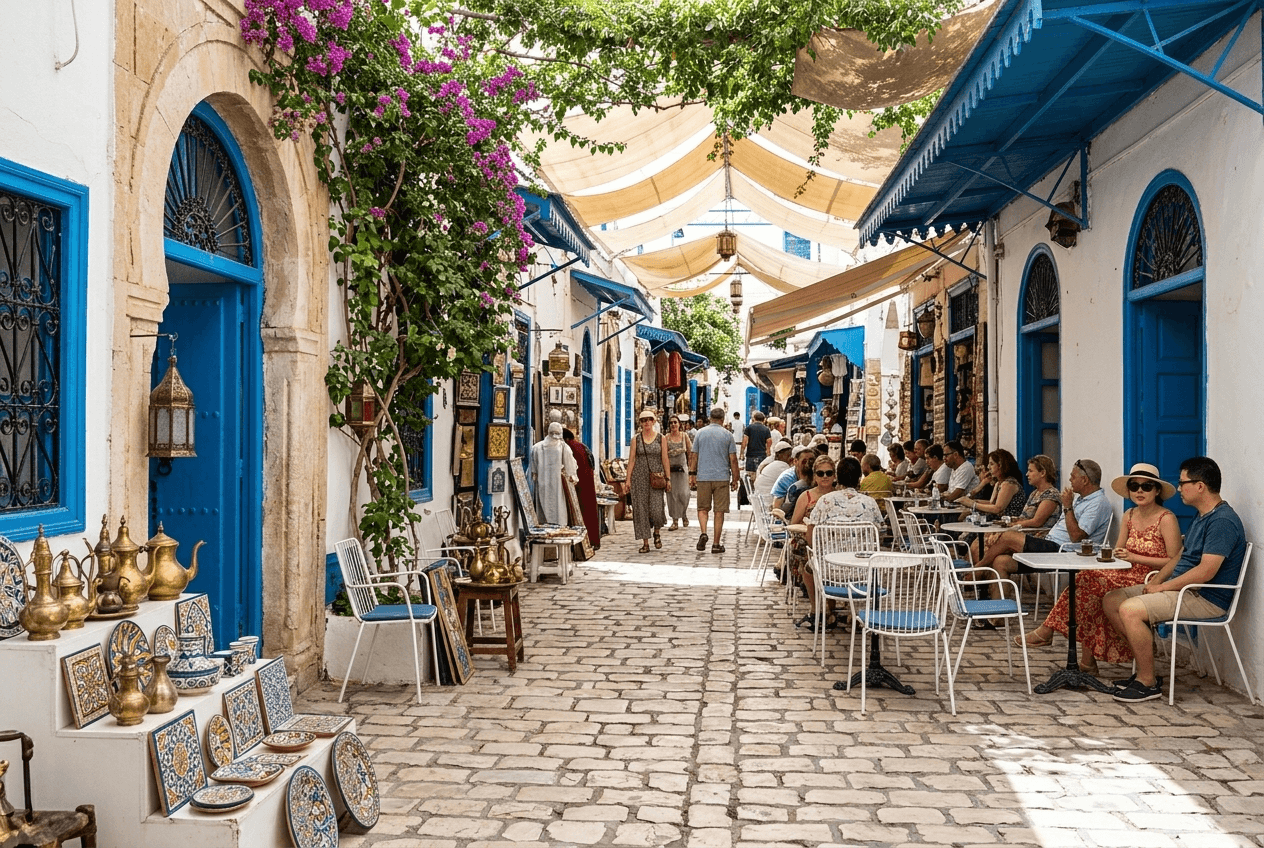
Between the monuments, the souks sell everything from spices and leather to ceramics and carpets — lively but far more relaxed than the big-city bazaars.
Roman mosaics: the Archaeological Museum
Sousse's Archaeological Museum, housed in the medina's kasbah, holds one of Tunisia's most important mosaic collections — widely considered second only to the Bardo Museum. These brilliantly coloured floors, lifted from the Roman villas of ancient Hadrumetum and the surrounding region, show gods, sea creatures, hunting scenes and daily life. The famous head of Medusa and striking marine mosaics are highlights. It's a cool, calm counterpoint to a morning in the sun.
Beaches and Port El Kantaoui
Sousse is above all a beach destination. The long town beach of Boujaffar runs right along the seafront, backed by a promenade of cafés and hotels. For something more polished, head about 10 km north to Port El Kantaoui, a purpose-built marina resort opened in 1979 and designed in traditional Tunisian style — whitewashed walls, blue shutters and a yacht-filled harbour. It's the hub for beach hotels, golf courses, boat excursions (including family-friendly "pirate ship" cruises), and waterfront dining. Many visitors base themselves here and dip into the historic medina on a half-day trip.
Beyond the medina: catacombs and more
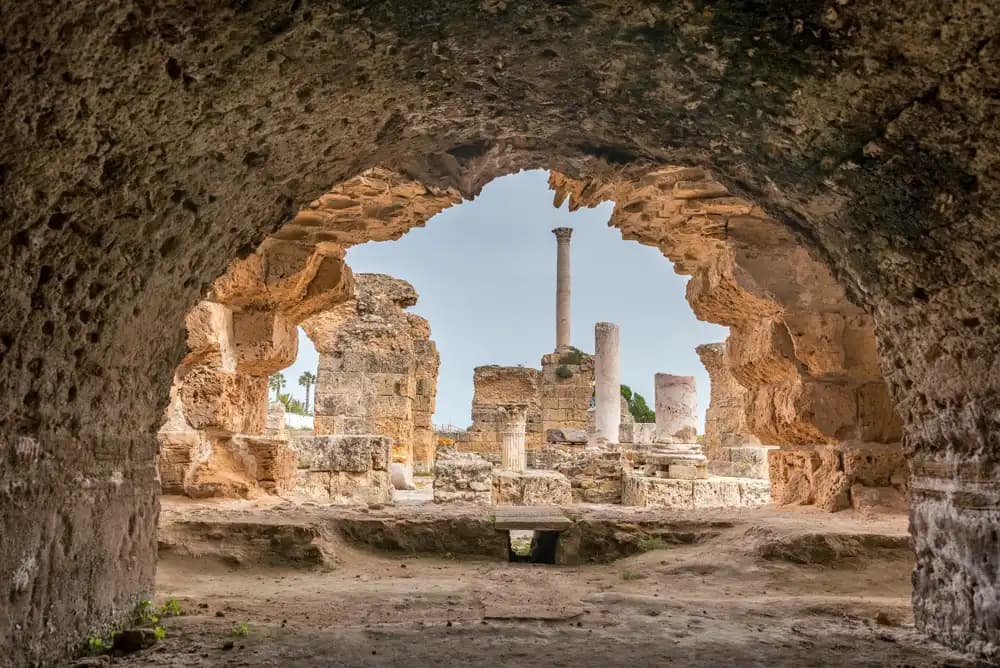
Sousse has a deeper past than its beaches suggest. Beneath the modern city lie the Catacombs of Sousse, a vast network of early Christian underground galleries — kilometres of tunnels lined with thousands of tombs, a reminder of the city's importance in Roman and early Christian times. A small, atmospheric section can be visited. Above ground, the modern town has a relaxed, workaday Tunisian feel, with the Sahel light-rail "metro" linking Sousse to nearby Monastir and Mahdia along the coast.
A short history of Sousse
Sousse is one of the oldest cities in Tunisia. It was founded by Phoenician settlers from Tyre, probably in the 9th century BC, under the name Hadrumetum. It later sided with Carthage, then with Rome, becoming a prosperous Roman port whose wealth is written in the mosaics now in its museum. Its golden age came under the Aghlabid dynasty (9th century), when it served as a key commercial and military port and gained the ribat, great mosque and ramparts that earned its UNESCO status. Pisans, Normans, Spanish and Ottomans all left their mark before the modern beach-tourism era transformed the Sahel coast into one of Tunisia's main holiday regions.
Day trips from Sousse
Sousse's central location makes it one of the best bases in Tunisia:
- El Jem — the colossal Roman amphitheatre, about an hour south. A must-see and easily combined with Sousse.
- Kairouan — Islam's fourth holiest city and a UNESCO site, around 70 km inland.
- Monastir — a short hop down the coast, with its gleaming ribat and the Bourguiba mausoleum, reachable by the Sahel metro.
- Mahdia — a quieter fishing town and former Fatimid capital on a scenic cape, good for beaches away from the crowds.
- Port El Kantaoui & thalasso — the Sousse area is also a hub for thalassotherapy and spa breaks.
Eating, shopping and evenings in Sousse
Sousse is a fine place to eat. Being a port, it is strong on seafood — grilled fish, calamari and prawns, often with a fiery dab of harissa — alongside Tunisian classics like couscous, brik and slow-cooked tagines. The seafront promenade and Port El Kantaoui are lined with restaurants and cafés, from simple grills to smarter waterfront tables. In the souks of the medina you can shop for leather, ceramics, carpets, silver, spices and olive-wood crafts; bargaining is expected and good-humoured. Evenings are lively but easygoing — mint tea on a café terrace, a stroll along the marina, and in summer plenty of family-friendly nightlife around Port El Kantaoui.
Planning your visit to Sousse
- Best time to go: May–June and September–October for warm weather without the peak-summer crowds; July–August is hot and busy, winter is mild and quiet (see the best time to visit Tunisia).
- How long to stay: 2–3 days lets you cover the medina, museum and beaches, with time for a day trip or two. Many beach-holiday visitors stay a week in Port El Kantaoui.
- Getting there: about 2–2.5 hours from Tunis by road or train; the nearest airport is Monastir (Habib Bourguiba), a short drive away, with Enfidha–Hammamet also within reach.
- Where to stay: the medina edge and seafront for sightseeing, or Port El Kantaoui for a resort holiday (see where to stay in Tunisia).
- Costs: Sousse is excellent value, from medina guesthouses to all-inclusive resorts (see our Tunisia trip cost guide).
Atlantis Voyages can build Sousse into a tailor-made Tunisia itinerary — pairing the medina and beaches with El Jem, Kairouan and the wider Sahel. Browse our Tunisia tours or start planning your trip.
Frequently asked questions
Is Sousse worth visiting?
Yes — Sousse combines a UNESCO-listed medina, long sandy beaches, world-class Roman mosaics and the Port El Kantaoui resort, all in one easy-to-reach city, making it one of Tunisia's best all-round destinations.
Why is the Medina of Sousse a UNESCO World Heritage Site?
It is one of the best-preserved examples of an early Islamic fortified coastal town, with its ribat, great mosque, kasbah and ramparts dating largely from the 9th-century Aghlabid era.
What is the Ribat of Sousse?
A fortified monastery from the 8th–9th centuries, considered the best-preserved ribat of its kind. Its watchtower offers a fine view over the medina and the sea.
What is there to do in Sousse?
Explore the walled medina, ribat and great mosque; see the Roman mosaics in the Archaeological Museum; relax on Boujaffar beach or at Port El Kantaoui; and take day trips to El Jem, Kairouan and Monastir.
What is Port El Kantaoui?
A purpose-built marina resort about 10 km north of Sousse, opened in 1979, with whitewashed Tunisian-style architecture, beach hotels, golf, restaurants and boat trips.
How many days do you need in Sousse?
Two to three days cover the medina, museum and beaches with time for a day trip. Beach-holiday visitors often stay a week based in Port El Kantaoui.
What is the best time to visit Sousse?
Late spring (May–June) and early autumn (September–October) offer warm weather and calm beaches. Summer is hot and crowded; winter is mild and quiet.
How do you get to Sousse?
It is about 2–2.5 hours from Tunis by road or train. The closest airport is Monastir (Habib Bourguiba), with Enfidha–Hammamet also within reach.
Does Sousse have good beaches?
Yes — the long Boujaffar town beach runs along the seafront, and more beaches line the coast north toward Port El Kantaoui, where most resort hotels are.
What was Sousse called in ancient times?
Hadrumetum — a Phoenician foundation, later a wealthy Roman port, whose mosaics are displayed in the city's Archaeological Museum.
Are there Roman remains in Sousse?
Yes — most famously the superb Roman mosaics in the Archaeological Museum and the early Christian Catacombs of Sousse, a vast underground network of tombs.
Is Sousse a good base for day trips?
Excellent — El Jem, Kairouan, Monastir and Mahdia are all easy day trips, and the Sahel light-rail metro links Sousse to the coast.
Is Sousse safe for tourists?
Yes — Sousse is a well-established tourist city and generally safe. Use the usual city precautions in crowded souks and on the beach, as you would anywhere.
Can you swim at Sousse?
Yes — the Mediterranean here is warm and swimmable from roughly June to October, with the water at its warmest in late summer.
Sousse or Hammamet — which is better?
Both are great beach bases. Sousse has the richer historic medina and museum and is closer to El Jem and Kairouan; Hammamet is closer to Tunis and Cap Bon. Many itineraries include both.
What food is Sousse known for?
Fresh seafood above all — grilled fish, calamari and prawns — plus Tunisian staples like couscous, brik and tagines, usually served with harissa. The seafront and Port El Kantaoui have the widest choice of restaurants.
Can you visit the catacombs of Sousse?
Yes — a section of the early Christian catacombs, a vast underground network of tombs beneath the city, can be visited; it's an atmospheric glimpse of Roman-era Sousse.
How far is Sousse from El Jem and Kairouan?
El Jem is about an hour south by road or train; Kairouan is roughly 70 km inland, around an hour's drive. Both are popular day trips from Sousse.
Is Sousse good for a family beach holiday?
Very — long sandy beaches, resort hotels at Port El Kantaoui, boat trips and easy sightseeing make it a comfortable, good-value base for families.
Discover the Pearl of the Sahel. Let Atlantis Voyages plan a tailor-made Tunisia trip around Sousse and the coast, or browse our guided Tunisia tours.