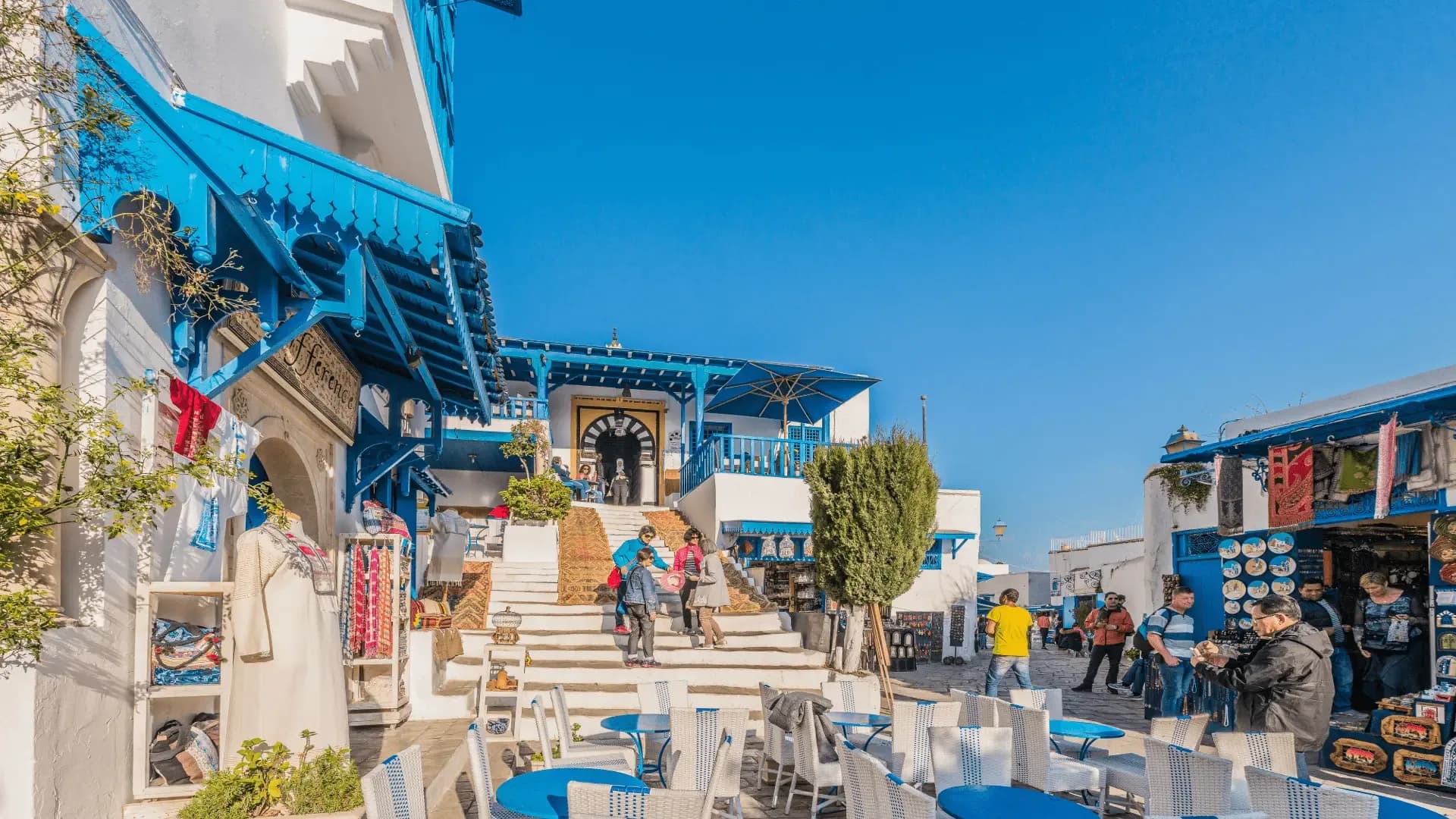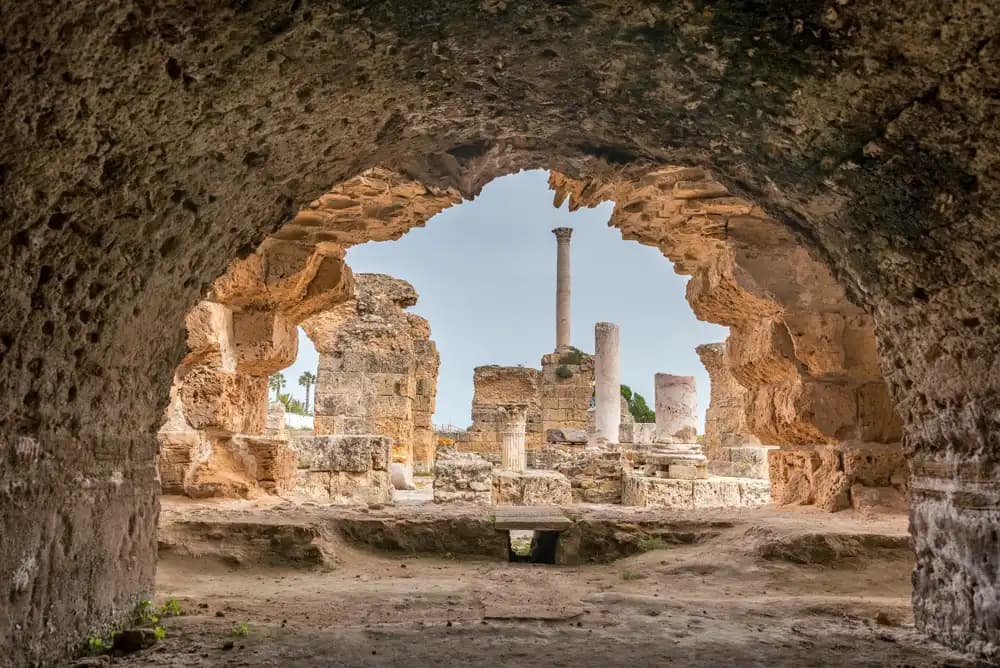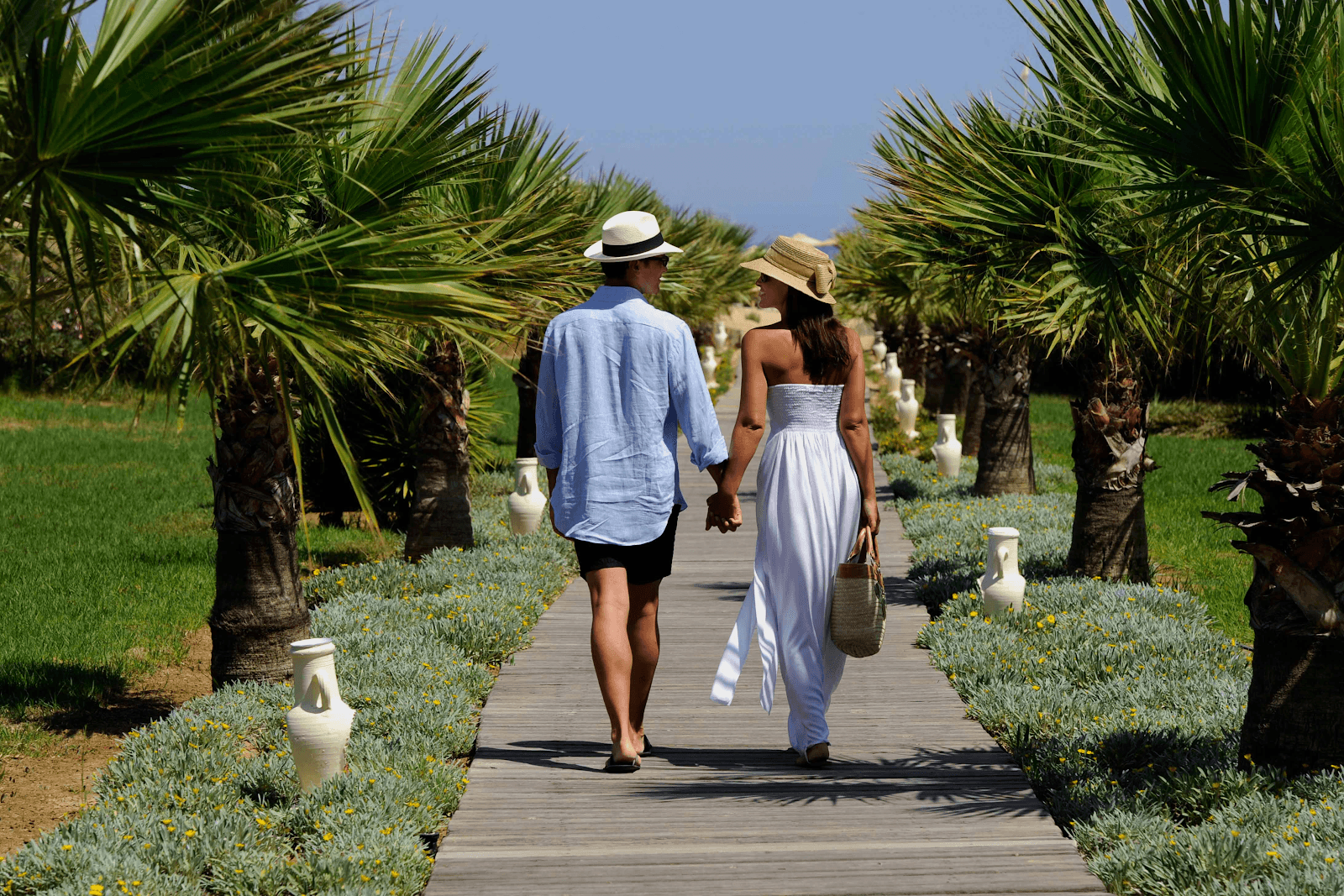

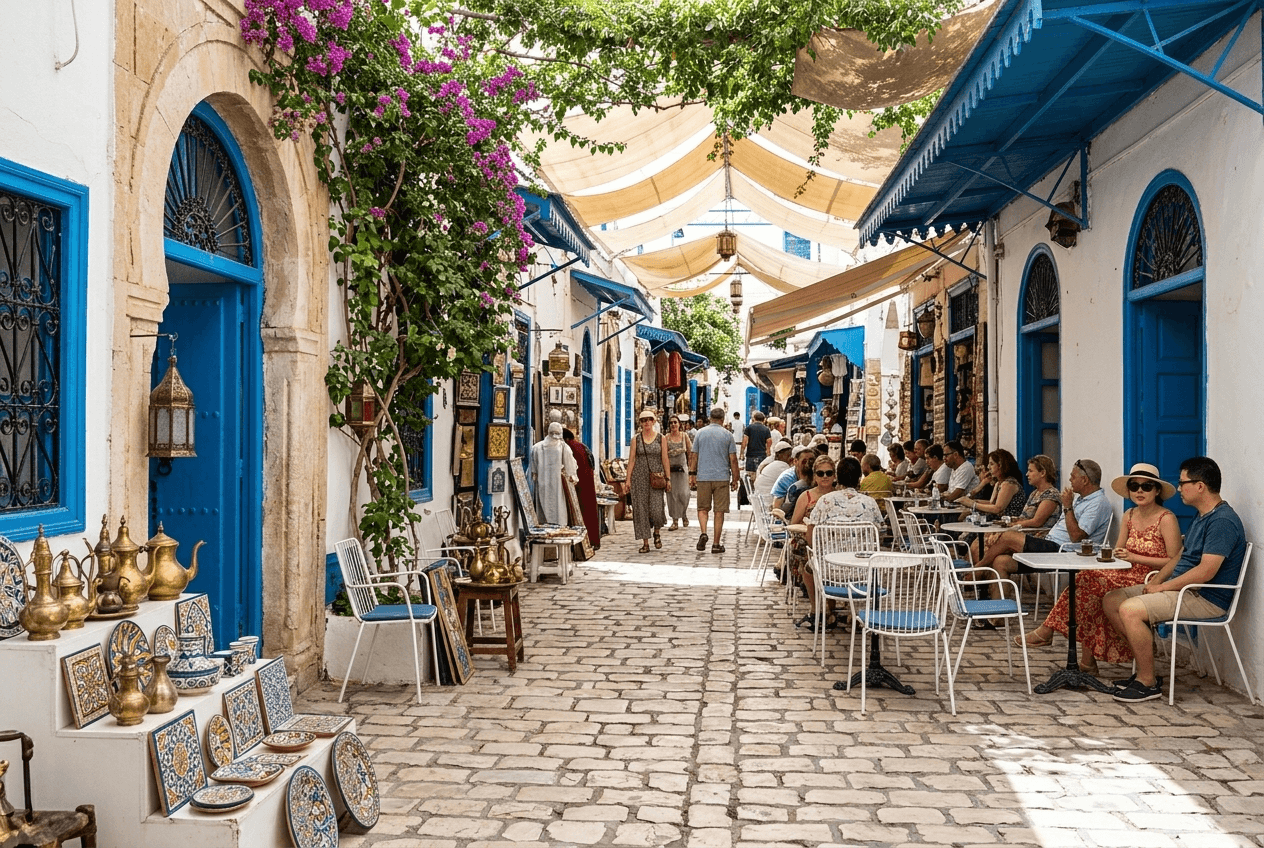
A former Fatimid capital on a slender cape, a medina you enter through a giant medieval gate, one of Tunisia's biggest fishing ports and long unspoiled beaches — Mahdia is the Sahel's quietest, most authentic coastal gem.
Mahdia is a historic port town on Tunisia's Sahel coast, built on a narrow peninsula jutting into the Mediterranean. Founded in the early 10th century as the first capital of the Fatimid dynasty, it keeps a walled medina entered through the massive Skifa el-Kahla gate, an Ottoman fort at the cape's tip, a working fishing harbour and some of the country's finest, least crowded beaches. Calmer than Sousse or Hammamet, it's a wonderfully authentic base, linked by the Sahel metro to Monastir and Sousse.
Why visit Mahdia?
Mahdia rewards travellers who want history and beaches without the crowds. It is smaller and more laid-back than its Sahel neighbours, and its setting — a medina filling a thin finger of land surrounded by sea on three sides — is unforgettable. Here's what makes it special:
- A Fatimid capital — the birthplace of a dynasty that would later rule Egypt and found Cairo, with surviving walls and gates.
- The Skifa el-Kahla — a colossal fortified gateway you walk through to enter the old town.
- A dramatic cape — the Borj el-Kebir fortress, a lighthouse, a sea-edge cemetery and old ruins at the peninsula's tip.
- Superb beaches — long, sandy and far quieter than the big resorts.
- A living fishing town — one of Tunisia's largest fishing ports, plus a famous silk-weaving tradition and lively markets.
The medina and the Skifa el-Kahla
You enter Mahdia's old town through the Skifa el-Kahla ("the dark passage") — a huge fortified gate, its vaulted tunnel several metres deep, the most imposing survivor of the original Fatimid defences. Beyond it, the medina unfolds along the narrow peninsula: whitewashed lanes, a restored main street lined with silk and jewellery shops, and small cafés opening onto the sea. At its heart stands the Great Mosque of Mahdia, a stark, monumental Fatimid building (faithfully reconstructed in the 20th century) whose plain, fortress-like façade set the template for later North African mosques. The whole medina is compact and easy to wander, with the Mediterranean always in view.
Borj el-Kebir, Cap d'Afrique and the lighthouse
Walk to the tip of the peninsula and you reach the Borj el-Kebir, a 16th-century Ottoman fortress on the high ground, built over older foundations and offering sweeping views along the coast. Beyond it lies Cap d'Afrique — named after the Roman-era settlement here — with a lighthouse, a beautifully sited marine cemetery whose white tombs run down toward the waves, and scattered ruins of the old Fatimid harbour. It's the most atmospheric corner of Mahdia, especially at sunrise and sunset.
Beaches
Mahdia is famous for having some of the cleanest, least crowded beaches in Tunisia. Long stretches of fine golden sand run north from the town into the zone touristique, where a handful of beach resorts sit right on the shore. The water is shallow, warm and swimmable through the summer and well into autumn. Because Mahdia draws fewer visitors than Sousse or Hammamet, even in high season the beaches feel relaxed — one of the main reasons travellers in the know choose it for a quieter seaside holiday.
A short history of Mahdia
Mahdia was founded in the early 10th century (around 921 CE) by Abdallah al-Mahdi, the first caliph of the Fatimid dynasty, who chose this easily defended cape as his capital. From here the Fatimids built the power that would go on to conquer Egypt and found Cairo. After the capital moved east, Mahdia remained an important port and was fought over by Normans, Spanish and Ottomans — the Spanish briefly held and then slighted its defences in the 16th century, after which the Ottomans built the Borj el-Kebir. Through it all Mahdia stayed a town of fishermen and silk weavers, and that authentic, working character survives today.
The fishing port, silk and markets
Mahdia has one of the largest fishing fleets in Tunisia, and the harbour is the beating heart of the town — best seen in the early morning when the boats come in and the catch is auctioned. The town is also historically a centre of silk weaving, and traditional Mahdia wedding costumes are renowned across the country; you'll still find silk and gold-thread work in the medina shops. Don't miss the big weekly market, when the streets fill with produce, textiles and crafts. For seafood lovers, Mahdia is a treat — fish could hardly be fresher, grilled simply and served by the port.
Day trips from Mahdia
Mahdia sits at the southern end of the Sahel, within easy reach of several major sights:
- El Jem — the colossal Roman amphitheatre, inland and easily reached in under an hour.
- Monastir — its famous ribat and marina, up the coast and linked by the Sahel metro.
- Sousse — the "Pearl of the Sahel", with its UNESCO medina and museum.
- Kairouan — Islam's fourth holiest city and a UNESCO site, inland.
- The Bardo connection — the famous Bardo Museum in Tunis displays the treasures of the ancient Mahdia shipwreck, a Roman cargo of Greek art found off this coast.
Eating, shopping and evenings in Mahdia
Life in Mahdia moves at an easy pace, and the evenings are part of the charm. Around the harbour and the Cap d'Afrique, simple restaurants grill the day's catch — sea bream, prawns, calamari and octopus — served with harissa, salads and a view of the boats. In the medina, the restored main street and the square by the Great Mosque fill with cafés where locals linger over mint tea long after dark. For shopping, Mahdia's speciality is silk and gold-thread weaving: the medina workshops still produce the fabrics used in traditional wedding costumes, alongside the usual ceramics, leather and spices. It's a genuine working town rather than a resort strip, which is exactly why so many visitors fall for it.
Planning your visit to Mahdia
- Best time to go: May–June and September–October for warm, quiet beach weather; July–August is hot but still less crowded than the big resorts; winter is mild and very peaceful (see the best time to visit Tunisia).
- How long to stay: a day covers the medina, Skifa and cape; a longer beach stay of several days suits those wanting to unwind, with day trips to El Jem and the Sahel.
- Getting there: Mahdia is the southern terminus of the Sahel light-rail metro from Sousse and Monastir; the nearest airport is Monastir (Habib Bourguiba), about an hour away, with Enfidha also reachable.
- Where to stay: the zone touristique for a beach resort, or a guesthouse in or near the medina for atmosphere (see where to stay in Tunisia).
- Costs: Mahdia is excellent value and generally cheaper and calmer than the bigger resorts (see our Tunisia trip cost guide).
Atlantis Voyages can build Mahdia into a tailor-made Tunisia itinerary — pairing its Fatimid medina and quiet beaches with El Jem, Monastir and the wider Sahel. Browse our Tunisia tours or start planning your trip.
Frequently asked questions
Is Mahdia worth visiting?
Yes — Mahdia combines a historic Fatimid medina on a dramatic cape, one of Tunisia's largest fishing ports and some of its cleanest, least crowded beaches, making it a rewarding and authentic alternative to the bigger Sahel resorts.
What is Mahdia known for?
Being the first Fatimid capital, its monumental Skifa el-Kahla gate, the Borj el-Kebir fortress and cape, a major fishing harbour, a silk-weaving tradition, and beautiful quiet beaches.
What is the Skifa el-Kahla?
A huge fortified gateway — a deep vaulted passage — that forms the entrance to Mahdia's medina. It is the most impressive surviving part of the original 10th-century Fatimid fortifications.
Why was Mahdia the Fatimid capital?
Its easily defended peninsula made it an ideal stronghold. Founded around 921 CE by the caliph al-Mahdi, it was the Fatimids' first capital before the dynasty moved east and founded Cairo.
What is there to do in Mahdia?
Explore the medina through the Skifa el-Kahla, visit the Great Mosque, walk to the Borj el-Kebir and lighthouse at the cape, watch the fishing harbour, shop for silk, and relax on the beaches.
Does Mahdia have good beaches?
Yes — Mahdia is famous for long, clean, golden-sand beaches that are among the least crowded in Tunisia, stretching north of the town into the resort zone.
Is Mahdia less crowded than Sousse or Hammamet?
Much less — Mahdia draws fewer visitors, so its beaches and medina feel calm and authentic even in summer, which is a large part of its appeal.
What is the best time to visit Mahdia?
Late spring (May–June) and early autumn (September–October) are ideal for warm, quiet beach weather. Summer is hot but still relaxed; winter is mild and very peaceful.
How do you get to Mahdia?
Mahdia is the southern end of the Sahel light-rail metro from Sousse and Monastir. The nearest airport is Monastir (Habib Bourguiba), about an hour away, with Enfidha also within reach.
How far is Mahdia from Monastir and Sousse?
Monastir is roughly an hour away and Sousse a little further, both linked by the Sahel metro, making Mahdia easy to combine with the rest of the coast.
How many days do you need in Mahdia?
A day is enough to see the medina, Skifa and cape. For a relaxed beach break with day trips to El Jem and the Sahel, a stay of several days is ideal.
What is the Borj el-Kebir?
A 16th-century Ottoman fortress on the high ground at the tip of Mahdia's peninsula, built over older foundations, with wide views along the coast.
Is Mahdia good for a family beach holiday?
Yes — shallow, warm water, long sandy beaches, resort hotels in the zone touristique and an easy, relaxed atmosphere make it comfortable and good value for families.
What food is Mahdia known for?
Seafood above all — with one of Tunisia's biggest fishing fleets, the fish is exceptionally fresh, grilled simply and served by the harbour alongside Tunisian classics.
What is the Mahdia shipwreck?
An ancient Roman-era shipwreck found off Mahdia, carrying a cargo of Greek art and bronzes; its treasures are now a highlight of the Bardo Museum in Tunis.
Is Mahdia safe for tourists?
Yes — Mahdia is a relaxed, welcoming town and generally very safe, with the usual sensible precautions in markets and on the beach.
Mahdia or Monastir — which should I visit?
Both are great, quieter Sahel towns. Monastir has its famous ribat and an airport; Mahdia has the Fatimid medina, a dramatic cape and the quietest beaches. With the Sahel metro linking them, many trips include both.
What is Mahdia's medina like?
Compact and authentic — a thin strip of whitewashed lanes along the peninsula, entered through the Skifa el-Kahla gate, with silk shops, cafés, the Great Mosque and the sea on both sides. It's easy to explore on foot.
Can you swim at Mahdia?
Yes — the beaches have shallow, warm, clear water that is swimmable from roughly June to October, warmest in late summer, and far less crowded than the big resorts.
What can you buy in Mahdia?
Mahdia is known for silk and gold-thread weaving, used in traditional wedding costumes, plus ceramics, leather and spices in the medina shops — with much less hard-sell than the bigger-city bazaars.
Discover the Fatimid cape of the Sahel. Let Atlantis Voyages plan a tailor-made Tunisia trip around Mahdia and the coast, or browse our guided Tunisia tours.