
Choose Tunisia if you want lower prices, far smaller crowds and a compact country where Mediterranean beaches, Roman ruins and the Sahara all sit within a few hours of each other. Choose Morocco if your heart is set on the famous imperial cities of Marrakech and Fez, High Atlas trekking and a bigger country for a longer, bucket-list trip.
The quick verdict: who each country suits
Tunisia and Morocco share a language, a faith, a French colonial echo and a slice of the same desert, so no one will have a bad holiday in either. The real question is what you value. Tunisia is the smart pick for value, calm and variety in a small footprint, which makes it ideal for first-timers, families and anyone short on days. Morocco is the choice for travellers chasing big-name cities, mountain scenery and a longer, more sprawling adventure. To picture what a week on the ground actually looks like, our complete guide to Tunisia sets the scene.
Cost and value
On price, Tunisia usually wins. Hotels, restaurants, guides and transfers tend to cost noticeably less than their Moroccan equivalents, and the gap widens in peak season when Marrakech rates climb. Morocco's riads are gorgeous but increasingly pricey, while Tunisia's coastal stays deliver more room and more meals for the same money. Flights from Europe are often cheaper too, partly because the hop is shorter. For a realistic breakdown, see our Tunisia trip cost and budget guide. Morocco can be done cheaply if you travel like a backpacker, but for comparable comfort, Tunisia stretches your budget further.
Getting there and how many days you need
Tunisia is closer to Europe, roughly two to three hours from most western hubs, and it is small. You can land in Tunis and reach Carthage, the Sahara and a beach resort without spending your holiday on the road. A rewarding Tunisia loop fits comfortably into 7 to 10 days. Morocco is far larger: the classic Marrakech–Fez–Sahara–coast circuit involves long drives and really wants 10 to 14 days to avoid feeling rushed. If your annual leave is tight, Tunisia's compactness is a genuine advantage. Timing matters in both, so plan around the seasons before you book.
Beaches and coast
This is a clear Tunisia edge. With a long Mediterranean shoreline, Tunisia offers warm, swimmable sea, the white-and-blue village of Sidi Bou Said, the island of Djerba and genuine beach-resort infrastructure. Morocco's coast is mostly Atlantic: beautiful and wild around Essaouira, but cooler, rougher and built more for surfers than for lounging. If a proper beach holiday, or a beach-plus-culture mix, is part of your dream, Tunisia delivers it more easily.
The Sahara desert
Both countries share the Sahara, and both do it superbly. Morocco's Erg Chebbi dunes near Merzouga are iconic and tall. Tunisia answers with the palm oases and dunes around Tozeur and the camel-trekking gateway of Douz, plus the Star Wars filming locations scattered across the south, where Luke Skywalker's home still stands. The difference is access: in Tunisia the desert sits far closer to the cities and coast, so a dune night costs you less driving. Our guide to the Sahara in Tunisia covers the routes. Morocco's dunes may edge it for sheer scale, but Tunisia wins on convenience and that cinematic, otherworldly south.
Ancient history and Roman ruins
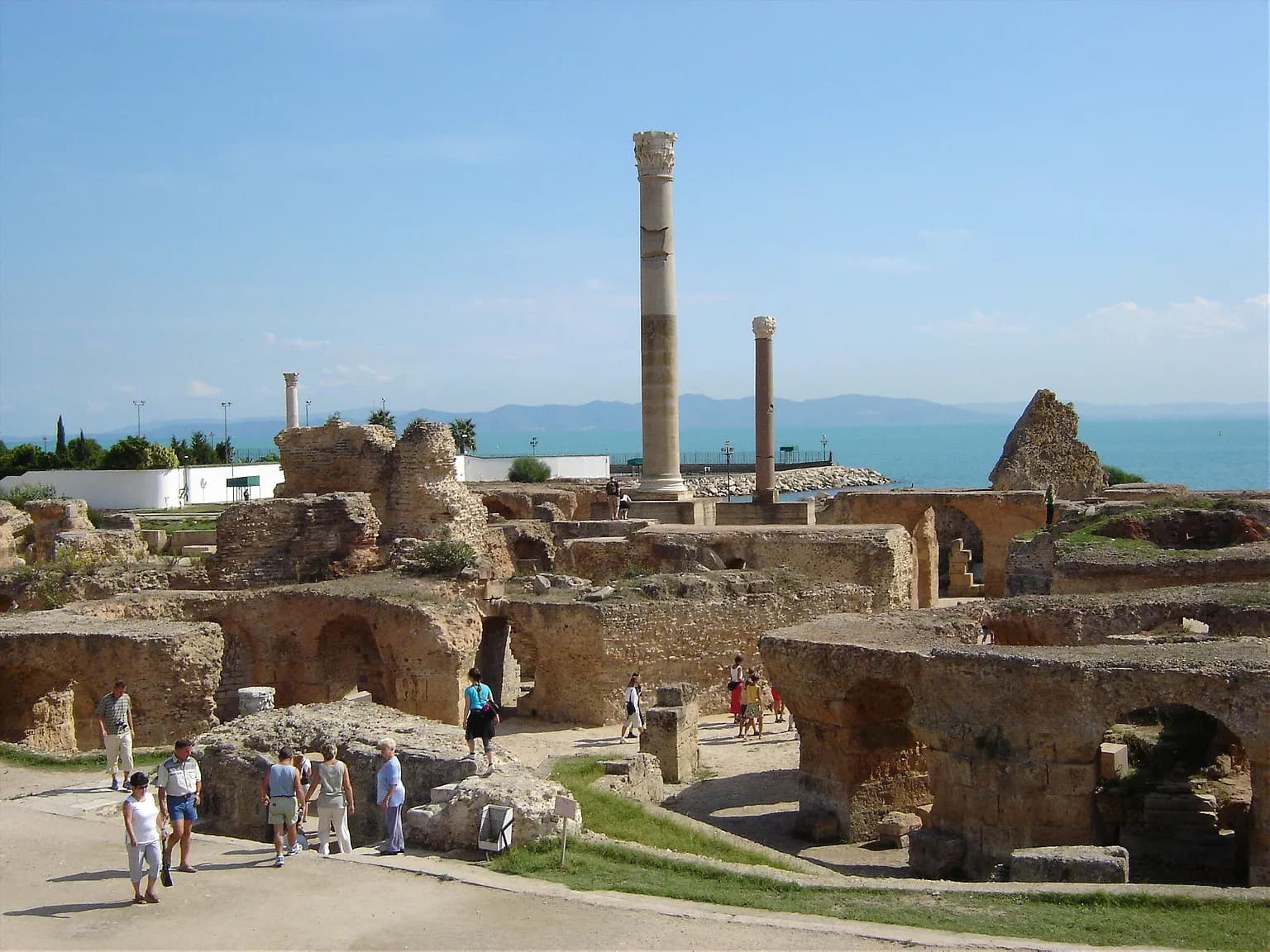
Here Tunisia holds a rare, underrated advantage. This was the heart of Roman Africa, and the remains are world-class. You can walk the ruins of Carthage, the Phoenician superpower that fought Rome; stand inside the staggering amphitheatre at El Jem, one of the best preserved on earth; and explore the hillside Roman city of Dougga. Few countries let you move through such intact antiquity with so few other visitors. Morocco has Volubilis and its own Roman story, but it is a single major site rather than a country-wide layer of classical history. For history lovers, Tunisia is quietly exceptional.
Culture, food, souks and crowds
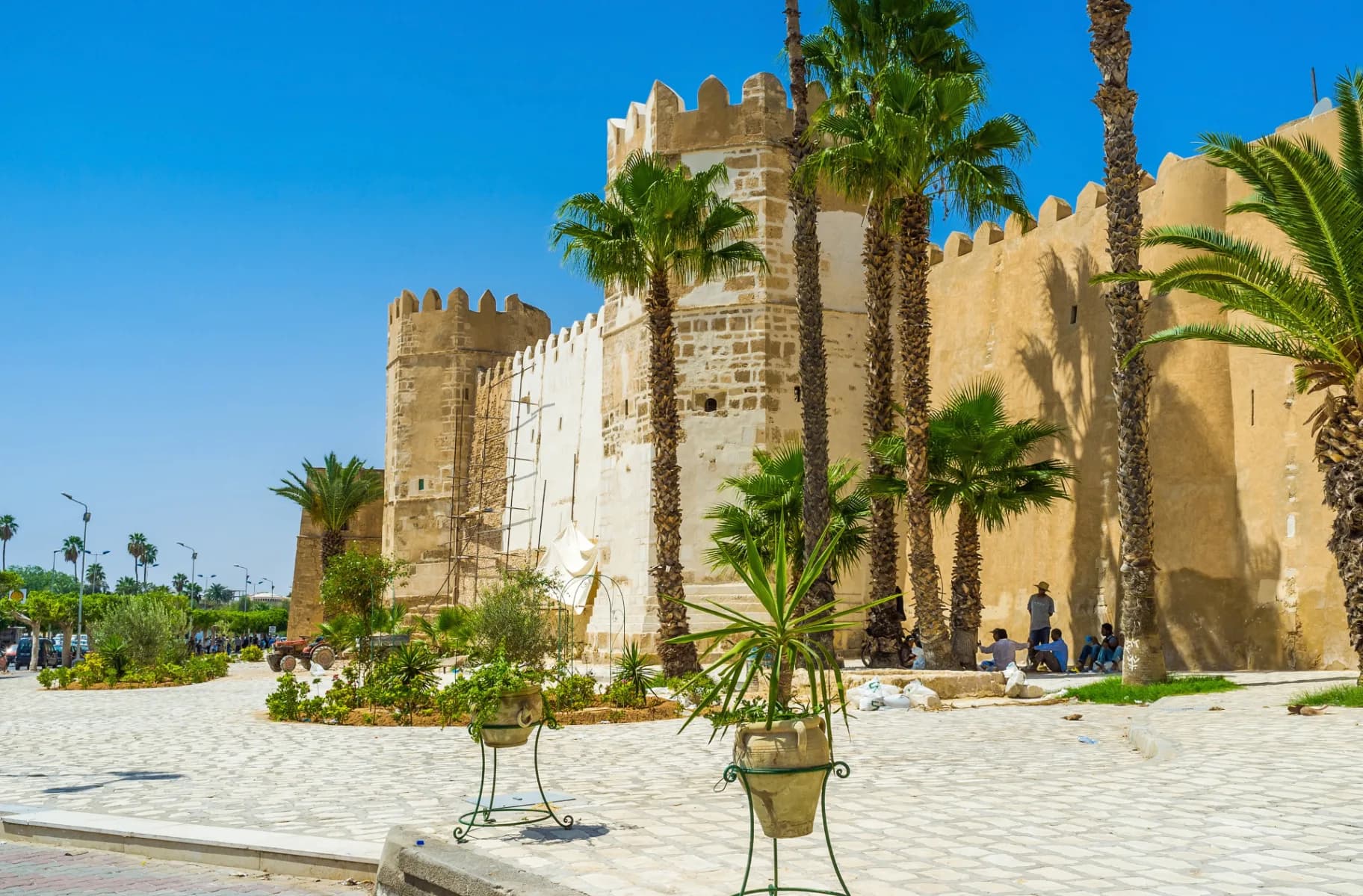
Be honest: Morocco's souks and medinas are more famous, and Marrakech and Fez are sensory spectacles that nothing in Tunisia quite matches for scale or renown. If a legendary labyrinth-bazaar is your priority, Morocco wins. But fame brings crowds and hustle, and the famous cities can feel intense and sales-pressured. Tunisia's medinas in Tunis, Sousse and Kairouan are atmospheric and far calmer, with much less hassle. Food is a joy in both, from couscous and slow stews to grilled fish, fresh bread, pastries and mint tea. Tunisian cooking leans spicier, thanks to harissa, and the dining feels relaxed rather than touristy.
Safety and ease for first-timers
Both countries are popular, well-touristed destinations. Tunisia tends to feel especially easy for first-timers: shorter distances, lower prices, less aggressive selling and a gentle learning curve make it a reassuring first taste of North Africa, and a strong pick for families. We cover the topic fully in our is Tunisia safe in 2026 article. Morocco is also well set up for tourists, though its big-city intensity can feel more overwhelming on a first visit.
How to decide
Make it simple. Pick Tunisia if you want the best value, the fewest crowds, a short flight and a compact trip that combines beaches, Roman ruins and the Sahara without long drives, especially as a first-timer or with family. Pick Morocco if the imperial cities, the High Atlas and a longer, larger itinerary are what you are dreaming of, and you have both the days and the budget to do them justice. Neither is a wrong answer, but if your priorities are value, ease and variety in one compact package, Tunisia is hard to beat.
Frequently asked questions
Is Tunisia cheaper than Morocco?
Generally, yes. For comparable comfort, Tunisia's hotels, meals, guides and transfers tend to cost less than Morocco's, and the difference is sharpest in peak season when Marrakech prices spike. Flights from Europe are often cheaper too. Morocco can be done on a tight backpacker budget, but Tunisia usually offers more for the same spend.
Which is better for a first trip to North Africa?
Tunisia is the gentler introduction. It is compact, affordable, less crowded and lower-hassle, with short transfers and a relaxed pace that suit first-timers and families. Morocco is rewarding, but its big cities can feel intense on a first visit.
Does Tunisia have the Sahara like Morocco?
Yes. Tunisia shares the Sahara, with dunes, palm oases and camel treks around Tozeur and Douz, plus famous Star Wars filming sites. Morocco's Erg Chebbi dunes are taller, but Tunisia's desert is much closer to its cities and coast, so you spend far less time driving to reach it.
How many days do I need for Tunisia versus Morocco?
Tunisia fits a satisfying loop into 7 to 10 days because distances are short. Morocco's classic circuit of Marrakech, Fez, the desert and the coast involves longer drives and really wants 10 to 14 days. If your time off is limited, Tunisia lets you see more in fewer days.
Which country has better beaches?
Tunisia, for most travellers. Its Mediterranean coast is warm and swimmable, with proper resorts, Sidi Bou Said and the island of Djerba. Morocco's coast is mainly Atlantic: scenic but cooler and rougher, and better suited to surfing than to classic beach days.
Is Morocco better than Tunisia for culture and souks?
Morocco's souks and imperial cities such as Marrakech and Fez are more famous and larger in scale, so for bucket-list bazaars it has the edge. That fame also brings bigger crowds and more sales pressure. Tunisia's medinas are atmospheric, calmer and less touristy, and its Roman ruins are genuinely world-class.