
Access & essentials
| Region | Central, arid climate |
|---|---|
| Map | View location on Google Maps |
Frequently asked questions
What is Kairouan known for?
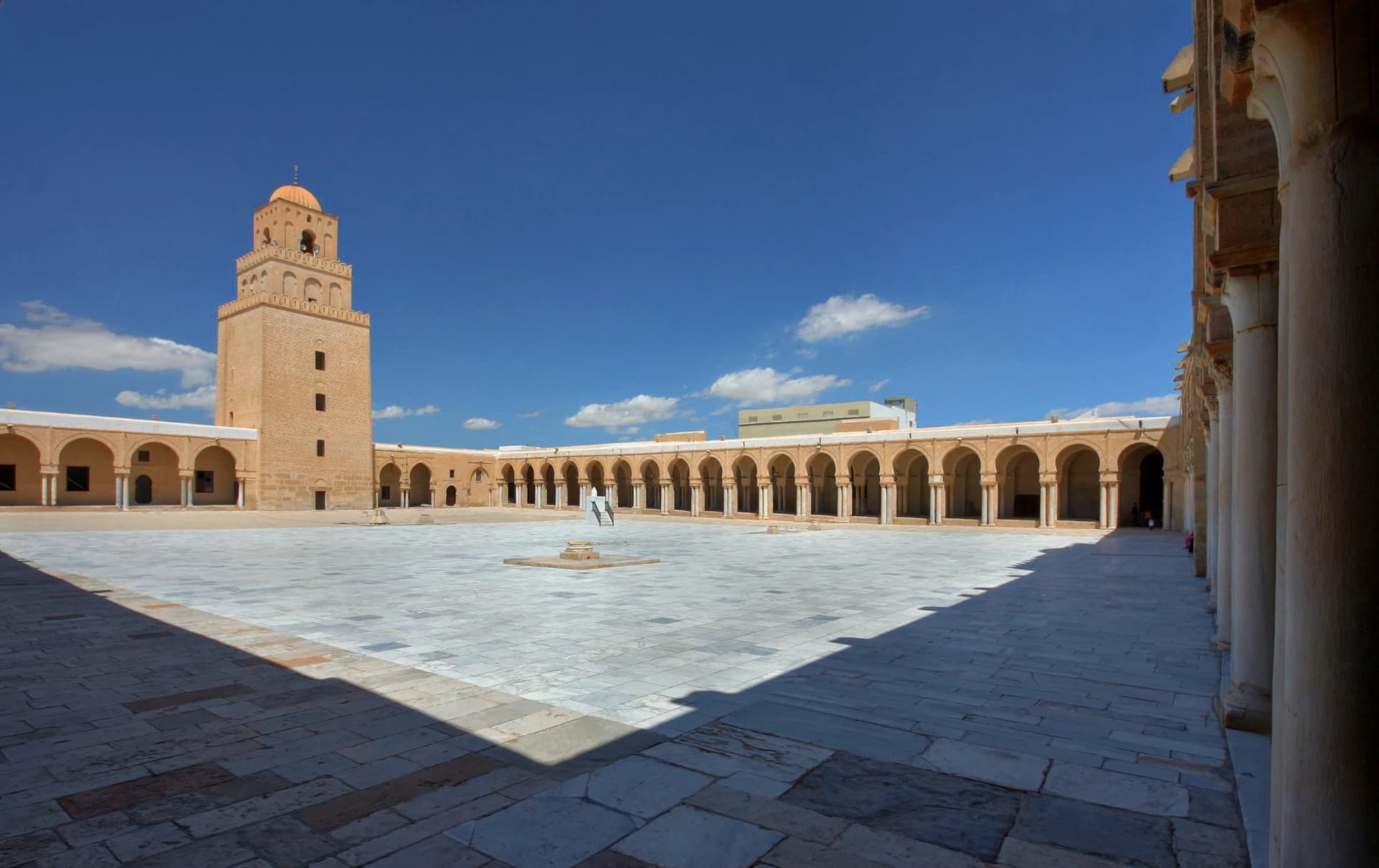
Kairouan is considered the fourth holiest city in Islam and was founded in 670 CE, making it one of the oldest Arab-Muslim cities in North Africa. Its walled medina is a UNESCO World Heritage Site, and the city is famous for the Great Mosque of Uqba, handwoven carpets and makroudh, a local date-and-semolina pastry. It offers a quieter, more spiritual atmosphere than Tunisia's coastal resorts.
What are the main things to see and do in Kairouan?
The highlight is the Great Mosque of Uqba (Sidi Oqba), one of the oldest and most important mosques in the Maghreb. Don't miss the 9th-century Aghlabid Basins, huge open-air water reservoirs, and the Zaouia of Sidi Sahbi, also known as the Mosque of the Barber, with its beautiful tilework. Wandering the medina's souks to watch carpet weavers and sample fresh makroudh rounds out a visit.
Can non-Muslims visit the Great Mosque of Kairouan?
Yes. Non-Muslim visitors can enter and admire the vast courtyard during posted visiting hours, though access to the prayer hall itself is reserved for worshippers. Modest dress is required, so keep shoulders and knees covered; wraps are sometimes available at the entrance. Plan around prayer times, when the site may briefly close to tourists.
How do I get to Kairouan and how far is it?
Kairouan sits inland, roughly an hour from Sousse, about 1.5 hours from Monastir and around 2.5 to 3 hours from Tunis. Many travelers come on a guided day trip or hire a car with a driver, which is the most flexible option. It pairs very well with Sousse or the Roman amphitheatre at El Jem in a single itinerary.
How long should I spend in Kairouan?
Half a day is enough to see the main monuments, while a full day lets you explore the medina at a relaxed pace, shop for carpets and linger over lunch. Most visitors treat it as a day trip from the coast rather than an overnight stay. If you enjoy photography or craft shopping, lean toward the full day.
When is the best time to visit Kairouan?
Because Kairouan lies inland and has an arid climate, the most comfortable months are roughly October to April. Summer can be very hot, so if you visit between June and August, start early and carry plenty of water. Spring and autumn offer pleasant temperatures for walking the medina.
What should I buy in Kairouan?
Kairouan is Tunisia's carpet capital, renowned for handwoven rugs and knotted carpets in traditional patterns. The other must-buy is makroudh, a diamond-shaped semolina pastry filled with dates and soaked in syrup. Prices in the souks are usually negotiable, so a little friendly bargaining is expected.
Is Kairouan worth visiting and is it family-friendly?
Absolutely. Few places capture Tunisia's religious and artisanal heritage as vividly as Kairouan, and its UNESCO medina is easy to explore on foot. Families are welcome, and children often enjoy the open Aghlabid Basins and the lively souks. Just dress modestly at religious sites and be mindful around prayer times.