
Most visitors fly into Tunis-Carthage (TUN), the country's main international airport, on direct flights of roughly 2-3 hours from cities across Europe. Travellers from North America or Asia connect through a European or Gulf hub, while ferries from Italy and France offer a scenic alternative if you want to bring your own car.
Tunisia's main gateways at a glance
Tunisia sits on the North African coast, directly across the Mediterranean from Italy and a short hop from mainland Europe. That proximity is the key to how easy the country is to reach. The overwhelming majority of travellers arrive by air, and the country has four international airports serving different regions and travel styles.
Tunis-Carthage (TUN) is the principal gateway, just a few kilometres from the capital. The others — Enfidha-Hammamet (NBE), Djerba-Zarzis (DJE) and Monastir (MIR) — are useful if your trip is focused on a particular resort area or island. If you are still shaping your plans, our complete Tunisia travel guide is a good companion to this article.
Flying to Tunisia from Europe
From Europe, Tunisia is genuinely close. Direct flights run from a long list of cities and typically take between two and three hours. Among the busiest routes are Paris, Marseille, Lyon, London, Frankfurt, Munich, Rome, Milan, Brussels and Geneva.
Carriers on these routes currently include the national airline Tunisair, the local operator Nouvelair, and European names such as Transavia and Air France, alongside seasonal charter and low-cost services. Fares vary enormously with season and how far ahead you book — expect roughly budget-airline prices on the cheaper routes and more for peak summer weekends. Booking a few weeks ahead and travelling outside the July-August rush usually helps; our guide to the best time to visit Tunisia explains the trade-offs, and the Tunisia trip cost and budget breakdown puts flight prices in context with the rest of your spending.
Getting to Tunisia from North America, Asia and beyond
There are currently no direct flights to Tunisia from North America or Asia, so travellers from those regions connect through an international hub. The most convenient options are Paris, Frankfurt, Istanbul and Doha, each of which has good onward links to Tunis. From the east coast of the United States or Canada, a single connection in Europe is the norm; from Asia, a stop in Istanbul or Doha works well.
When booking, it is usually simpler and safer to buy a single through-ticket rather than two separate flights, so that your luggage is checked through and any missed connection is the airline's responsibility. Leave a comfortable layover — at least a couple of hours — to absorb delays.
Tunisia's four international airports
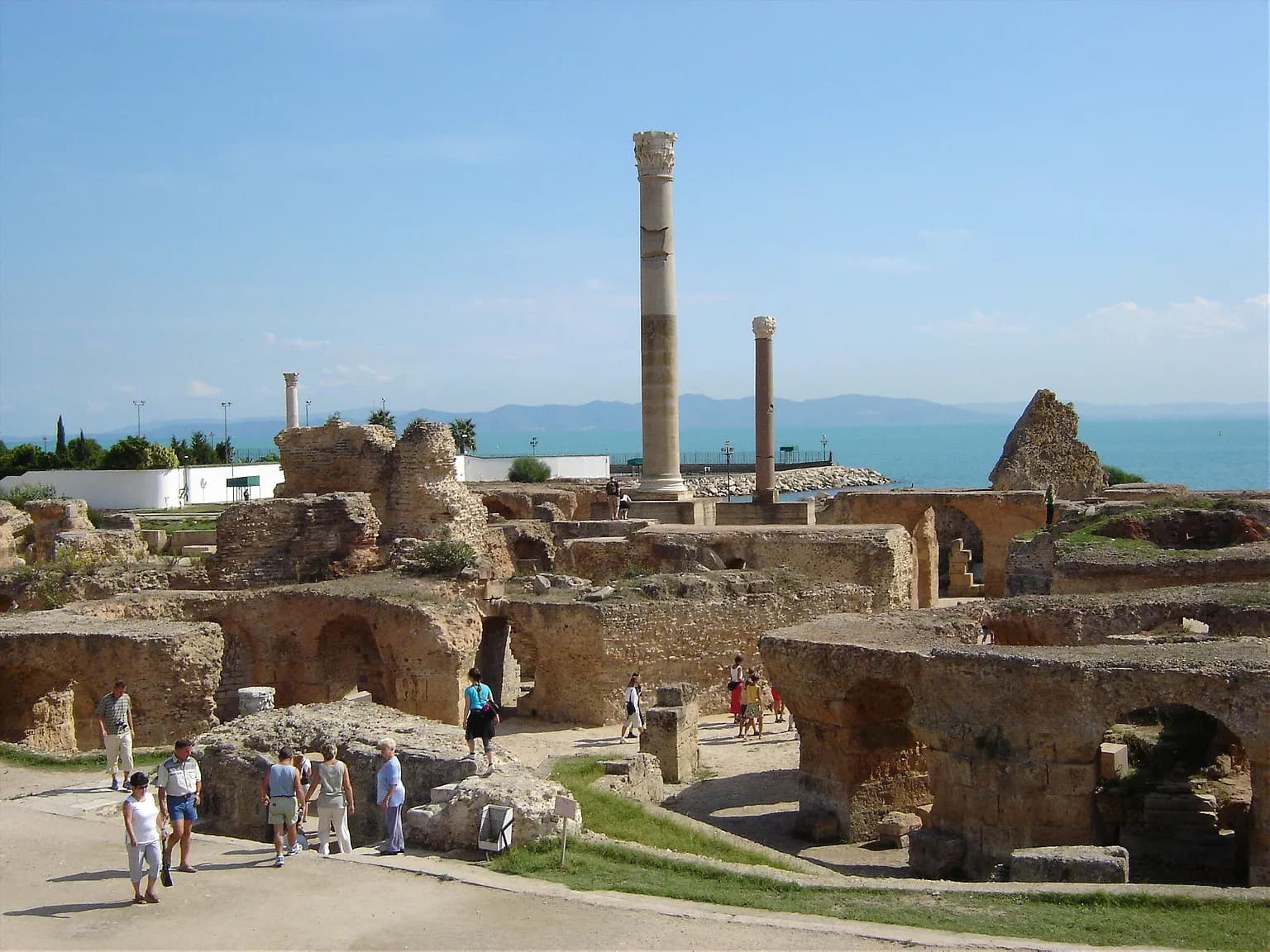
Tunis-Carthage (TUN) is the main hub, ideal if your trip begins in the capital or the northern coast. It is close to the city and well connected to sites like the ruins of Carthage and the blue-and-white village of Sidi Bou Said — see our Tunis destination guide for what's nearby.
- Enfidha-Hammamet (NBE) — a large, modern airport serving charter and low-cost flights, convenient for the Hammamet and Sousse resort zone.
- Djerba-Zarzis (DJE) — the gateway to the island of Djerba in the south, popular with sun-seekers and beach holidaymakers.
- Monastir (MIR) — handy for the central coast and the Sousse-Monastir area, often used by package and charter operators.
Choosing the right airport can save hours of transfer time, so match your arrival point to where you'll actually be staying.
Arriving by ferry from Italy and France
For a slower, more scenic approach — and the only practical way to bring your own vehicle — ferries cross the Mediterranean to the port of Tunis/La Goulette. Services currently run from Genoa, Palermo and Civitavecchia in Italy and from Marseille in France, with operators such as CTN, GNV and Corsica Linea.
Crossings take roughly a day depending on the route, and cabins are available for overnight sailings. Ferries suit travellers planning a road trip or those who simply prefer not to fly; schedules are more limited in winter, so book ahead and confirm sailing dates directly with the operator.
Entry requirements: visas, passports and what to check
Many nationalities can currently enter Tunisia visa-free for tourism for stays of up to 90 days, including travellers from the EU, the UK, the US, Canada, Japan and Korea, among others. Your passport should generally be valid for the duration of your stay, and border officers may ask for proof of onward travel or accommodation.
Entry rules do change and they vary by passport, so always confirm the current requirements for your specific nationality with an official source — your government's travel advice or a Tunisian embassy or consulate — before you fly. For broader reassurance about travelling here, see whether Tunisia is safe to visit and our first-time visitor FAQ.
From the airport to your destination
Getting from the airport into town is quick and inexpensive. At Tunis-Carthage, metered taxis and pre-arranged private transfers reach the city centre within about twenty to thirty minutes outside rush hour. A pre-booked transfer is the smoothest option if you are arriving late or heading to a distant resort — Tunisia Trip can arrange one as part of your itinerary.
Local SIM cards from Ooredoo, Orange and Tunisie Telecom are sold at the arrivals halls, giving you data and a local number from the moment you land. Once you've sorted transport and a SIM, you're ready to explore — our guide on how many days to spend in Tunisia will help you make the most of your time.
Frequently asked questions
What is the main airport in Tunisia?
Tunis-Carthage (TUN), just outside the capital, is Tunisia's principal international airport and the gateway most visitors use. Enfidha-Hammamet, Djerba and Monastir serve specific resort and island regions.
Are there direct flights to Tunisia from Europe?
Yes. Direct flights currently run from many European cities — including Paris, London, Frankfurt, Rome, Milan, Brussels and Geneva — and typically take around two to three hours with carriers such as Tunisair, Nouvelair, Transavia and Air France.
Can I fly directly to Tunisia from the US or Asia?
Not currently. There are no direct flights from North America or Asia, so travellers connect through a hub such as Paris, Frankfurt, Istanbul or Doha. A single through-ticket with a comfortable layover is the easiest approach.
Do I need a visa to visit Tunisia?
Many nationalities — including EU, UK, US, Canadian, Japanese and Korean passport holders — can currently visit visa-free for up to 90 days, but rules vary by passport and can change. Always check official sources for your nationality before travelling.
Can I reach Tunisia by ferry?
Yes. Ferries currently sail to Tunis/La Goulette from Genoa, Palermo and Civitavecchia in Italy and from Marseille in France, operated by companies such as CTN, GNV and Corsica Linea. They're especially useful if you want to bring a car.
How do I get from the airport to the city?
Metered taxis and pre-arranged private transfers reach Tunis city centre in roughly twenty to thirty minutes. Local SIM cards from Ooredoo, Orange and Tunisie Telecom are available right at arrivals so you can stay connected on the way.