
Sun-bleached and easygoing, ringed by beaches and dotted with white mosques, Djerba is Tunisia's dreamy island escape — and, since 2023, its newest UNESCO World Heritage Site.
Djerba is a flat, sun-drenched island off Tunisia's southeast coast, famous for its sandy beaches, whitewashed villages, ancient El Ghriba synagogue, lively Houmt Souk market town and relaxed island pace. In 2023 it became a UNESCO World Heritage Site for its unique pattern of settlement. Add pottery villages, open-air street art, Star Wars film locations and warm, shallow sea, and you have one of Tunisia's most charming and family-friendly destinations.
What is Djerba?
Djerba is the largest island in North Africa, lying in the Gulf of Gabès off Tunisia's southeastern coast and linked to the mainland by a Roman-era causeway and a short car ferry. Low, flat and scattered with palm and olive groves, it has a distinct identity of its own — gentler and more laid-back than the mainland, with its own architecture, crafts and deep multicultural roots. Legend even identifies it with the island of the Lotus-Eaters from Homer's Odyssey, where travellers were tempted never to leave — a reputation the island still lives up to.
For sun-seekers it's one of Tunisia's premier beach destinations; for the curious, it's a fascinating, layered place where Muslim, Jewish and Ibadi heritage have coexisted for centuries.
Why Djerba is a UNESCO World Heritage Site
In 2023, UNESCO inscribed Djerba under the title "Djerba: Testimony to a settlement pattern in an island territory." Unlike a single monument, the listing recognises the whole island's distinctive way of life — a dispersed pattern of settlement developed over centuries to cope with a dry, water-scarce environment. Traditional homesteads called menzels, hundreds of small fortified mosques, underground cisterns, markets and places of worship of several faiths together form a unique cultural landscape. It makes Djerba one of Tunisia's ten UNESCO sites — see them all in our complete guide to UNESCO sites in Tunisia.
Things to do in Djerba
Houmt Souk
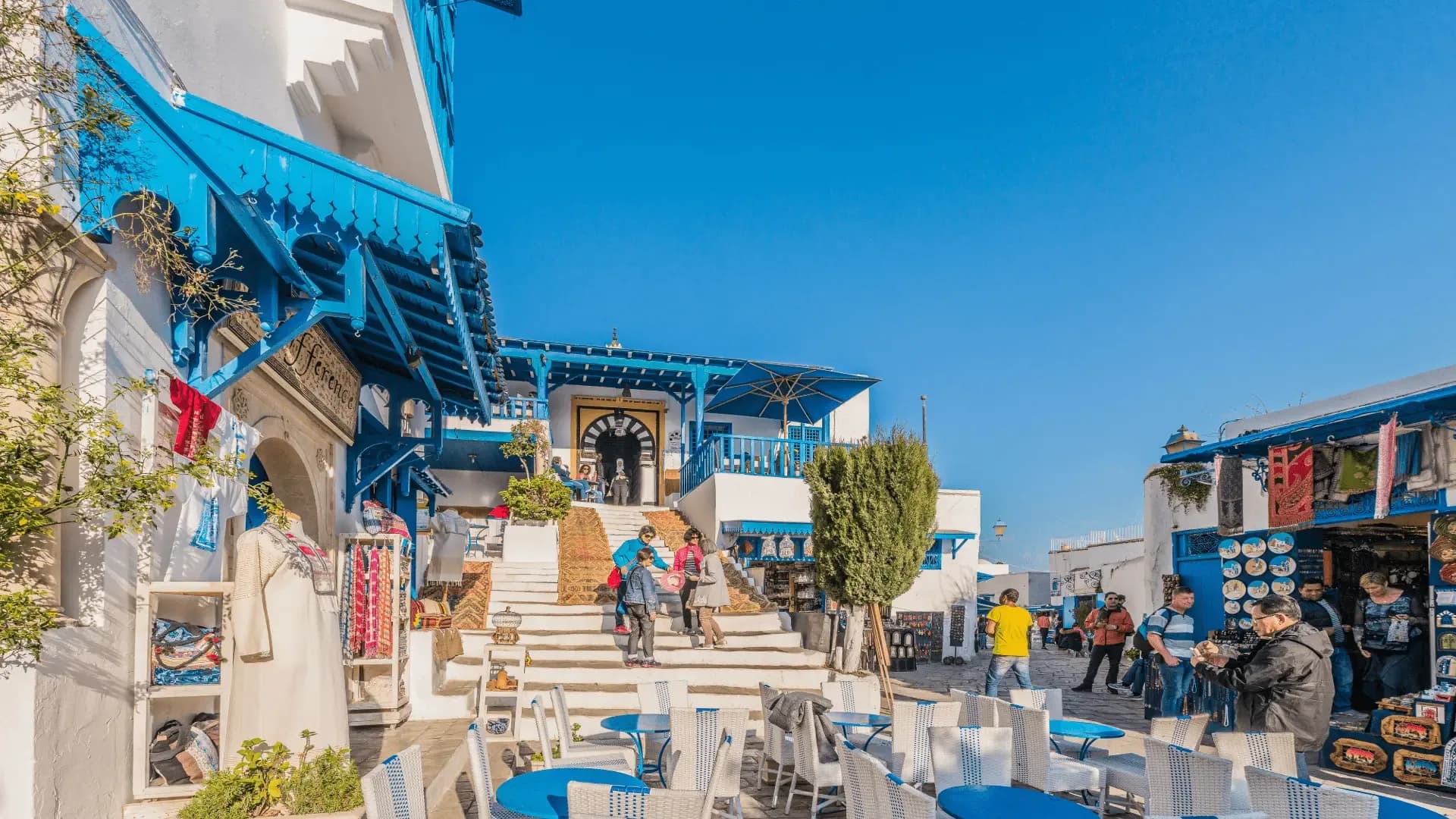
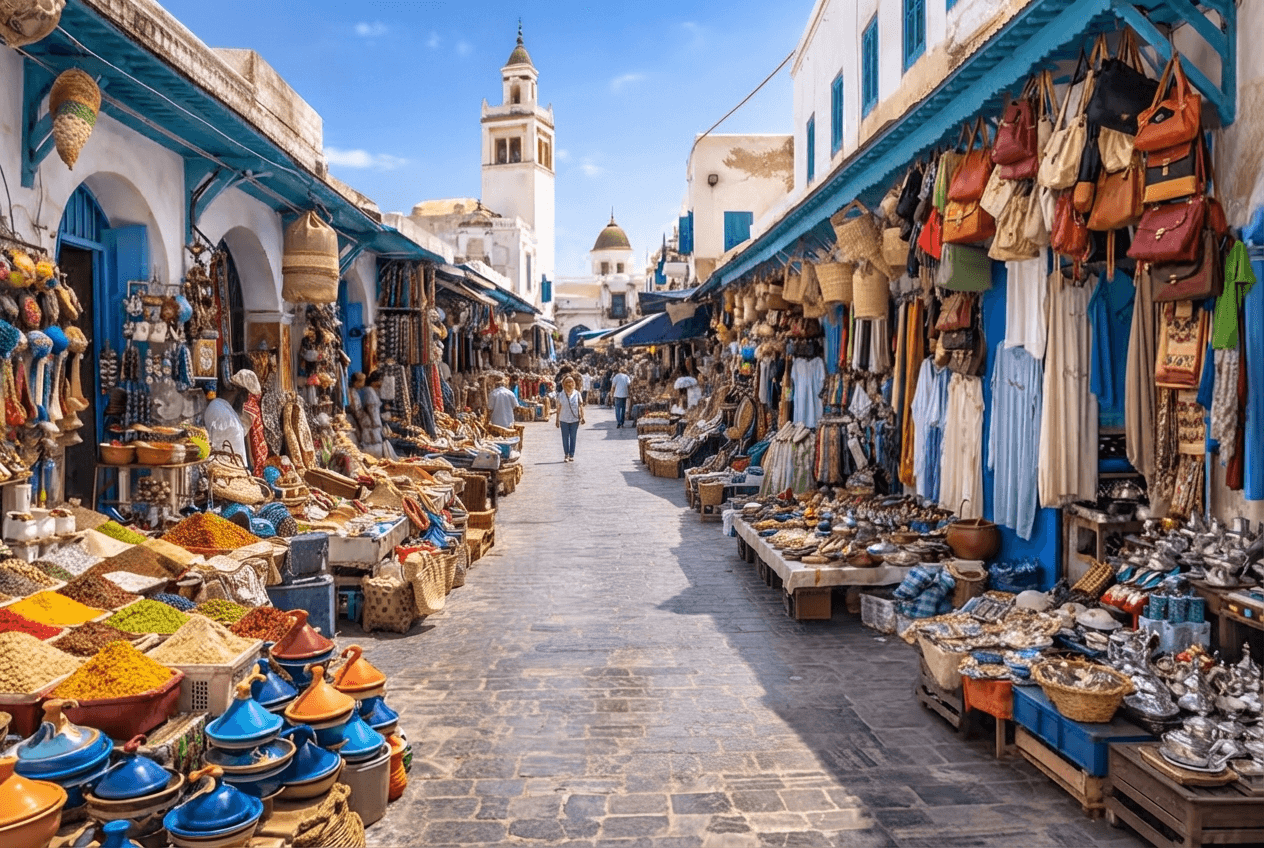
Houmt Souk is the island's capital and beating heart — a whitewashed town of winding lanes, covered markets, old fondouks (merchants' inns) and lively squares. It's the place to browse for pottery, jewellery, leather and spices, sip coffee in a shaded café, and feel the island's everyday rhythm.
El Ghriba synagogue
In the village of Erriadh (Hara Seghira) stands the El Ghriba synagogue, one of the oldest in Africa, its origins traditionally traced back some two and a half thousand years. Richly decorated in blue and white tilework, it is the focus of an annual Jewish pilgrimage around Lag b'Omer and a moving symbol of Djerba's long history of religious coexistence. For context, see our guide to religion in Tunisia.
Djerbahood street art
Also in Erriadh is Djerbahood, an open-air museum where artists from around the world have covered the village's white walls with vivid murals. Wandering its lanes, turning a corner to find another surprising artwork, is one of the most enjoyable afternoons on the island.
Guellala pottery village
The southern village of Guellala is Djerba's pottery capital, where generations of artisans have shaped the local clay into jars, bowls and the island's distinctive amphorae. You can watch potters at work and pick up handmade souvenirs straight from the source.
Star Wars, flamingos and more
Film fans will recognise the island as a Star Wars location — the town of Ajim doubled for Mos Eisley spaceport — so it pairs naturally with our Star Wars in Tunisia guide. Nature lovers can head to the Flamingo Island sandbar (Ras Rmel), while families enjoy the island's crocodile farm and heritage park, and everyone can explore the old Borj El Kebir fortress guarding Houmt Souk's harbour.
Djerba's beaches and resorts
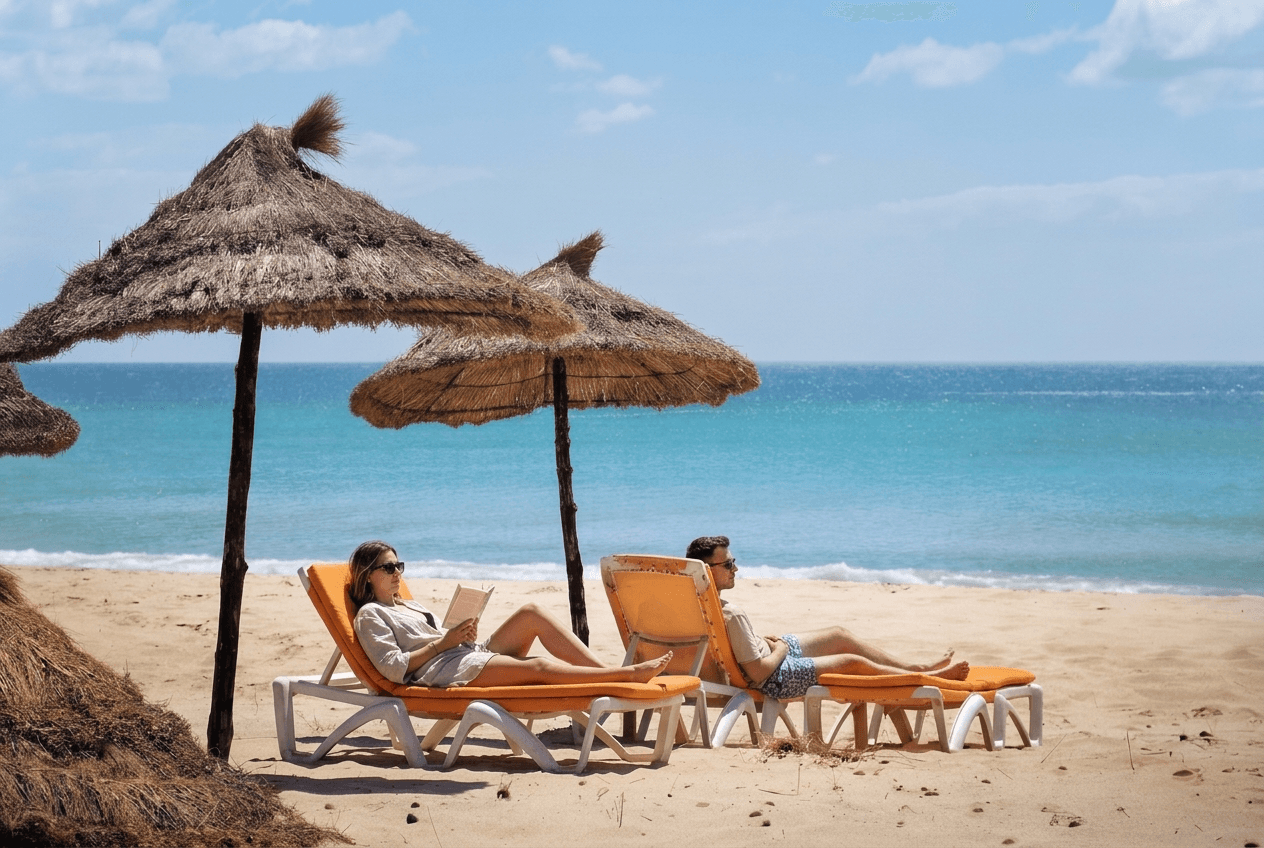
Djerba's northeastern coast is one long ribbon of sandy beach, backed by the island's main resort zone around Sidi Mahrès and Aghir. The sea here is warm, clean and famously shallow and gently shelving — ideal for children and relaxed swimming. Resorts range from large all-inclusive hotels to smaller properties, many with pools, water sports and spa facilities. It's an easy place to combine total beach relaxation with day trips into the island's culture — a big part of why Djerba is such a strong choice for families travelling with children.
The island's unique character
What sets Djerba apart is its atmosphere. The architecture is low and white, with domed roofs and squat fortified mosques scattered across the countryside; the light is soft; and the pace is unhurried. Olive and palm groves stretch between villages, each historically built around its own well and mosque. This dispersed, self-sufficient landscape — the very thing UNESCO recognised — gives Djerba a timeless, slightly otherworldly feel found nowhere else in Tunisia. It is a place to slow down and let the island work its old magic.
A short history of Djerba
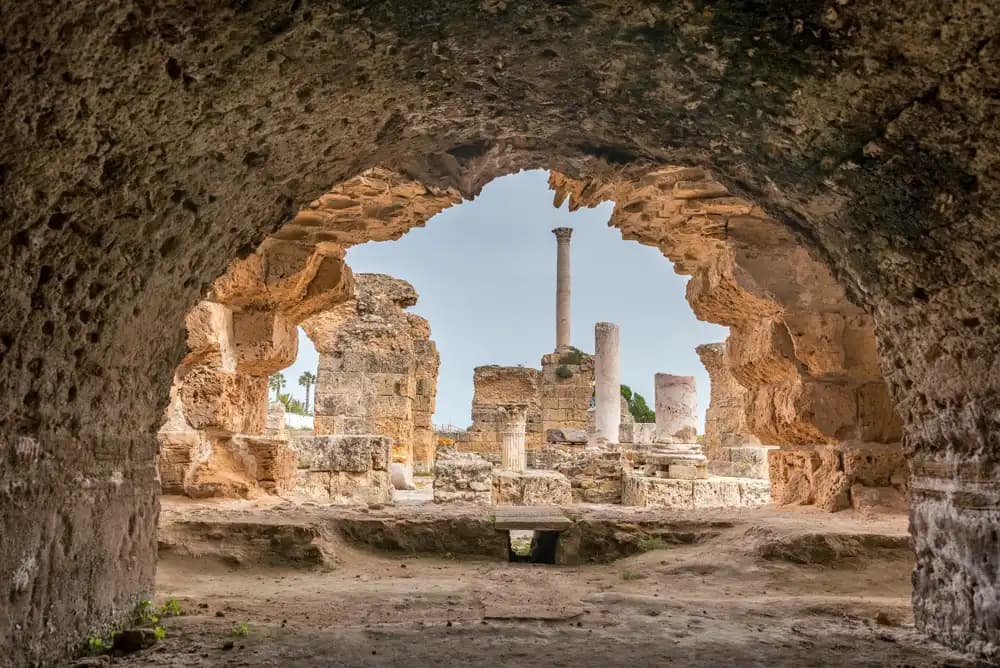
Djerba's strategic position made it a prize for every Mediterranean power. The Phoenicians and Carthaginians traded here, the Romans built the causeway that still links the island to the mainland, and over the centuries it was fought over by Arabs, Normans, Spaniards and Ottomans. The 16th century was especially turbulent, when the corsair Dragut made Djerba a base and a notorious battle left a grim "Tower of Skulls" on the shore, only dismantled generations later. Through it all the island nurtured distinctive communities — the Ibadi Muslims, with their austere fortified mosques, and one of the oldest Jewish communities in the world — whose long coexistence is central to the heritage UNESCO recognised.
Djerba's food and crafts
Being an island, Djerba excels at seafood — grilled fish, octopus and seafood couscous feature on every menu, often eaten by the harbour in Houmt Souk. The island is also a craft powerhouse: the potters of Guellala, the weavers whose blankets and fabrics fill the souks, and fishermen who still trap octopus in traditional clay gargoulette pots. Olive oil, palm dates and local sweets round out the larder, and bringing home a piece of Djerbian pottery or weaving is part of the experience.
Visiting Djerba
- Getting there: Djerba has its own international airport (Djerba–Zarzis) with direct flights from several European cities, making it a popular fly-and-flop destination. By road from the mainland, you cross the Roman causeway or take the short ferry from Jorf to Ajim.
- Getting around: the island is flat and easy; hire a car, use taxis, or join excursions to reach the villages and sights, which are spread out.
- When to go: Djerba enjoys warm weather much of the year and mild winters; the beach season runs roughly May to October. See our best time to visit Tunisia guide.
- How long: a week is ideal for a beach-and-culture holiday; even a couple of days captures the highlights.
- Combining it: Djerba pairs well with a Sahara excursion to the nearby desert and the ksour of the south.
Atlantis Voyages can build a tailor-made Djerba trip blending beach time with the island's culture and a desert add-on — browse our Tunisia tours or start planning your trip.
Frequently asked questions
What is Djerba famous for?
For its sandy beaches, warm shallow sea, whitewashed villages, the ancient El Ghriba synagogue, Houmt Souk market town, pottery and street art — and, since 2023, UNESCO World Heritage status.
Where is Djerba?
It's an island in the Gulf of Gabès off Tunisia's southeastern coast, linked to the mainland by a Roman causeway and a short car ferry.
Why is Djerba a UNESCO World Heritage Site?
It was inscribed in 2023 for its unique island settlement pattern — a dispersed landscape of homesteads, cisterns and hundreds of mosques developed to live in a dry environment.
Is Djerba good for a beach holiday?
Very — its long sandy northeastern coast, warm shallow sea and resort zone around Sidi Mahrès make it one of Tunisia's top beach destinations.
How do you get to Djerba?
By air to Djerba–Zarzis airport, which has direct European flights, or by road from the mainland via the causeway or the Jorf–Ajim ferry.
Is Djerba good for families?
Yes — the shallow, gentle beaches, family resorts, crocodile farm and heritage park, and easygoing pace make it excellent for children.
What is the El Ghriba synagogue?
One of Africa's oldest synagogues, in the village of Erriadh, traditionally dated back some 2,500 years and the site of an annual Jewish pilgrimage around Lag b'Omer.
Is Djerba a Star Wars location?
Yes — the town of Ajim on Djerba stood in for the Mos Eisley spaceport, and several island spots feature in the films.
What is Djerbahood?
An open-air street-art project in the village of Erriadh, where international artists have decorated the white village walls with murals you can explore on foot.
How many days do you need in Djerba?
A week is ideal for beach and culture; two to three days is enough to see the main highlights if you're short on time.
When is the best time to visit Djerba?
The beach season runs roughly May to October, while mild winters suit culture-focused visits. Spring and autumn offer the best all-round balance.
Can you combine Djerba with the Sahara?
Yes — Djerba is a natural gateway to the southern desert and the ksour, so a beach stay pairs well with a Sahara excursion.
Is Djerba safe to visit?
Yes — Djerba is a relaxed, well-established tourist destination. Take the same everyday precautions you would anywhere, and you will find it welcoming and easygoing.
What is the capital of Djerba?
Houmt Souk, the island's main town, known for its markets, old merchants' inns and the Borj El Kebir fortress by the harbour.
Does Djerba have an airport?
Yes — Djerba–Zarzis International Airport receives direct flights from several European cities, making the island easy to reach.
What food is Djerba known for?
Fresh seafood above all — grilled fish, octopus and seafood couscous — alongside Tunisian staples, local olive oil and dates.
What should I buy in Djerba?
Handmade pottery from Guellala, woven blankets and fabrics, and leather and jewellery from the souks of Houmt Souk.
Is Djerba worth visiting beyond the beach?
Absolutely — its UNESCO-listed villages, ancient synagogue, street art, pottery, fortress and markets make it as rewarding culturally as it is for the beach.
How big is Djerba?
About 514 square kilometres — the largest island in North Africa, yet flat and easy to explore in a few days by car.
Can you take boat trips from Djerba?
Yes — popular excursions include the Flamingo Island sandbar and pirate-themed boat trips, alongside day trips to the mainland desert and ksour.
Escape to Tunisia's island. Plan a tailor-made Tunisia trip with Atlantis Voyages, or explore our guided Tunisia tours.