
The first time I drove a friend from London out past Nefta and watched him step onto the sand at Mos Espa, he went completely silent, then whispered "this is really it." I've made that trip more times than I can count, and I still get goosebumps. Welcome to Tatooine, my friend, or as we call it back home, Tunisia.
Quick answer: The main Star Wars filming locations in Tunisia are Matmata (the Lars homestead interior, still a working hotel), Mos Espa and the Chott el Djerid near Tozeur and Nefta, Ong Jmel's dunes, Ajim on Djerba island (Obi-Wan's house and the Mos Eisley cantina), and the ksour near Tataouine. You visit them on a guided 4x4 tour from Tozeur or Douz, usually combined with the Sahara.
Why Tunisia is the real planet Tatooine
Here is something most fans do not know until they arrive: the name "Tatooine" was borrowed straight from a real Tunisian town called Tataouine, in the deep south of the country. When George Lucas came scouting in the 1970s, he found a landscape that looked like nowhere else on Earth: endless salt flats, ochre canyons, and Berber villages carved into the ground. He did not need to build much of an alien world, because ours was already waiting.
That is why the Star Wars filming locations in Tunisia feel so authentic. These are not studio sets shipped in and torn down. They are real places where real Tunisians live, farm, and welcome guests, sitting right next to film sets that have stood in the desert for decades.
Matmata and the Sidi Driss Hotel: sleeping inside the Lars homestead
If you only do one thing on this trip, make it Matmata. This mountain village is famous for its troglodyte homes, houses dug down into the earth around a central courtyard to stay cool in summer and warm in winter. One of them, the Hotel Sidi Driss, was used as the interior of the Lars family farm, the home where a young Luke Skywalker grew up dreaming of the stars.
The best part? It is still a working hotel, and you can actually sleep there. Some of the original set decoration is still bolted to the walls of the dining area. Waking up inside Uncle Owen's kitchen, with a mint tea in hand, is the kind of thing that turns a holiday into a memory you tell for years. If you want to understand the wider region, take a look at our guide to Matmata before you go.
- Rooms are simple and cave-like, so pack a light layer even in warm months.
- Ask the staff to point out the original film props, they love sharing the stories.
- Even if you do not overnight, you can visit the courtyard, but a small entrance fee usually applies (indicative, it changes).
Mos Espa and the Chott el Djerid near Tozeur and Nefta
Some of the most photographed Star Wars filming locations in Tunisia sit out near Tozeur and the oasis town of Nefta. The Chott el Djerid, a vast blinking salt lake, is where the exterior dome of the Lars homestead was planted, that white igloo-shaped structure poking out of nothing. Depending on the season and the sand, you may find it restored or half-buried, which honestly adds to the magic.
A short drive away, near Nefta, stands Mos Espa, the spaceport city where young Anakin Skywalker lived. Unlike most sets, this one was never dismantled. You can walk right through the domed buildings, the market stalls, and the pod-racing arches, still standing in the open desert. It is surreal and, for a fan, deeply moving.
Because these sites are exposed to wind and shifting dunes, their condition changes from year to year, so a local guide who knows the current state of each set is worth every dinar.
Ong Jmel: the dunes that framed the shots
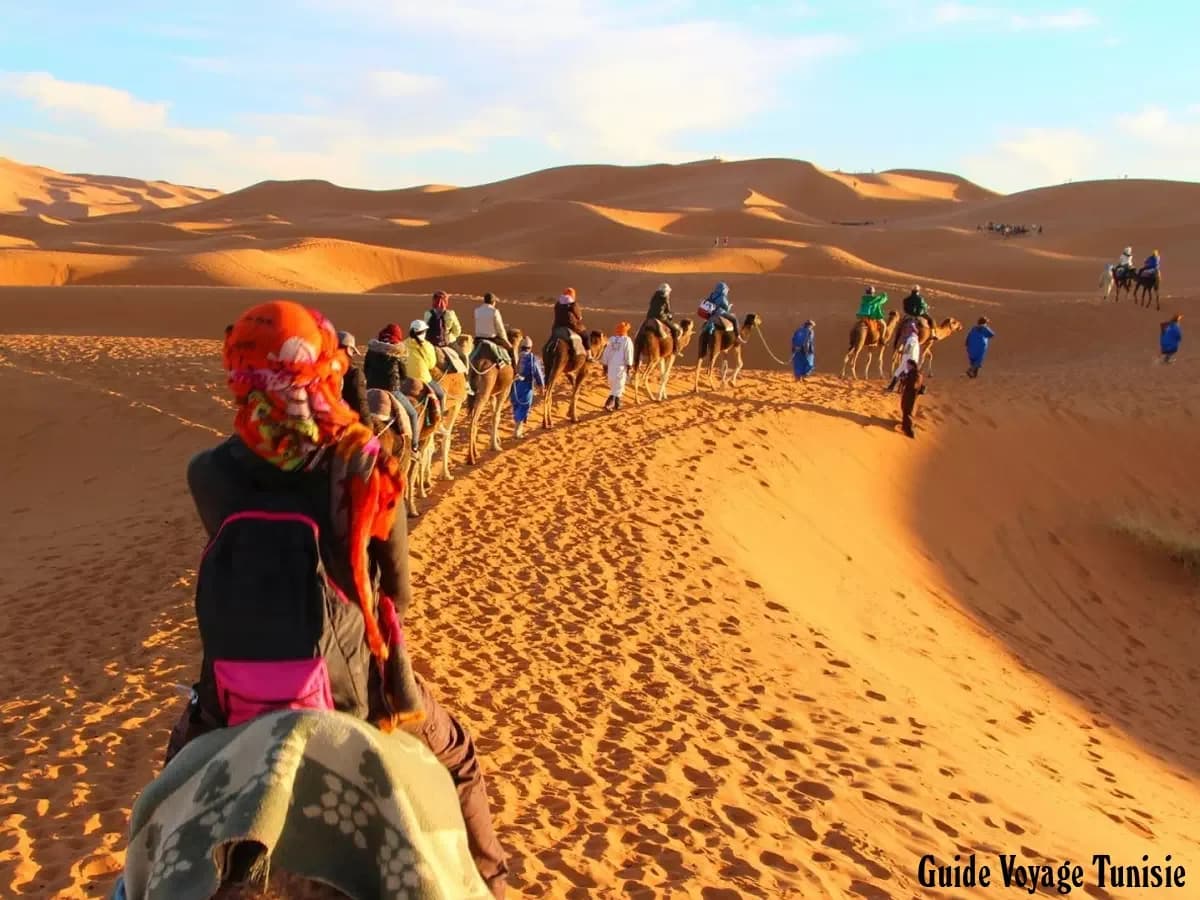
Just beyond Mos Espa lies Ong Jmel, meaning "the camel's neck," named for a rock formation on the horizon. These rolling golden dunes were used as the backdrop for several desert scenes, and they are exactly what you picture when you imagine Tatooine at sunrise. This is also where 4x4 tours often stop for photos, tea, and that jaw-drop moment when the Sahara opens up in front of you.
Ajim on Djerba: Obi-Wan's home and the Mos Eisley cantina
Head to the island of Djerba, and in the quiet fishing town of Ajim you will find two more icons. A small whitewashed building here served as the exterior of Obi-Wan Kenobi's hermit house, and a former bakery nearby stood in for the outside of the Mos Eisley cantina, that "wretched hive of scum and villainy." There is no big sign, no ticket booth, just everyday Tunisian life carrying on around film history. Ask a local and someone will happily point you the right way.
The ksour near Tataouine: gateways from Episode I
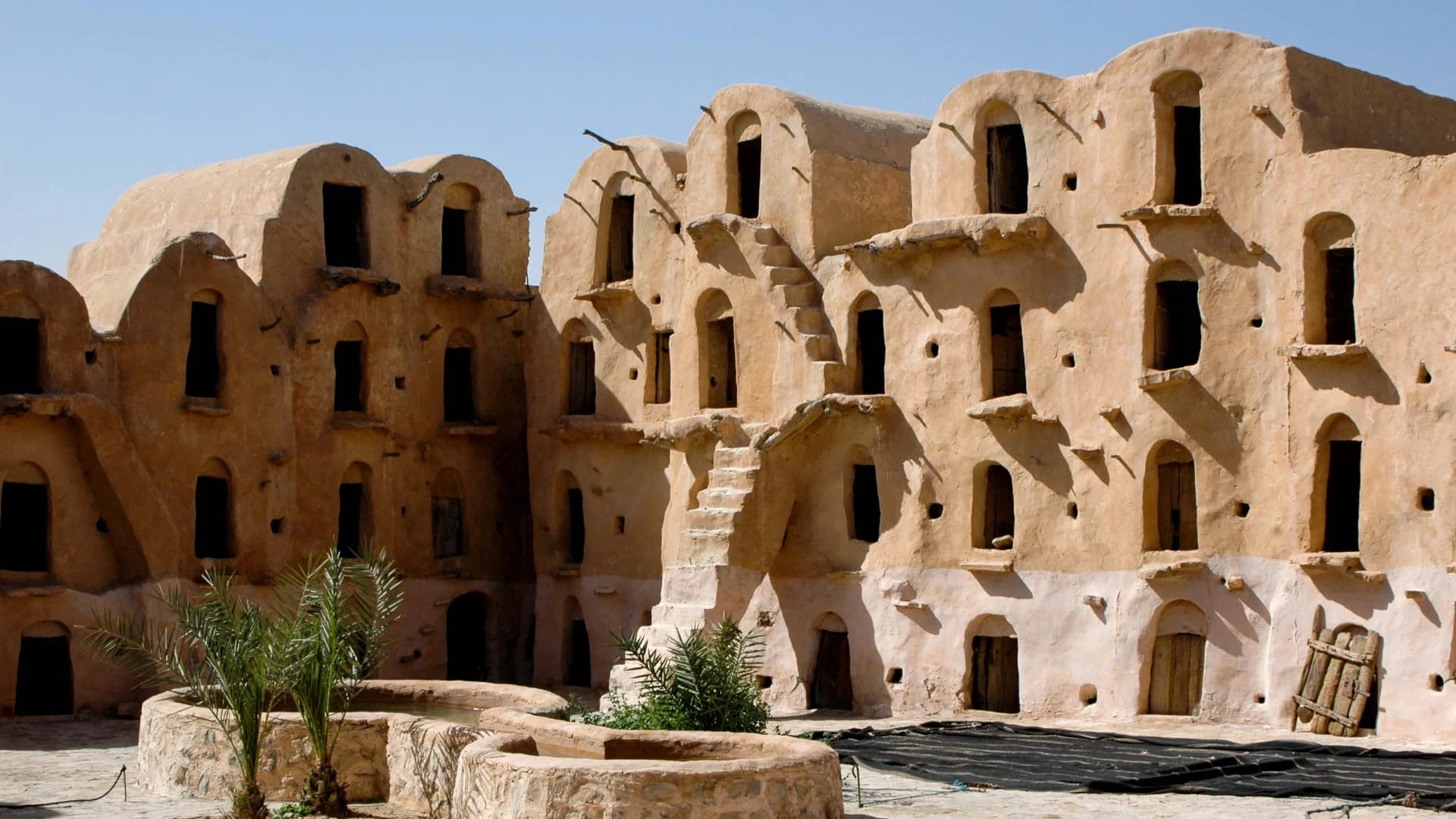
Down near the town that gave the planet its name, the fortified granaries known as ksour were used for the prequel films. Ksar Ouled Debbab and Ksar Hadada, with their honeycomb of vaulted storage cells, appeared as buildings in Episode I. Beyond the movie connection, these ksour are genuine Berber heritage, centuries old, and stunning in their own right. Our overview of Tataouine covers how to reach them and what else to see in the area.
How to visit the Star Wars filming locations in Tunisia
The honest truth is that these sites are spread across a big, remote region, and some sit at the end of unmarked desert tracks. The easiest and safest way to see them is on a guided 4x4 tour, usually departing from Tozeur or from Douz, the "gateway to the Sahara." A good driver-guide knows which sets are currently accessible, handles the soft sand, and turns the day into a story rather than a scavenger hunt.
Most travelers fold the Star Wars circuit into a broader southern Tunisia itinerary that includes a night in the dunes. If a proper desert adventure appeals to you, read our Sahara desert guide and consider basing part of the trip near Ksar Ghilane, a desert oasis with a hot spring that pairs beautifully with the film sites.
- From Tozeur: closest to Chott el Djerid, Mos Espa, Ong Jmel and Sidi Bouhlel.
- From Douz: great starting point if you are combining with Sahara dune nights.
- Djerba's Ajim is a separate stop, best done when you are on the island.
Sidi Bouhlel: the "Star Wars canyon"
Near Tozeur hides a narrow gorge that fans nicknamed the "Star Wars canyon." Officially Sidi Bouhlel, it was used for several memorable moments, including scenes where the Jawas and the Tusken Raiders appear. Walking through its shaded, rocky corridor after the blazing open desert is a lovely change of pace, and it photographs wonderfully in the soft morning light.
Best time to go
Southern Tunisia is desert, so timing matters. The sweet spot is spring, roughly March to May, and autumn, September to November, when daytime temperatures are pleasant and the light is gorgeous. Summer, from June to August, can be brutally hot around the Chott and the dunes, easily topping 40°C, which makes long walks between sets uncomfortable. Winter days are mild and clear but nights get genuinely cold, so pack accordingly.
Practical tips from a local
- Bring more water than you think you need, plus sunglasses, a hat, and high-factor sunscreen.
- Wear closed shoes you do not mind filling with sand.
- Carry some cash in dinars, small sites and cafes rarely take cards.
- Start early to catch soft light and beat the midday heat.
- Prices for tours vary a lot by season, group size, and vehicle, so treat any figure you see online as indicative only and confirm before you book.
- Respect that people actually live near these sets, ask before photographing anyone up close.
Is it worth it even if you are not a Star Wars fan?
Absolutely, and I say that as someone who has guided plenty of travelers who had never seen a single film. Strip away the movie magic and you are still standing in one of the most surreal landscapes on the planet: salt lakes that shimmer like mirages, canyons glowing red at dusk, and Berber villages that have thrived here for centuries. The Star Wars story is the hook, but the raw beauty of southern Tunisia is what people remember. For the bigger picture, our complete Tunisia travel guide ties it all together.
Frequently asked questions
Are the Star Wars sets in Tunisia still there?
Yes, many are. Mos Espa near Nefta still stands in the open desert, the Sidi Driss Hotel in Matmata still operates, and the ksour near Tataouine remain. The Lars homestead dome on the Chott el Djerid can be more weathered depending on the year, which is why a local guide's up-to-date knowledge helps.
Can you actually stay overnight at a filming location?
You can. The Hotel Sidi Driss in Matmata, used as the interior of the Lars family farm, is a real troglodyte hotel where guests still sleep. It is basic but unforgettable.
Do I need a 4x4 to reach the film sites?
For several of them, yes. Sites like Mos Espa, Ong Jmel and parts of the Chott el Djerid sit on soft desert tracks, so a guided 4x4 tour from Tozeur or Douz is the practical choice. A few, like Matmata and the Ajim sites on Djerba, are reachable by regular road.
How many days do I need for the Star Wars filming locations in Tunisia?
To see the core sites around Tozeur and Nefta comfortably, plan two to three days. Add extra time if you want to include Djerba's Ajim, the ksour near Tataouine, and a night in the Sahara.
Is it safe to travel in southern Tunisia?
The main tourist areas of the south around Tozeur, Douz, Djerba and Tataouine are well used to visitors and generally welcoming. As anywhere, use a reputable local operator for desert excursions and follow current travel advice. First-time visitors may find our Tunisia first-time FAQ reassuring.
Which town do most Star Wars tours start from?
Tozeur is the most common base because it is closest to Mos Espa, the Chott el Djerid, Ong Jmel and Sidi Bouhlel. Douz is popular when you are combining the film sites with a Sahara dune experience.