
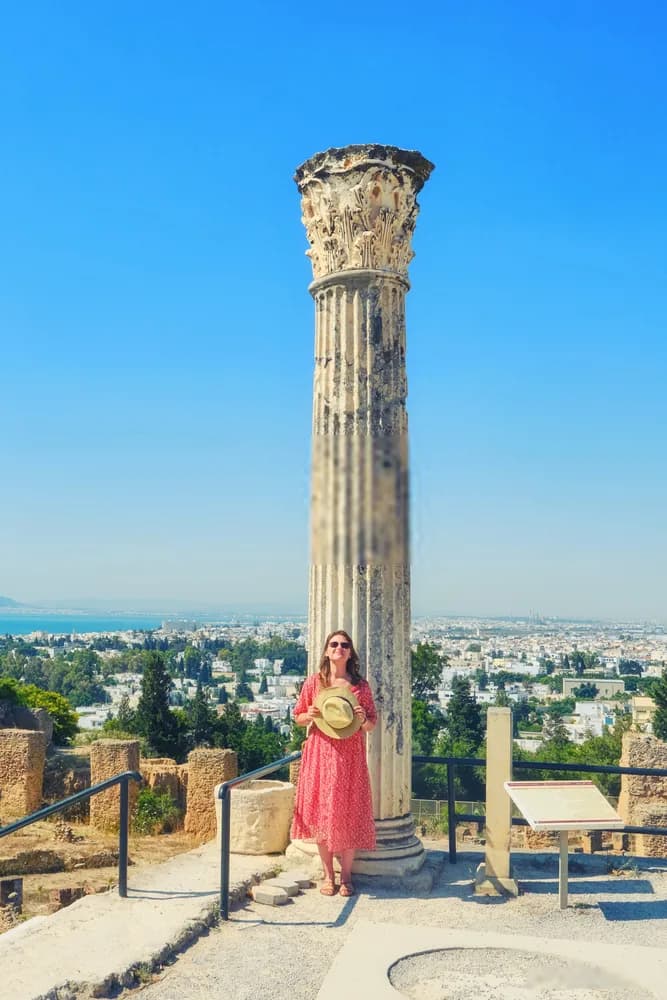
Begin on the shore at the Baths of Antoninus, one of the largest Roman bath complexes ever built. What stands is the service level beneath a vanished bathhouse, but the scale is unmistakable: columns and vaulted chambers rise straight from the seafront, with the Gulf of Tunis flat and blue behind them. This is the spot to simply stand and look.
Then climb Byrsa Hill, the high heart of the Phoenician city. Walk the excavated Punic quarter — streets and house foundations that escaped Rome's destruction — and step into the National Museum, where finds from across the site help you read what lies outside. Below you sit the Punic ports: the circular military harbour, now a quiet lagoon you follow by its shape.
Where to stand, and how to get there
The rest of the site is scattered through the suburb and rewards a slow wander: the Roman theatre, villas with their mosaic floors, and the Tophet sanctuary. Carthage has been UNESCO-listed since 1979, and it sits beside the blue-and-white village of Sidi Bou Saïd — ruins in the morning, cafés and sea views in the afternoon.
- Come out from central Tunis on the TGM light rail; several stations serve different sites, so check which stop is closest to where you want to start.
- Wear comfortable shoes — you cross uneven ground between separate fenced areas.
- Carry water, a hat and sun cover; shade is scarce at the ports and the baths.
- Allow half a day for the highlights, or a full day to add the theatre, the villas and Sidi Bou Saïd.